Private Health Insurance Cost Calculator
Estimate your monthly private health insurance premium based on your age and coverage level. This calculator uses 2025 UK industry averages. Actual costs may vary based on medical history, location, and other factors.
How this compares to the NHS
At age 30, a comprehensive plan costs £70 monthly. This covers faster access to specialists and private care, while the NHS provides free basic care with longer waiting times.
Many people assume that if you live in the UK, all your healthcare is free. That’s not wrong-but it’s not the whole story either. The NHS covers a lot, but not everything. And if you want faster access, more choice, or services the NHS doesn’t provide, you’ll need something extra: private health insurance. So is health insurance in the UK free? The short answer: no. But the NHS? That’s where things get clearer.
What the NHS actually covers
The National Health Service (NHS) gives you access to most medical care without paying at the point of use. That includes seeing your GP, emergency treatment in A&E, hospital operations, maternity care, and mental health services. If you’re a legal resident, you don’t get billed for these. No receipts, no co-pays, no surprise charges.
But here’s what the NHS doesn’t cover: dental check-ups (except for kids, pregnant women, and low-income adults), prescription medications (in England-Scotland, Wales, and Northern Ireland have different rules), eye tests, and private rooms in hospitals. You also won’t get access to the latest drugs or treatments if they’re not approved by NICE (the National Institute for Health and Care Excellence). And if you need a specialist referral, you could wait months.
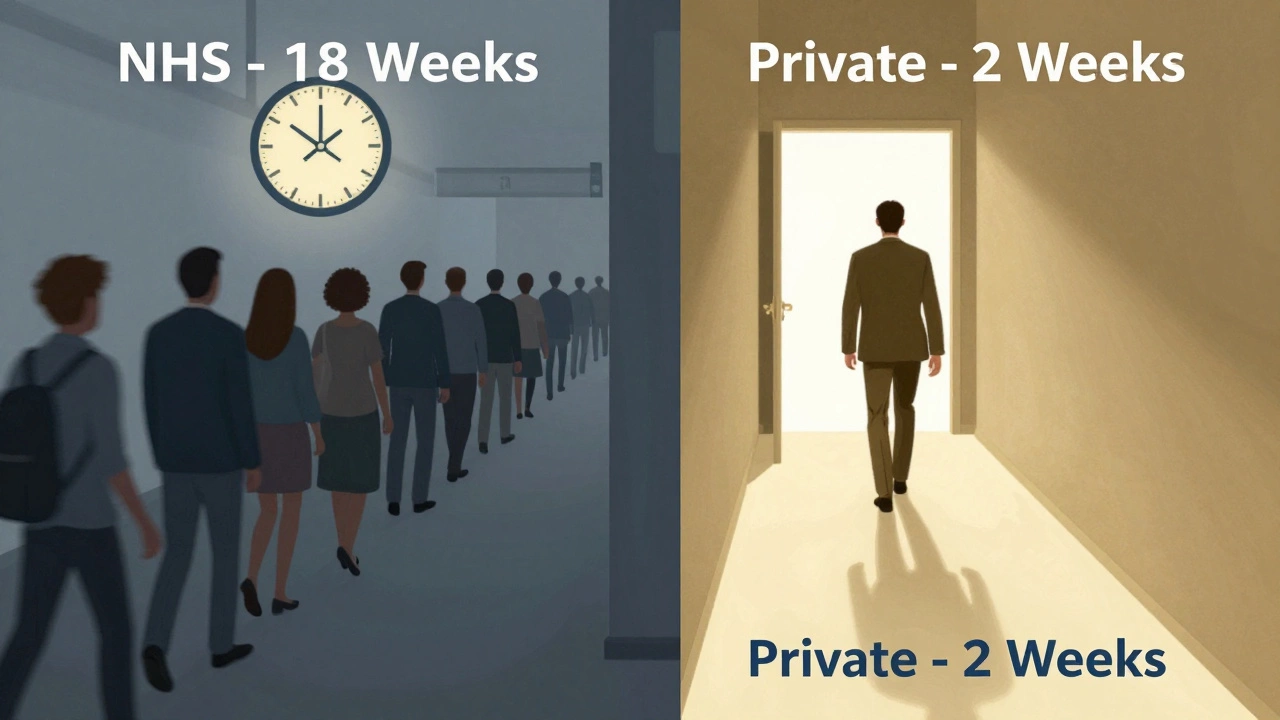
For example, a hip replacement on the NHS might take 6 to 12 months. On the private side? Often within 2 to 4 weeks. That’s not a luxury-it’s a difference in timing that matters when you’re in pain.
Private health insurance: what it is and what it isn’t
Private health insurance in the UK is not a replacement for the NHS. It’s an add-on. You pay a monthly premium-usually between £30 and £150 a month depending on age, location, and coverage-to get faster access to private hospitals, specialists, and treatments.
Most plans cover things like:
- Consultations with private consultants
- Diagnostic scans (MRI, CT, ultrasound)
- Elective surgeries (knee replacements, cataracts, hernias)
- Private hospital rooms
- Some mental health therapy
But they don’t cover:
- Pre-existing conditions (usually excluded for 2-5 years)
- Chronic conditions like diabetes or asthma
- Emergency care (you’d still go to NHS A&E)
- GP visits (you can still use the NHS for those)
- Long-term care or nursing homes
So if you have a condition you’ve had for years, your insurance won’t pay for treating it. That’s why people often buy insurance for things they don’t have yet-like a future knee problem or a tumor that shows up in their 50s.
Who buys private health insurance?
Most people who have private health insurance get it through their employer. Around 10% of the UK population has it, mostly in the south and among higher-income earners. It’s common in sectors like finance, tech, and law, where benefits packages include it as standard.
Individuals who buy it themselves tend to be:
- People frustrated with NHS waiting times
- Those who want choice of doctor or hospital
- People with jobs that require quick recovery (e.g., athletes, performers, surgeons)
- Older adults who want peace of mind
It’s not for everyone. If you’re young, healthy, and don’t mind waiting, the NHS works fine. But if you’ve ever sat in a waiting room for 10 weeks for a specialist appointment, you start to see why people pay.

How much does private health insurance cost?
Prices vary widely. A basic plan for a 30-year-old in London might cost £45 a month. For a 55-year-old with a history of high blood pressure? It could be £120 or more. Some insurers charge extra if you live in areas with higher healthcare costs, like Oxford or Cambridge.
Here’s a rough idea of monthly premiums based on age and coverage level:
| Age | Basic Plan (£) | Standard Plan (£) | Comprehensive Plan (£) |
|---|---|---|---|
| 25 | 30 | 45 | 70 |
| 40 | 50 | 75 | 110 |
| 55 | 85 | 120 | 160 |
| 70 | 150 | 220 | 300+ |
These are estimates. Your actual cost depends on your medical history, smoking status, and whether you choose to exclude certain treatments (like maternity or mental health) to lower the price.
What about prescriptions and dental care?
Even if you have private health insurance, you still pay for prescriptions in England. The current charge is £9.90 per item. You can buy a prepayment certificate for £111 a year if you need more than 11 prescriptions annually. That’s cheaper than paying each time.
Dental care is even more confusing. NHS dental treatment is available but limited. Many dentists don’t take NHS patients because the pay is too low. So you end up paying privately for check-ups, fillings, or crowns. A simple filling can cost £60 to £150. A root canal? £300 to £700. Private insurance rarely covers routine dental work-you need a separate dental plan.
Can you use the NHS and private insurance together?
Yes. In fact, most people do. You use the NHS for everything basic: your GP, emergency care, vaccinations, and long-term conditions. Then, if you need something faster or more comfortable, you switch to private. For example, you might get an MRI on the NHS but pay privately for a second opinion from a top neurologist.
Some insurers even let you use NHS services for diagnosis and then pay for private treatment. This is called "NHS pathway" cover. It’s a smart way to save money while still getting quicker care.
Is private health insurance worth it?
It depends on what you value. If you’re okay with waiting, the NHS is excellent. It’s one of the most efficient public health systems in the world. But if you hate waiting, want control over your care, or need access to treatments the NHS won’t fund, then private insurance makes sense.
Think of it like car insurance. You don’t expect to crash every year, but you pay for peace of mind. Same here. You might never use it. But if you need it, you’ll be glad you have it.
For most people, the best move is to stay on the NHS and only pay for private care when you really need it-like a quick scan or a specialist visit. That way, you avoid monthly premiums but still have options when time matters.
What’s changing in 2025?
The UK government has been pushing to reduce NHS waiting lists, but progress is slow. More private providers are partnering with the NHS to treat patients on the waiting list-this is called "private sector capacity sharing." It’s not free, but it means some NHS patients are getting treated faster through private hospitals, paid for by the NHS.
Meanwhile, insurers are adding new benefits: virtual GP appointments, mental health apps, and fitness trackers as part of wellness programs. Some even offer discounts on gym memberships if you meet health goals.
But the core truth hasn’t changed: healthcare in the UK is free at the point of need-if you’re okay with waiting. If you’re not, you pay.
Is everything free on the NHS?
No. While most medical treatments are free at the point of use, you pay for prescriptions in England, dental care, and eye tests. Some services like cosmetic surgery or fertility treatments are rarely covered unless there’s a medical need.
Do I need private health insurance if I live in the UK?
No, you don’t need it. The NHS provides comprehensive care for residents. But if you want faster access, more choice in doctors or hospitals, or private rooms, private insurance can help. It’s optional, not required.
Can I get private health insurance with a pre-existing condition?
Most insurers will exclude pre-existing conditions from coverage for 2 to 5 years. Some may offer coverage after a waiting period, but you’ll likely pay more. Always read the policy details carefully.
How long do NHS waiting times really take?
As of 2025, the average wait for non-urgent specialist treatment is around 18 weeks. For some procedures like hip replacements or cataract surgery, it can be 6 to 12 months. Emergency care is immediate.
Does private health insurance cover mental health?
Many plans now include mental health support, like therapy sessions or digital apps. But coverage varies. Basic plans might only cover 6 sessions. Comprehensive plans offer unlimited access. Always check what’s included.