Pain Management Strategy Finder
Select the description that best matches your primary pain sensation to see the recommended medical hierarchy.
Recommended Treatment Hierarchy
Imagine a pain so severe that it steals your sleep, drains your energy, and makes simple tasks like walking or holding a cup of tea feel impossible. You have tried the over-the-counter tablets, perhaps even some prescription meds, but nothing seems to touch the fire in your nerves or the ache in your joints. So, you ask the question that haunts many living with chronic pain is a persistent health condition where pain lasts longer than expected during the healing process or continues beyond normal recovery time, often lasting months or years. What is actually the most powerful pain relief available?
The short answer is: there is no single "most powerful" pill that works for everyone without significant downsides. The concept of "power" in pain management is tricky. A drug might be powerful enough to stop nerve signals but also powerful enough to cause addiction, respiratory failure, or organ damage. True power in modern medicine isn't just about brute force; it's about precision. It’s about targeting the specific source of your pain-whether it’s inflammation, nerve damage, or central sensitization-with the least amount of collateral damage to your body.
In this guide, we will break down the hierarchy of pain relief options, from the strongest medications to advanced medical procedures. We’ll look at what doctors consider the "heavy hitters" in 2026, why opioids are no longer the gold standard they once were, and how new treatments are changing the game for people who have been told their pain is untreatable.
The Hierarchy of Medical Pain Relief
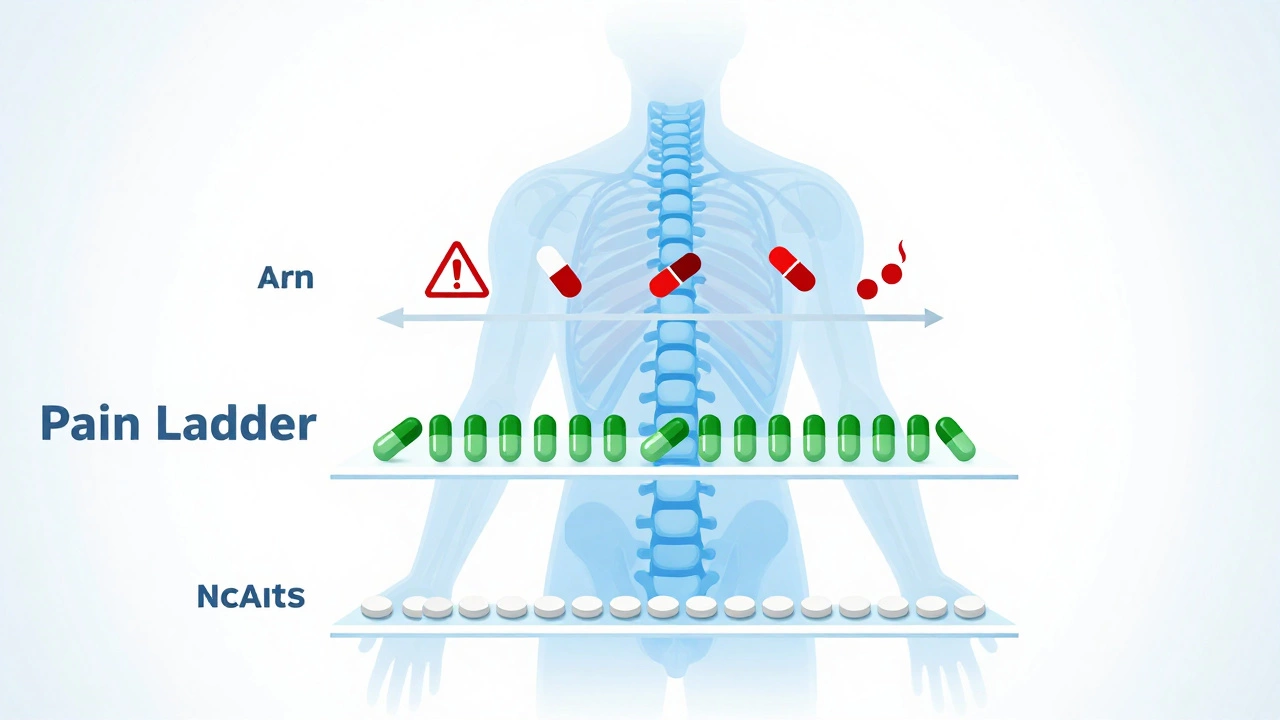
To understand what is "most powerful," we need to look at how the medical community categorizes pain treatments. Historically, the World Health Organization (WHO) created the "Pain Ladder" to help clinicians escalate treatment. While this model has evolved, the principle remains: you start with non-opioids, move to weak opioids if needed, and only then consider strong opioids or adjuvant therapies.
However, for chronic non-cancer pain, the ladder looks different today. The focus has shifted away from simply silencing the pain signal at all costs toward restoring function and quality of life. Here is how the current landscape breaks down:
- First-Line Agents: Non-steroidal anti-inflammatory drugs (NSAIDs) like ibuprofen or naproxen, and acetaminophen (paracetamol). These are effective for mild to moderate inflammatory pain but have limits on dosage due to stomach and liver risks.
- Second-Line Agents: Antidepressants (like duloxetine or amitriptyline) and anticonvulsants (like gabapentin or pregabalin). These are not used for mood or seizures here; they are used because they calm down overactive nerves.
- Third-Line Agents: Opioids (like morphine, oxycodone, fentanyl). These are the "strongest" in terms of binding to pain receptors, but their long-term utility for chronic pain is heavily debated.
- Interventional Procedures: Injections, nerve blocks, and neuromodulation. These physically interrupt pain signals.
The "most powerful" option depends entirely on the type of pain you have. Treating nerve pain with an anti-inflammatory is like trying to put out an electrical fire with water-it won’t work and might make things worse.
Opioids: The Myth of the "Strongest" Pill
If you ask someone from twenty years ago what the most powerful pain relief was, they would say opioids. Drugs like Morphine is a potent opioid analgesic derived from opium, used primarily for severe acute pain and cancer-related pain. and oxycodone are indeed chemically very strong. They bind tightly to mu-opioid receptors in the brain and spinal cord, blocking pain perception completely.
But here is the catch: tolerance. Your body adapts. The dose that worked six months ago might do nothing today. To get the same effect, you need more. This leads to a dangerous cycle. Furthermore, long-term use of high-dose opioids can actually cause Opioid-Induced Hyperalgesia is a paradoxical condition where prolonged opioid use increases sensitivity to pain, making the patient feel more pain despite higher doses.. Yes, the medicine makes the pain worse.
In Ireland and across much of Europe, guidelines have tightened significantly. Opioids are now generally reserved for:
- Cancer-related pain.
- End-of-life care.
- Severe acute trauma (like major fractures).
- Specific cases of chronic pain where all other options have failed, and only under strict specialist supervision.
For most people with chronic back pain, arthritis, or fibromyalgia, opioids are not considered the "most powerful" solution because they don’t address the root cause and carry a high risk of dependency and side effects like constipation, brain fog, and hormonal imbalances.
Neuropathic Pain: The Real Heavy Hitters
If your pain is burning, shooting, tingling, or electric-shock-like, you likely have Neuropathic Pain is pain caused by damage or disease affecting the somatosensory nervous system, distinct from nociceptive pain caused by tissue injury.. Standard painkillers barely touch this. For neuropathic pain, the "most powerful" medications are actually antidepressants and anti-seizure drugs.
Duloxetine (Cymbalta): This is an SNRI (Serotonin-Norepinephrine Reuptake Inhibitor). It boosts chemicals in the brain that help dampen pain signals. It is particularly effective for diabetic neuropathy and fibromyalgia.
Pregabalin (Lyrica) and Gabapentin (Neurontin): These bind to calcium channels in the nervous system, reducing the release of neurotransmitters that send pain signals. They are highly effective for sciatica and post-herpetic neuralgia (shingles pain).
While these aren't "knock-out" drugs like opioids, they are more powerful for this specific type of pain because they target the mechanism causing the suffering. Many patients find that a low dose of pregabalin does more for their daily function than a high dose of codeine ever did.
Interventional Procedures: Beyond Pills
When medications fail or cause too many side effects, the next level of "power" comes from physical interventions. These procedures don't just mask pain; they can sometimes reset the nervous system or repair damaged structures.
| Procedure | Best For | How It Works | Duration of Relief |
|---|---|---|---|
| Epidural Steroid Injection | Herniated discs, sciatica | Reduces inflammation around the nerve root | Weeks to months |
| RFA (Radiofrequency Ablation) | Faceted joint arthritis, chronic neck/back pain | Uses heat to disable small nerve fibers transmitting pain | 6-18 months |
| Spinal Cord Stimulation (SCS) | Failed back surgery syndrome, complex regional pain syndrome (CRPS) | Implanted device sends electrical pulses to mask pain signals | Years (battery dependent) |
| Intrathecal Pump | Severe widespread cancer or non-cancer pain | Delivers tiny amounts of opioid/bupivacaine directly to spinal fluid | Ongoing (requires refills) |
Spinal Cord Stimulation (SCS) is often cited as one of the most powerful non-pharmacological tools. Instead of flooding your whole body with medication, an implanted device sends mild electrical currents to the spinal cord. This creates a tingling sensation (paresthesia) or, with newer waveforms, no sensation at all, which effectively "blocks" the pain signal before it reaches your brain. It’s like turning down the volume on a radio that’s stuck on a static channel.
Emerging Treatments in 2026
The field of pain management is moving fast. In recent years, we’ve seen the rise of biologic therapies and targeted neurolysis. One notable advancement is the use of Botox (Botulinum Toxin) is a neurotoxic protein that blocks nerve signals, increasingly used off-label for chronic migraines and muscle spasticity pain. for chronic migraines and myofascial pain. By paralyzing the muscles that are cramping and sending pain signals, Botox provides relief that can last for three to four months.
Another area showing promise is Ketamine Infusions is a dissociative anesthetic used in sub-anesthetic doses to treat refractory chronic pain and depression by resetting NMDA receptor activity.. While traditionally an anesthetic, low-dose ketamine infusions are being used in specialized clinics to treat Complex Regional Pain Syndrome (CRPS) and severe neuropathic pain. It works by blocking NMDA receptors, which play a key role in central sensitization (where the brain amplifies pain). For some patients who have tried everything else, ketamine offers a dramatic, albeit temporary, reset button.
The Role of Multimodal Therapy
Here is the hard truth: the single most powerful approach is rarely a single drug or procedure. It is multimodal therapy. This means combining different types of treatment to attack pain from multiple angles.
For example, a patient with chronic lower back pain might receive:
- A course of physical therapy to strengthen core muscles and improve mechanics.
- A low dose of duloxetine to manage the nerve component.
- An epidural steroid injection to reduce acute inflammation.
- Cognitive Behavioral Therapy (CBT) to help manage the emotional toll and stress response, which can amplify pain signals.
This combination is often far more effective than any one element alone. The physical therapy addresses the mechanical issue, the medication addresses the chemical signaling, the injection addresses the local inflammation, and the psychology addresses the brain’s interpretation of pain.
When to Seek Specialist Help
If you are relying on over-the-counter painkillers daily for more than two weeks, or if you are taking prescription opioids for chronic non-cancer pain, it is time to see a pain specialist. In Ireland, you can access pain clinics through the HSE, though waiting times can vary. Private pain specialists offer faster access and can discuss advanced options like SCS or intrathecal pumps more readily.
Don’t settle for "just living with it." Pain is a symptom, not a life sentence. The definition of "most powerful" is evolving. It’s no longer about the drug that knocks you out; it’s about the strategy that gets you back to living.
Is Fentanyl the strongest painkiller available?
Yes, fentanyl is approximately 50 to 100 times more potent than morphine. However, it is extremely dangerous and is typically reserved for severe cancer pain or anesthesia in hospital settings. It is not suitable for general chronic pain management due to the high risk of respiratory depression and overdose.
Can CBD oil provide powerful pain relief?
CBD (cannabidiol) may help with mild to moderate pain, particularly inflammation and anxiety-related pain. However, it is not considered "powerful" compared to prescription medications or interventional procedures. Evidence for its efficacy varies, and it should not replace prescribed treatments for severe chronic pain without consulting a doctor.
What is the best treatment for nerve pain?
The first-line treatments for nerve pain (neuropathic pain) are usually antidepressants like duloxetine or anticonvulsants like pregabalin and gabapentin. If these fail, options include topical lidocaine patches, capsaicin cream, or interventional procedures like spinal cord stimulation.
Are opioids safe for long-term chronic pain?
Long-term opioid use for chronic non-cancer pain is controversial and generally discouraged unless other treatments have failed. Risks include tolerance, dependence, addiction, and opioid-induced hyperalgesia. Guidelines recommend using the lowest effective dose for the shortest possible duration.
How do I find a pain specialist in Ireland?
You can refer yourself to a public pain clinic through your GP, though waiting lists can be long. Alternatively, you can seek private consultation with a consultant in anaesthesia or pain medicine. Check the Irish College of Anaesthetists website for accredited specialists.