
UK Dental Implant Cost Estimator
Configuration
Estimated Total Cost
Why Dental Implants Feel Out of Reach
Missing a tooth is more than a cosmetic issue. It affects how you chew, speak, and even your confidence when smiling. The standard fix for many people is a dental implant, which is a titanium post surgically placed into the jawbone to support a replacement tooth or bridge. While they are the gold standard for durability and function, the price tag often stops people in their tracks. In the UK, a single implant can cost anywhere from £1,500 to £3,000 depending on the clinic and location. For most households, that is a significant sum to pull out of thin air.
You might be wondering if there is any way to get this treatment without draining your savings. The short answer is yes, but it requires navigating a system that isn't always transparent. Unlike general health checks, dental work in the UK operates largely outside the National Health Service (NHS) safety net for adults. Understanding why this is the case is the first step toward finding a solution.
The Reality of NHS Coverage for Implants
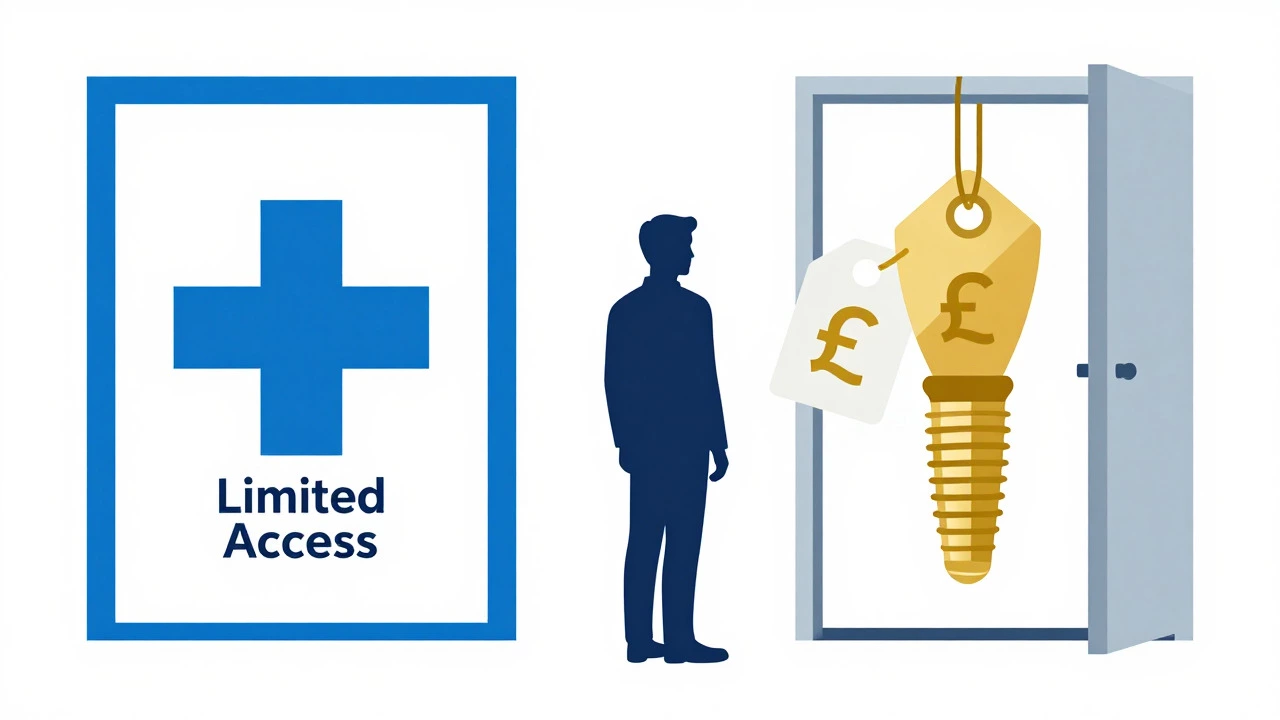
Many people assume the NHS covers all essential medical procedures. However, the National Health Service (NHS) classifies the publicly funded healthcare system in the United Kingdom dentistry as having limited scope for restorative aesthetics. Under current NHS guidelines, dental implants are generally considered a 'specialist' procedure. They are only covered if there is a clear clinical need where other treatments, like bridges or dentures, would fail or cause further harm.
This usually applies to specific scenarios:
- Patients who have had oral cancer surgery and require reconstruction.
- Individuals with severe congenital defects affecting the jaw structure.
- Cases where trauma has resulted in complex bone loss that cannot be managed with standard prosthetics.
For the average person missing a molar due to decay or gum disease, the NHS will typically offer a bridge or a partial denture instead. These options are cheaper and covered by the standard band charges, but they don't offer the same longevity or stability as an implant. If you fall into the small percentage of patients eligible for NHS-funded implants, you will likely face long waiting times. For everyone else, the path leads to private care.
Breaking Down the Private Cost
When you move to the private sector, prices vary wildly. A quick search online might show quotes ranging from £900 to over £4,000 per tooth. Why such a huge difference? It comes down to several factors including the surgeon's experience, the technology used, and the materials chosen.
| Factor | Impact on Price | Typical Range / Detail |
|---|---|---|
| Location | High | London and Southeast clinics charge 20-30% more than regions like Yorkshire or Wales due to overheads. |
| Surgeon Expertise | Medium | Oral surgeons or periodontists charge more than general dentists performing the procedure. |
| Additional Procedures | d>High | Bone grafting (£300-£800) or sinus lifts (£500-£1,200) add significantly to the base cost. |
| Material Quality | Low-Medium | Premium titanium brands (e.g., Nobel Biocare, Straumann) may cost slightly more but offer better long-term data. |
It is crucial to ask for a comprehensive quote. Some clinics advertise low 'implant-only' prices but then add extra fees for the abutment (the connector piece) and the crown (the visible tooth). Always ensure the quote is 'all-inclusive' so there are no surprises later.
Payment Plans and Financing Options
If you cannot pay the full amount upfront, financing is the most common route. Many private dental practices partner with finance companies to offer interest-free or low-interest payment plans. This allows you to spread the cost over 6, 12, or even 24 months.
Popular providers in the UK include Zopa, a digital lending platform offering personal loans and PaydayLoans.com alternatives specifically for healthcare, such as Credit Care or Chrysalis Finance. When choosing a plan, look closely at the terms. Interest-free periods are great, but if you miss a payment, the accrued interest can be steep. Always check if the loan requires a credit check and how that might affect your score.
Another option is using a credit card with a 0% introductory APR. If you can pay off the balance within the promotional period (usually 12-18 months), this can be a cost-effective way to manage large expenses. Just be disciplined about setting up direct debits to avoid falling into debt traps.
Dental Tourism: Is It Worth the Risk?
A growing number of UK residents are traveling abroad for dental work. Countries like Turkey, Hungary, and Spain offer implants at a fraction of the UK price-sometimes as low as £500 to £800 per unit. This is known as medical tourism, which involves traveling to another country primarily to obtain medical treatments.
While the savings are tempting, there are hidden costs and risks. You must factor in flights, accommodation, and potentially multiple trips for follow-up care. More importantly, aftercare is critical. If an infection occurs three months after you return home, who do you see? Your local dentist may be reluctant to treat complications from foreign work, or they may charge high fees to assess it. Ensure any overseas clinic is accredited by recognized bodies and that they provide detailed records of the materials used.

Grants and Charitable Support
For those on very low incomes, charitable organizations may offer assistance. While dedicated 'dental implant grants' are rare, some charities provide broader healthcare support. Organizations like Turn2us, a charity providing grants and financial advice to people in hardship can help identify available funds. Additionally, some local councils offer discretionary housing payments that might indirectly free up budget for health needs, though this is not guaranteed.
University dental schools also offer reduced-cost treatments. Students under supervision perform the work, which takes longer but costs significantly less. This is a viable option if you live near a university with a dental program and are willing to wait for an appointment slot.
Preventive Steps to Reduce Future Costs
Affording implants today is important, but preventing future ones saves money long-term. Good oral hygiene reduces the risk of gum disease and tooth decay, the two main causes of tooth loss. Regular check-ups allow dentists to catch issues early when they are cheaper to fix. Consider investing in a water flosser or electric toothbrush if manual cleaning isn't effective for you. Small daily habits prevent massive bills down the line.
Questions People Ask About Affordable Implants
Does the NHS cover dental implants for anyone?
The NHS rarely covers dental implants. They are typically reserved for cases involving trauma, cancer reconstruction, or congenital defects where other treatments would fail. For most adults, implants are considered a private, elective procedure.
What is the cheapest way to get dental implants in the UK?
The cheapest domestic option is often through university dental hospitals where students perform the work under supervision. Alternatively, looking for clinics outside major cities like London can reduce costs by 20-30%. Dental tourism to countries like Turkey offers lower upfront costs but carries risks regarding aftercare.
Can I use my tax-free savings account (ISA) for dental implants?
Yes, you can withdraw money from a Cash ISA or Stocks and Shares ISA to pay for dental implants. Since these withdrawals are tax-free, it is an efficient way to use saved funds without incurring additional tax liabilities. However, ensure you have enough liquidity to cover the cost without disrupting your long-term investment goals.
Are there interest-free payment plans for dental work?
Many private dental clinics offer interest-free payment plans for periods of 6 to 12 months through third-party finance providers. These plans allow you to pay monthly installments without paying extra interest, provided you meet the repayment schedule. Always read the fine print to understand penalties for missed payments.
Is dental insurance worth it for implants?
Most standard dental insurance plans in the UK do not cover the full cost of implants, often capping contributions at £150-£500 per year. They are better suited for routine check-ups and minor repairs. If you already have a policy, check if it includes a 'major treatment' rider, but don't rely on it to fully fund an implant.