
Healthcare Cost Comparison Tool
Compare UK vs US Healthcare Costs
When you hear someone say healthcare is free in the UK, they’re not wrong-but they’re also not telling the whole story. In the US, you pay upfront, often in hundreds or thousands, before you even see a doctor. In the UK, you don’t pay at the point of care. But which system actually saves you money? Let’s break it down with real numbers, not politics.
How the UK system works (and what you really pay)
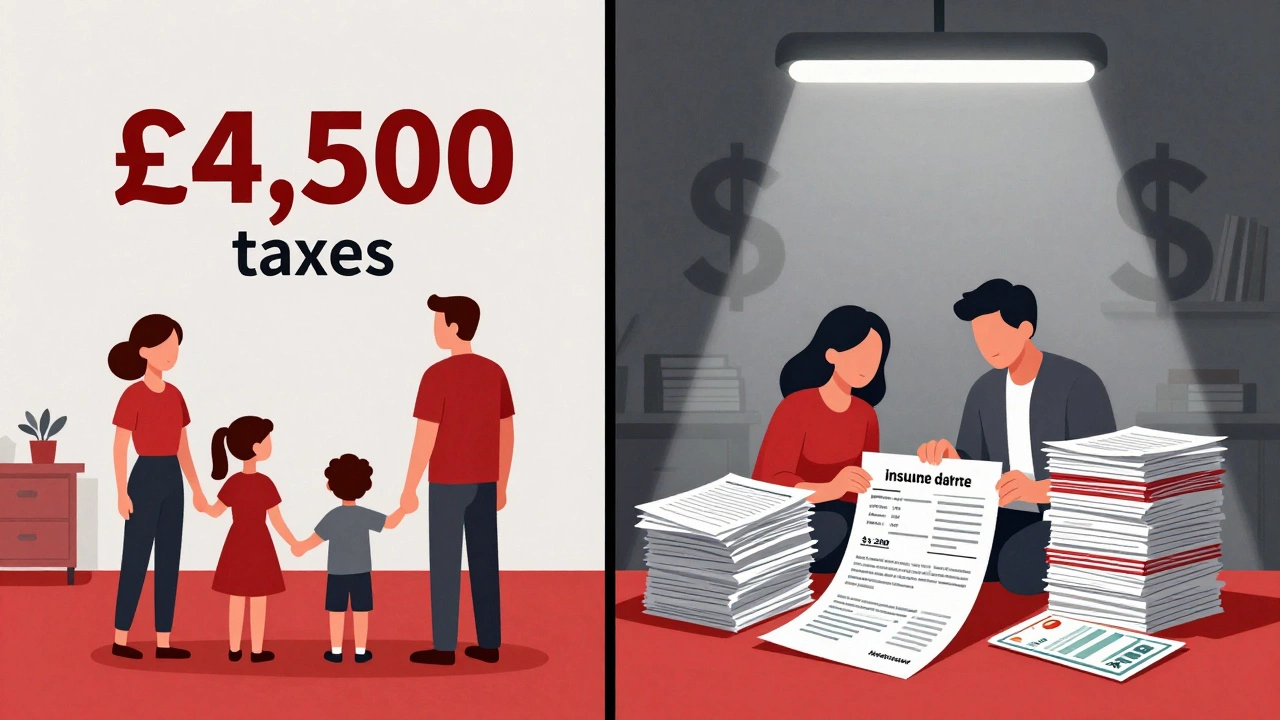
The UK’s National Health Service (NHS) is funded through taxes. If you live in the UK, you don’t get a bill when you walk into a GP office, go to A&E, or get a hospital procedure. That sounds simple. But here’s what most people miss: you’re already paying for it. The average UK household pays about £4,500 per year in taxes that go toward healthcare. That’s roughly $5,700 USD. You don’t see it as a separate charge, but it’s there.
There are small out-of-pocket costs. Prescription charges in England are £9.95 per item (as of 2026), though many groups are exempt-under-16s, over-60s, diabetics, cancer patients. Dental care costs £25.60 for Band 1 (checkup), up to £306 for Band 3 (crowns, bridges). Eye tests are free for some, otherwise £25-£50. These are minor compared to what Americans pay just to see a doctor.
How the US system works (and why it’s so expensive)
In the US, healthcare isn’t a public service-it’s a market. You pay for insurance, then you pay for care, then you pay for surprise bills. The average American spends $14,570 per year on healthcare, according to the CDC. That’s over twice what the UK spends per person.
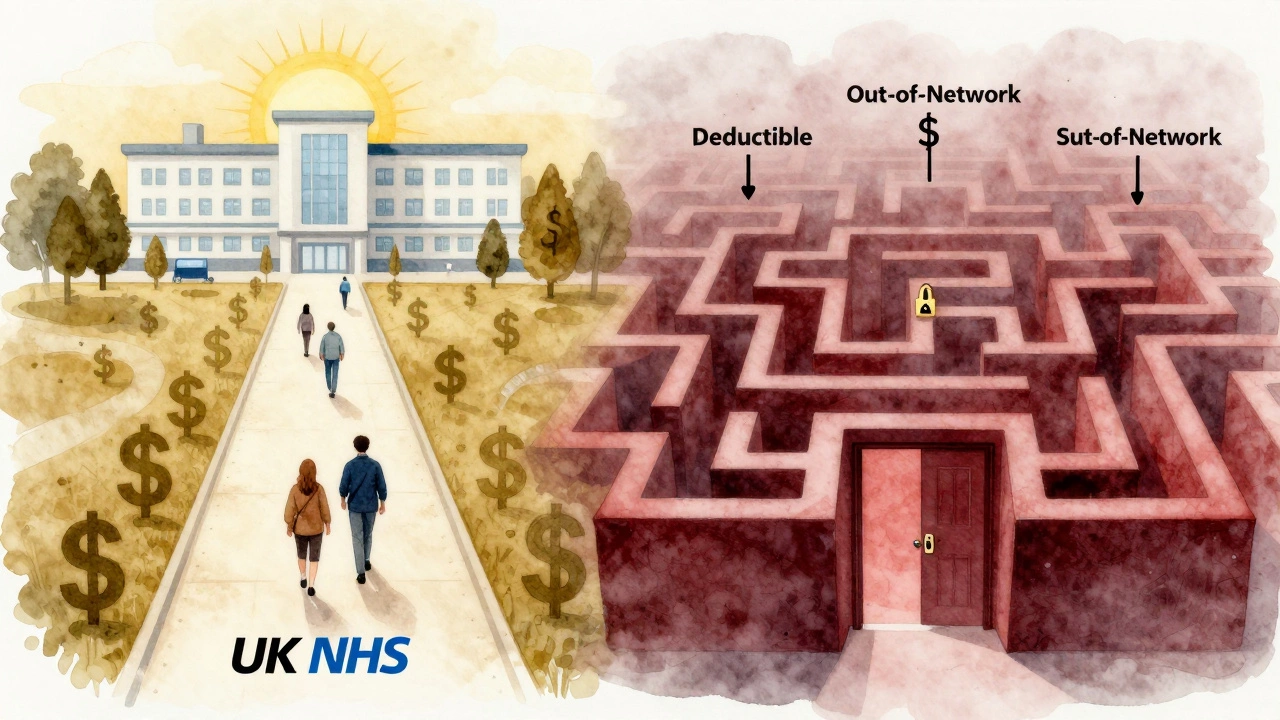
Why? Because of the middlemen. Insurance companies, hospital billing departments, pharmacy benefit managers-they all add layers of cost. A simple doctor visit in the US can cost $250-$400 without insurance. With insurance, you still pay a $50 copay, plus your deductible. If you have a $5,000 deductible and need an MRI? You pay the full $1,200 out of pocket until you hit that number.
And then there’s the surprise. A 2023 study in JAMA found that 1 in 5 emergency room visits in the US resulted in a bill from an out-of-network provider-even when the hospital was in-network. That’s not a glitch. That’s how the system is designed.
Out-of-pocket costs: UK vs US
Let’s compare real scenarios.
| Service | UK Cost | US Cost (with insurance) | US Cost (without insurance) |
|---|---|---|---|
| GP visit | £0 (free) | $50 copay | $250-$400 |
| Emergency room visit | £0 (free) | $150 copay | $1,500-$3,000 |
| MRI scan | £0 (free, wait 2-6 weeks) | $500-$1,000 (after deductible) | $1,200-$2,500 |
| Prescription (30-day supply) | £9.95 | $10-$50 | $100-$300 |
| Childbirth (vaginal) | £0 (free) | $5,000-$10,000 | $15,000-$25,000 |
The difference isn’t subtle. In the UK, you don’t delay care because you can’t afford it. In the US, 40% of adults skip needed care due to cost, according to KFF. That’s not just about being uninsured-it’s about high deductibles, co-insurance, and copays that add up fast.
What about wait times? Is free healthcare slower?
Yes, wait times in the UK are longer for non-emergency care. The NHS target is 18 weeks from referral to treatment. In 2025, the average wait for elective surgery was 22 weeks. For a specialist appointment? Around 6 weeks.
In the US, if you have good insurance, you can often see a specialist within days. But here’s the catch: that speed comes at a price. A 2024 analysis by the Commonwealth Fund showed that Americans pay more for faster access-but they don’t get better outcomes. Life expectancy in the UK is higher than in the US. Infant mortality is lower. Preventable hospitalizations are fewer.
Speed isn’t everything. The UK system prioritizes need, not wealth. The US system prioritizes access for those who can pay. That’s not a technical difference-it’s a moral one.
Who pays more? The average person
Let’s look at a typical family. Two adults, two kids, middle income-$75,000 a year in the US, £55,000 in the UK.
In the US, they pay:
- $12,000 in employer-sponsored premiums
- $4,000 in out-of-pocket costs (copays, deductibles, prescriptions)
- $2,000 in taxes for Medicaid and Medicare
- Total: $18,000
In the UK, they pay:
- £4,500 in income tax toward healthcare (about $5,700)
- £200 in prescriptions (about $250)
- £100 for dental (about $125)
- Total: £4,800 ($6,075)
That’s a difference of over $12,000 per year. For the same level of care-sometimes better care-the UK family pays less than a third.
What about private healthcare in the UK?
Some people in the UK buy private health insurance to skip NHS waits. It’s common among higher earners. A private plan for a family costs £2,000-£4,000 a year. That’s still less than the average US premium alone.
And here’s the irony: even private healthcare in the UK is cheaper than US insurance. A private MRI in the UK costs £400. In the US, it’s $1,200+. A private specialist visit? £150 vs $400+.
So if you’re thinking about private insurance in the UK to avoid NHS waits, ask yourself: are you paying more to save time, or are you just mimicking the broken US system?
The real question: Is cheaper better?
People in the US often assume that more expensive means better. It doesn’t. The UK has higher life expectancy, lower infant mortality, and better management of chronic diseases like diabetes and hypertension. The US spends twice as much and gets worse results on almost every key metric.
It’s not about ideology. It’s about structure. The UK system removes profit from care delivery. The US system turns care into a product. One system makes money from sickness. The other tries to prevent it.
Is healthcare cheaper in the UK? Yes-by a huge margin. But the real answer is deeper: the UK system makes healthcare affordable. The US system makes it profitable.
Is healthcare really free in the UK?
Healthcare in the UK isn’t free in the sense that no one pays for it. It’s funded through taxes. Every working adult contributes, and that covers nearly all care at the point of service. You don’t get a bill at the hospital, but you pay for it through your income tax and National Insurance. That’s how it’s different from the US, where you pay premiums, deductibles, and copays directly.
Can Americans get healthcare in the UK for cheaper?
No. The NHS is only available to UK residents who pay taxes there. Tourists and short-term visitors are charged for most services unless they’re from countries with reciprocal agreements (like the EU or some Commonwealth nations). If you’re moving to the UK, you’ll qualify for NHS care after registering with a GP. But you can’t just fly in and expect free treatment.
Why do US healthcare costs vary so much?
Prices in the US vary because hospitals and providers negotiate rates with hundreds of different insurance companies. A hospital might charge $10,000 for a procedure, but your insurer might have a contract for $3,000. Someone without insurance pays the full $10,000. There’s no standard pricing. In the UK, the NHS sets fixed prices for every procedure, so everyone pays the same-whether they’re rich or poor.
Do UK citizens pay for private healthcare?
Yes, about 10% of UK residents have private health insurance, mostly for faster access to specialists or elective surgery. But even private care in the UK is significantly cheaper than in the US. A private hip replacement in the UK costs around £10,000. In the US, it’s $35,000-$50,000. Many UK private plans are offered by employers as a perk, not because the NHS is inadequate.
Is the UK healthcare system overwhelmed?
The NHS faces staffing shortages and long waits, especially after the pandemic. But it still handles over 1 million patient contacts daily. The problem isn’t lack of funding-it’s underinvestment over the last decade and rising demand. The UK spends 10% of GDP on healthcare. The US spends 18%. The UK gets more value per pound spent. The issue is sustainability, not collapse.