UK vs US Dental Implant Cost Estimator
Enter your scenario below to estimate the out-of-pocket costs for a single dental implant in both countries.
United States
Estimated Out-of-Pocket:
- Wait Time: 2-4 weeks
- Coverage: Rarely covers implants
United Kingdom
Estimated Out-of-Pocket:
- Wait Time: 4-8 weeks
- Coverage: NHS rarely funds implants
💡 Analysis
Select options and click Calculate to see which system offers better value for your specific situation.
Note: These are estimates based on 2026 average market data. Actual prices vary by clinic, surgeon experience, and additional procedures (extractions, sinus lifts). The NHS typically does not cover implants unless medically necessary (e.g., trauma/cancer reconstruction).
You’ve probably heard the horror stories. Someone’s tooth falls out in Ohio, and they’re quoted $4,000 for a single implant. Then they see their cousin in Manchester get the same work done for £1,500, or even less if they qualify for subsidized treatment. It sounds too good to be true, right? So, is UK dental care actually better than what you get across the Atlantic? The short answer is no-not exactly. The long answer is that "better" depends entirely on what you value more: speed and choice, or cost and accessibility. If you are looking at dental implants UK specifically, the landscape is vastly different from the US system. Let’s break down why these two systems diverge so sharply and where the real pitfalls lie.
The Core Difference: Public Subsidy vs. Market Pricing
In the United States, dental care is largely treated as a consumer service, similar to buying a car or hiring a lawyer. Prices are set by market forces, overheads, and the dentist’s desired profit margin. There is no central body dictating how much a root canal should cost. This leads to massive variation. You might pay $800 in rural Texas and $3,500 in Manhattan for the exact same procedure.
The National Health Service (NHS) in the UK operates on a completely different logic. It’s a publicly funded system designed to provide essential care to everyone, regardless of income. However-and this is the big catch-the NHS does not cover everything. While it covers basic check-ups, fillings, and extractions, complex restorative work like implants often falls into a gray area or is deemed "cosmetic," pushing patients toward private providers.
| Feature | United States (Private) | United Kingdom (Private) | United Kingdom (NHS)* |
|---|---|---|---|
| Average Cost per Implant | $3,000 - $5,000 | £1,800 - £3,500 | £90 - £391 (Band 3 fee)* |
| Waiting Time | 2 - 4 weeks | 4 - 8 weeks | 3 - 12 months+ |
| Insurance Coverage | Rarely covers implants | Varies by policy | Only if medically necessary |
| Consultation Fee | $75 - $200 | £20 - £50 | Free / Band 1 Fee |
Why US Dentists Charge More (And Why It Might Be Worth It)
When Americans complain about dental bills, they aren’t wrong. But before you pack your bags for London, consider what that money buys you. In the US, the high cost reflects several factors that often translate to higher quality control and faster access.
- Malpractice Insurance: US dentists face significantly higher liability risks. This drives up overheads, which are passed on to you.
- Technology Adoption: Private US clinics are often quicker to adopt new tech like CEREC same-day crowns or 3D-printed guides because they compete directly for customers.
- Speed: If you have an emergency, you can likely see a specialist within days. In the UK, waiting lists for non-urgent specialist referrals can stretch into months.
There’s also the issue of continuity. Many US practices offer comprehensive packages where the surgeon, prosthodontist, and hygienist work under one roof with integrated digital records. In the UK, while many private practices do this well, the fragmented nature of the NHS means you might see a GP dentist for extraction, then wait three months to see a specialist at a hospital trust for the implant planning.
The UK Advantage: Standardization and Safety Nets
So, where does the UK shine? Regulation and baseline standards. The General Dental Council (GDC) maintains strict registration requirements. Every dentist practicing in the UK must meet specific competency standards, carry mandatory indemnity insurance, and undergo regular audits. In the US, regulation is state-by-state, leading to inconsistencies in enforcement.
Furthermore, the cost barrier is lower for entry-level care. An initial consultation in the UK typically costs between £20 and £50. In the US, walking into a new office without insurance can easily hit $150 just to say hello. For someone on a tight budget who needs routine maintenance, the UK model is undeniably more accessible.
But here’s the reality check for implants: The NHS almost never pays for them. Unless you have a congenital defect, have had jaw surgery due to trauma, or suffer from severe gum disease affecting multiple teeth in a way that dentures won’t fix, you will likely pay privately. And when you compare UK private prices to US private prices, the gap narrows significantly. A premium implant in Mayfair isn’t cheap-it’s just slightly cheaper than Beverly Hills.
Dental Tourism: The Hidden Risks
This price difference has given rise to a booming industry: dental tourism. Thousands of Americans fly to Mexico, Costa Rica, or Hungary every year. Some now look to the UK, though it’s less common for pure tourism compared to Eastern Europe. But is flying overseas for a screw in your jaw really smart?
Imagine this scenario: You get an implant placed in a clinic abroad. It looks great. You fly home. Two weeks later, it feels loose. Who fixes it? Your local dentist might refuse to touch foreign work due to liability issues. Or they’ll charge you a full diagnostic fee plus repair costs, wiping out any savings. Plus, follow-up care is crucial for implants. They require monitoring during the osseointegration phase (when the bone fuses to the titanium). Doing this remotely is risky.
If you are considering cross-border treatment, ensure the clinic offers a warranty that covers travel costs for revisions. Very few do.
Quality of Materials: Is There a Difference?
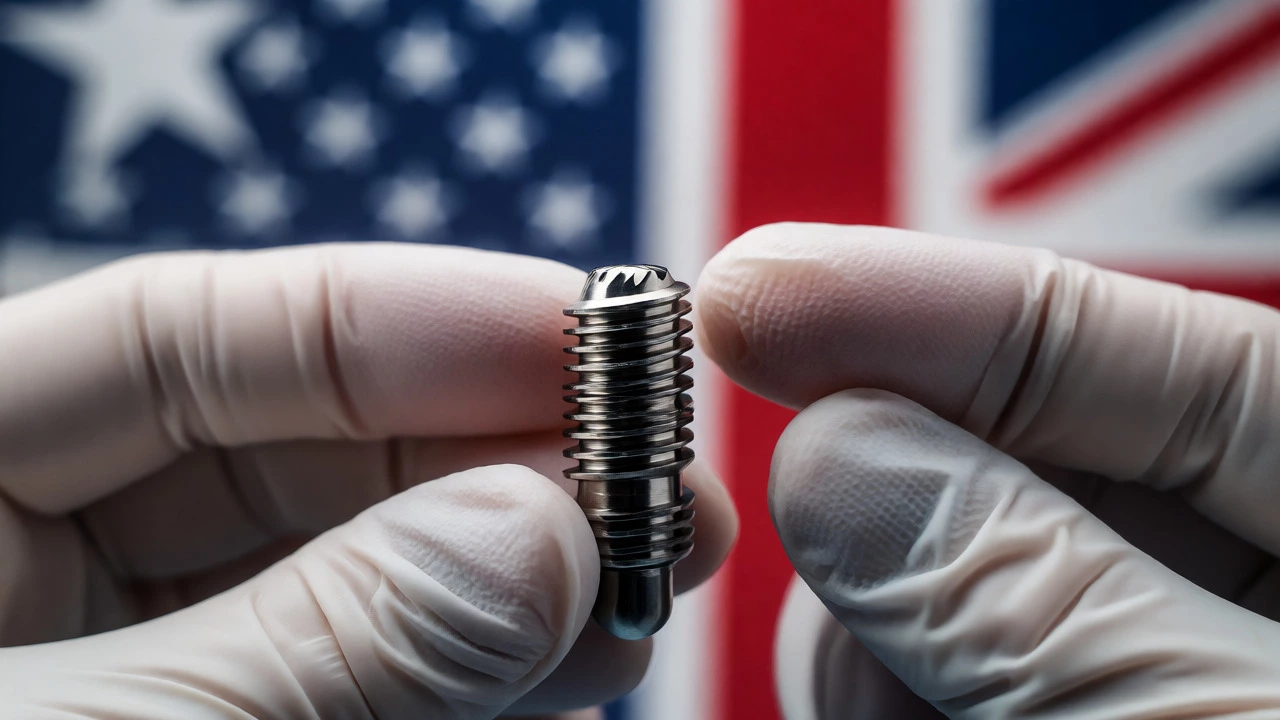
One myth we need to bust immediately: The titanium screws used in the UK are not inherently "higher quality" than those in the US. Both countries rely on global manufacturers like Straumann, Nobel Biocare, and Zimmer Biomet. These are Swiss, Swedish, and American companies respectively. Their products are sold worldwide.
What differs is the skill of the clinician placing them. Studies consistently show that surgical precision matters far more than the brand of the screw. A skilled surgeon in Arizona using a mid-range implant will outperform a rushed practitioner in London using a premium brand. When choosing a provider, ask about their annual volume of implants placed. High-volume surgeons tend to have lower complication rates.

Which System Should You Choose?
If you live in the US, switching to the UK system permanently isn’t practical for most people due to visa and residency requirements. But understanding the differences helps you navigate your own options.
Choose the US approach if:
- You value speed and convenience above all else.
- You have good dental insurance that covers diagnostics and cleanings.
- You prefer having a direct relationship with your provider without bureaucratic referrals.
Consider the UK model (or European alternatives) if:
- You are already living in the region or have dual citizenship.
- You are willing to wait longer for non-urgent procedures to save money.
- You have a chronic condition requiring frequent, low-cost maintenance visits.
For the average person, the "best" care is the one you can afford consistently. Neglecting oral health because of cost is the biggest risk factor in both countries. A missing tooth leads to bone loss, shifting teeth, and digestive issues. Whether you pay $3,000 in Chicago or £2,500 in Leeds, delaying treatment usually ends up costing more in the long run.
Frequently Asked Questions
Does the NHS cover dental implants?
Generally, no. The NHS considers dental implants to be cosmetic unless there is a specific medical necessity, such as after jaw reconstruction or for patients with severe congenital conditions. Most patients in the UK pay privately for implants, although some Clinical Commissioning Groups may fund them in exceptional cases.
Is dental care free in the UK?
No, dental care is not entirely free in England. Patients pay band fees for treatments. Scotland, Wales, and Northern Ireland have different structures, but even there, complex treatments like implants are rarely fully covered. Free care is mostly limited to children, pregnant women, and those on certain benefits.
Are US dentists better trained than UK dentists?
Training pathways differ but are rigorous in both countries. US dentists undergo four years of undergraduate study followed by four years of dental school. UK students enter dental school directly after secondary education for five to six years. Specialization requires further postgraduate training in both regions. There is no evidence suggesting one country's dentists are universally superior; individual skill varies widely.
Can I use my US dental insurance in the UK?
Most US dental insurance plans do not cover treatment received outside the United States. Some international plans offer partial reimbursement, but you would likely need to pay upfront and claim back. Always check your policy details before traveling for treatment.
How long do dental implants last?
With proper care, the titanium implant fixture itself can last a lifetime. However, the crown attached to it may need replacement every 10-15 years due to wear and tear. Success rates exceed 95% over ten years for healthy non-smokers in both the UK and US.