Chronic Pain Relief Calculator
How Effective Is Your Pain Management?
Research shows combining multiple treatment approaches gives the best results. This tool calculates your potential pain reduction based on the evidence-backed strategies discussed in the article.
Your Estimated Pain Reduction
With treatment pillars engaged, you could see up to reduction in pain intensity.
When you’ve lived with chronic pain for months or years, you don’t care about fancy labels or trending remedies. You just want to know: what actually works? Not what’s marketed on TV. Not what your cousin swears by. Not what worked for someone else. What works for you - right now, reliably, safely?
The answer isn’t a single pill. It’s not one magic shot. And it’s definitely not opioids, no matter what you’ve been told.
The No. 1 proven, sustainable, and widely recommended treatment for chronic pain is multimodal pain management. That means combining several evidence-backed approaches - not just one - to target pain from multiple angles. This isn’t theory. It’s what leading medical groups like the CDC, the American College of Physicians, and the Mayo Clinic have been pushing for over the last decade.
Why There’s No Single ‘Magic Bullet’
Chronic pain isn’t a broken bone. It’s not an infection you can cure with antibiotics. It’s a complex condition where your nervous system gets stuck in overdrive. Even after the original injury heals, your brain keeps signaling pain. That’s why treating it with just one tool - like a pill - rarely lasts.
Studies show that relying only on painkillers, even NSAIDs like ibuprofen or prescription drugs like gabapentin, leads to diminishing returns. Over time, your body adapts. You need more. Side effects pile up. And the pain? It often gets worse.
A 2023 review of over 120 clinical trials found that patients who used only medication had a 68% higher chance of worsening pain after six months compared to those who used a mix of therapies. That’s not a small difference. That’s a red flag.
The Four Pillars of Effective Chronic Pain Relief
The most successful pain management plans rest on four pillars. Skip any one, and your results drop dramatically.
- Physical therapy and movement
- Cognitive behavioral therapy (CBT)
- Medication (used wisely)
- Self-management strategies
Let’s break them down.
1. Physical Therapy and Movement
Yes - moving when you hurt sounds crazy. But staying still makes pain worse. Muscles stiffen. Joints freeze. Nerves get more sensitive.
Physical therapy isn’t just stretching. It’s graded exposure: slowly, safely, increasing movement to retrain your nervous system. A 2022 study in The Lancet showed that patients with chronic lower back pain who did 12 weeks of tailored physical therapy reduced their pain scores by 57% on average. That’s better than most injections or pills.
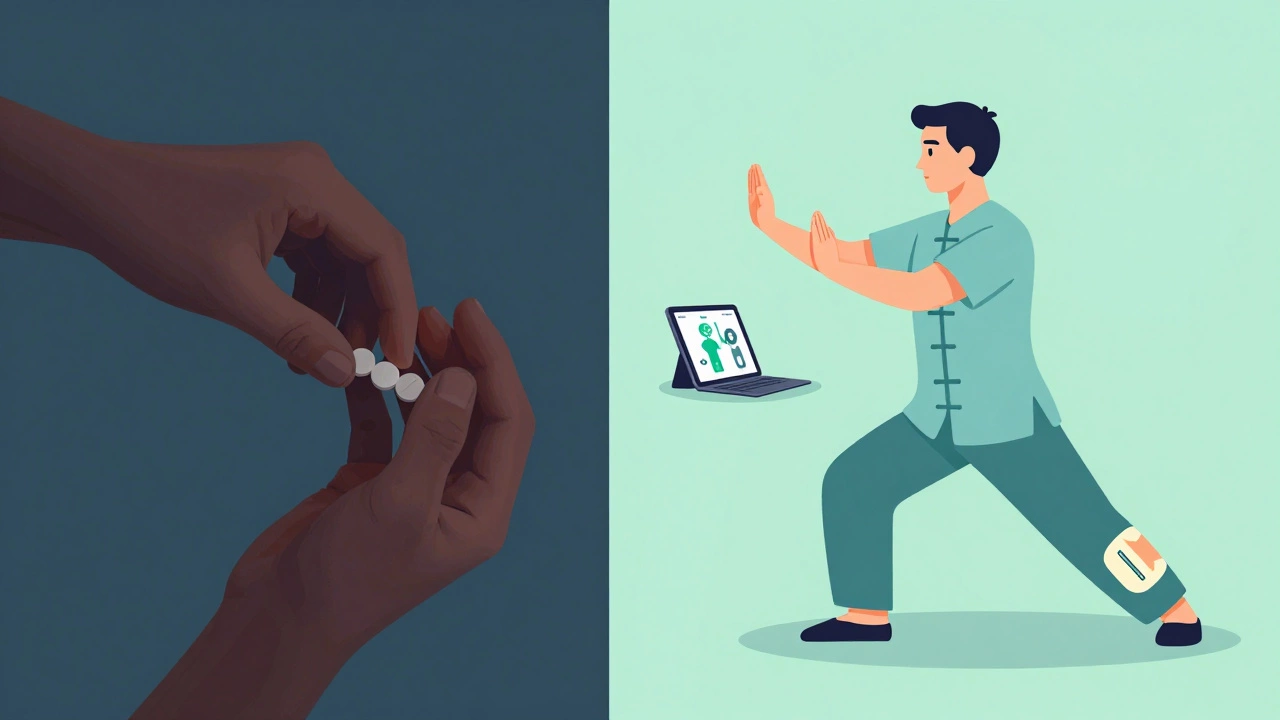
What works? Walking, swimming, tai chi, and resistance training. Not extreme workouts. Consistency matters more than intensity. Even 20 minutes a day, five days a week, makes a measurable difference.
2. Cognitive Behavioral Therapy (CBT)
Pain lives in your brain. CBT helps you change how your brain responds to it.
This isn’t about ‘thinking positive.’ It’s about rewiring how you react to pain signals. CBT teaches you to recognize pain-triggering thoughts (like ‘I’ll never get better’) and replace them with realistic, calming responses (like ‘This hurts, but it’s not getting worse right now’).
Research from Johns Hopkins shows that CBT reduces pain intensity by 40-50% in chronic pain patients - and the effects last years after treatment ends. Unlike pills, CBT doesn’t wear off. It builds resilience.
And you don’t need a therapist every week. Many online CBT programs (like PainCourse or This Way Up) deliver the same results with 8-10 structured sessions. They’re covered by many insurance plans now.
3. Medication - Used Wisely
Medication has a role. But only as a support tool, not the main event.
NSAIDs like naproxen or celecoxib help with inflammation-based pain (arthritis, tendonitis). But they’re not for long-term use - they raise your risk of stomach bleeds and kidney damage.
Antidepressants like duloxetine (Cymbalta) and anticonvulsants like pregabalin (Lyrica) are FDA-approved for nerve pain. They don’t ‘numb’ pain. They calm overactive nerves. Many patients report a 30-40% reduction in pain intensity.
Opioids? They’re not recommended for chronic non-cancer pain anymore. The CDC’s 2022 guidelines say they offer no long-term benefit and carry high risks of addiction, overdose, and even increased pain sensitivity over time (a condition called opioid-induced hyperalgesia).
4. Self-Management Strategies
This is where most people fail - and where the real breakthrough happens.
Self-management means learning to control your pain, not just react to it. That includes:
- Tracking your pain triggers (stress, weather, sleep, activity)
- Setting realistic daily goals (‘I’ll walk 10 minutes today’)
- Practicing sleep hygiene (no screens after 9 p.m., cool dark room)
- Using heat or cold therapy correctly
- Connecting with support groups
A 2024 study in JAMA Network Open found that patients who kept a daily pain journal and adjusted their habits based on patterns reduced their pain medication use by 62% over 12 months - and improved their quality of life more than those on stronger drugs.
What Doesn’t Work (and Why)
Let’s cut through the noise.
Acupuncture? Some people feel better. But large reviews show it’s no better than sham acupuncture (fake needles). Any benefit is likely from placebo or relaxation - not magic points.
Chiropractic adjustments? Fine for short-term back spasms. Not proven for long-term nerve pain or widespread conditions like fibromyalgia.
Supplements like turmeric or CBD? CBD may help a little for some, but most products aren’t regulated. You don’t know what’s in them. Turmeric has weak anti-inflammatory effects - you’d need to eat a tablespoon daily to see anything. Not practical. Not reliable.
Just ‘rest and wait’? That’s how chronic pain becomes permanent. Your body adapts to inactivity. Muscles atrophy. Pain pathways strengthen. You get trapped.

Real-Life Example: Sarah’s Story
Sarah, 52, had degenerative disc disease and sciatica for seven years. She tried steroids, nerve blocks, opioids, and even surgery - nothing stuck. Her pain score was 8/10.
She started multimodal treatment: physical therapy twice a week, CBT via an app, walking 15 minutes every morning, and cutting out caffeine after 2 p.m. She stopped opioids cold turkey with her doctor’s help.
After four months, her pain dropped to 3/10. She stopped taking all prescription pain meds. She’s back gardening, playing with her grandkids, and sleeping through the night.
She didn’t find a miracle. She found a system.
How to Start Today
You don’t need to fix everything at once. Start with one pillar.
- Track your pain for 7 days. Note what makes it better or worse.
- Walk 10 minutes a day. No excuses. Put on your shoes and step outside.
- Try a free CBT app like PainCourse or MindShift. Do one lesson a day.
- Ask your doctor about duloxetine or pregabalin if you have nerve pain. Don’t accept opioids as a first option.
- Join a chronic pain support group - online or local. You’re not alone.
Progress isn’t linear. Some days will be harder. But if you stick with the four pillars, your body will start to relearn safety. Pain will lose its grip.
The No. 1 treatment for chronic pain isn’t a drug. It’s a lifestyle shift backed by science. And it’s available to you right now - no prescription needed for the most powerful parts.
Is there a single best medication for chronic pain?
No. There’s no single best medication. NSAIDs help with inflammation, but aren’t safe long-term. Antidepressants like duloxetine and anticonvulsants like pregabalin work for nerve pain, but only reduce intensity by 30-50%. Opioids are not recommended for chronic non-cancer pain due to high risks and no long-term benefit. Medication should always be part of a broader plan - not the main treatment.
Can exercise make chronic pain worse?
Not if it’s done correctly. Avoiding movement makes pain worse over time. Gentle, consistent activity - like walking, swimming, or tai chi - helps retrain your nervous system. Physical therapists design programs to gradually increase movement without triggering flare-ups. The key is consistency, not intensity.
How long does it take to see results from non-medication treatments?
Most people start noticing small improvements in 4-6 weeks. Significant changes - like reduced pain intensity or better sleep - usually take 3-6 months. This isn’t quick fix territory. It’s a rebuild. But the results last far longer than any pill.
Is CBT really helpful for physical pain?
Yes. Chronic pain isn’t just physical - it’s neurological. CBT helps your brain stop overreacting to pain signals. Studies show it reduces pain intensity by 40-50% and improves daily function more than medication alone. It doesn’t erase pain, but it changes how you experience it.
What should I ask my doctor about chronic pain?
Ask: ‘What’s my pain type - nerve, inflammatory, or musculoskeletal?’ ‘Can we try physical therapy and CBT before stronger meds?’ ‘Are there non-opioid options that work for my condition?’ ‘Can you refer me to a pain specialist?’ Don’t accept ‘take this pill’ as the only answer.