
Private Health Insurance Cost Calculator
Calculate Your Health Insurance Costs
Find out how much private health insurance could cost you in England based on your personal situation.
Estimated Annual Cost
Based on your selections, this is your estimated annual cost.
Private health insurance costs in England vary significantly based on your individual situation. The NHS covers most essential care for free, but private insurance is often used to reduce waiting times for non-emergency procedures.
These estimates include the average costs described in the article: £500-£900 for basic, £1,000-£1,800 for standard, and £2,000-£4,000+ for comprehensive plans.
Most people in England don’t pay for health insurance at all. That’s because the NHS covers nearly all essential medical care for free at the point of use. But if you’re wondering how much people pay for private health insurance in England, the answer isn’t simple-it depends on your age, health, location, and what you want covered.
What most people don’t realize about health insurance in England
The NHS isn’t just a public service-it’s a tax-funded system. Everyone who lives and works in England pays for it through income tax and National Insurance contributions. You don’t get a bill for seeing your GP, getting an X-ray, or having surgery in a hospital. That’s why over 98% of the population relies on the NHS for their day-to-day healthcare needs.
Private health insurance in England isn’t about replacing the NHS. It’s about speed and choice. People buy it to avoid long waiting lists for non-emergency procedures like hip replacements, cataract surgery, or specialist consultations. It’s also used for private rooms, access to newer treatments, or seeing a specific consultant.
How much does private health insurance actually cost?
As of 2026, the average annual premium for an individual in England is around £1,500. But that number can swing wildly. A healthy 25-year-old living in Manchester might pay as little as £700 per year. A 55-year-old in London with a history of high blood pressure could pay over £3,000.
Here’s a rough breakdown of what you can expect:
- Basic plan: Covers hospital treatment only. Costs £500-£900/year. No outpatient care, no dental, no mental health.
- Standard plan: Adds outpatient visits, diagnostics, and some mental health. Costs £1,000-£1,800/year.
- Comprehensive plan: Includes dental, optical, physiotherapy, and alternative therapies. Costs £2,000-£4,000+/year.
Family plans exist too. A couple with two kids under 18 might pay £3,500-£5,500 annually for full coverage. Premiums rise sharply after age 50. By 65, some policies double or triple in price.
Who actually buys private health insurance?
Only about 10-12% of the population in England has private health insurance. Most of them are:
- Employees with employer-sponsored coverage (about 60% of policyholders)
- High-income earners who want faster access
- People with chronic conditions who’ve had long NHS waits
- Expats or retirees who moved from countries with private systems
Employers often pay part or all of the premium as a benefit. In London and the South East, it’s common for tech and finance companies to include private health insurance in their packages. Outside those areas, it’s rare.
What’s not covered by private insurance
Even if you pay for private insurance, it doesn’t cover everything. Most policies exclude:
- Pre-existing conditions (unless you’ve been symptom-free for 2-5 years)
- Chronic conditions like diabetes or arthritis
- Emergency care (you still go to A&E if needed)
- Long-term care or nursing homes
- Dental and optical (unless you pay extra for them)
Some insurers will cover you for a condition after a waiting period. For example, if you had a hernia repaired privately two years ago and haven’t had issues since, you might be eligible for coverage. But if you’re still getting treatment for it, you’re out of luck.
Why some people still choose private insurance
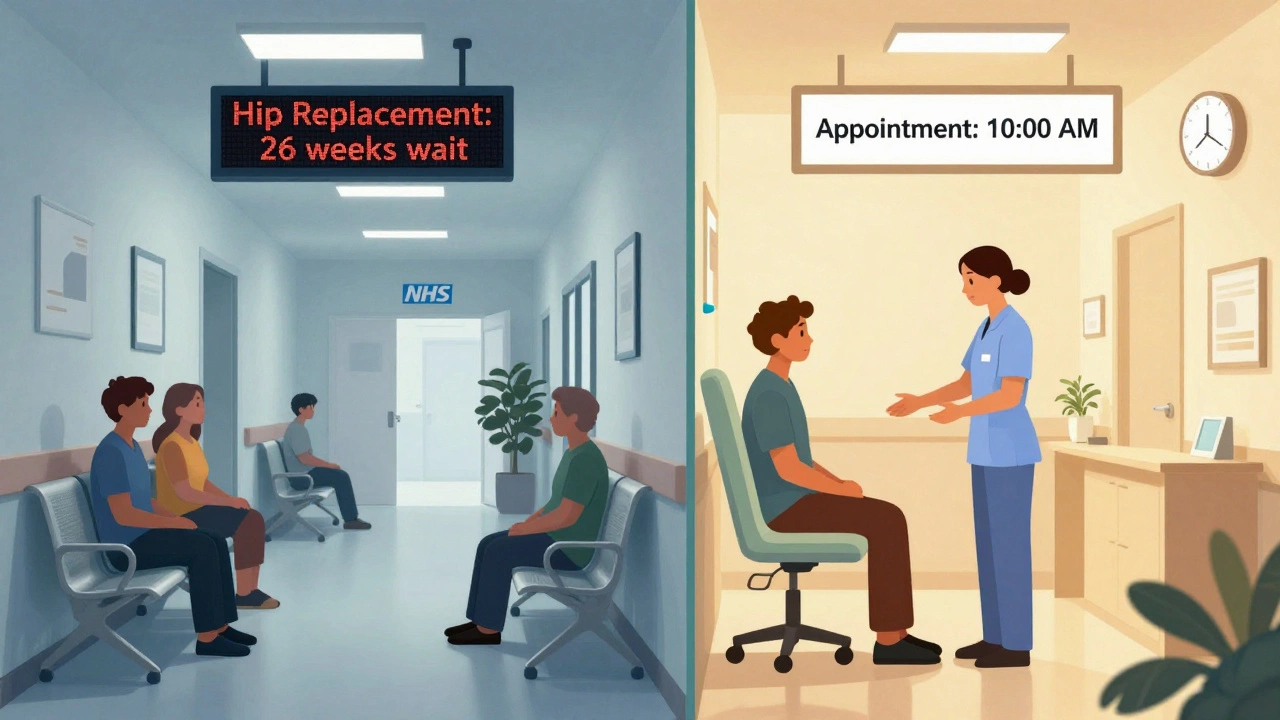
It’s not about better care-it’s about faster care. The NHS waits for non-urgent procedures have gotten longer. In 2025, the average wait for a hip replacement in England was 26 weeks. In private hospitals, you can often get the same surgery in under 4 weeks.
Private hospitals also offer more comfort. Single rooms, flexible visiting hours, and the ability to choose your surgeon matter to some people. For others, it’s peace of mind. If you’ve been on a waiting list for six months and your pain is getting worse, private insurance gives you a way out.
There’s also the perception of quality. Some believe private hospitals have newer equipment or more experienced staff. That’s not always true. Many NHS hospitals have world-class surgeons and technology. But perception drives demand.
What happens if you can’t afford private insurance?
You don’t have to. The NHS is still there. If you need surgery, you’ll get it-eventually. If you’re in pain, you can still see your GP, get referrals, and be placed on waiting lists. The system is designed to prioritize based on clinical need, not ability to pay.
Some people use a hybrid approach: they stay on the NHS for everything except one procedure they’re desperate to get done quickly. For example, someone might wait a year for a knee operation on the NHS, then pay £5,000 privately to have it done sooner. It’s not cheap, but it’s a calculated trade-off.

Is private health insurance worth it?
For most people, no. If you’re under 40, healthy, and don’t mind waiting a few months for non-emergency care, the cost doesn’t justify the benefit. The NHS does a good job. You’re already paying for it through taxes.
But if you’re over 50, have a family history of conditions that need early intervention, or work in a high-stress job where time matters, private insurance can be a smart investment. It’s not about avoiding the NHS-it’s about having options when the NHS can’t move fast enough.
One thing to watch: premiums rise every year. Many people sign up in their 30s thinking they’ll keep it forever. By their 50s, they can’t afford it anymore. Some drop coverage and find themselves back on NHS waiting lists-often worse off than if they’d never tried private care.
Alternatives to private insurance
Not everyone wants or needs a full insurance policy. There are other ways to pay for faster care:
- Self-pay packages: Many private hospitals offer fixed-price deals for common procedures. A knee replacement might cost £7,500 outright-no insurance needed. You pay upfront, get the surgery, and go home.
- Health cash plans: These cost £10-£20/month and give you cash back for GP visits, dental checkups, or physio sessions. Not insurance, but helps with small costs.
- Employer schemes: Some companies offer discounted private consultations or access to online doctors without full insurance.
These options are cheaper and more flexible. You only pay when you use them. No monthly premiums. No exclusions. Just pay-as-you-go for the care you need.
Final thought: You’re already paying
Everyone in England pays for healthcare. The question isn’t whether you pay-it’s how. If you’re working and earning above the tax threshold, you’re already funding the NHS. Private insurance is an add-on, not a replacement.
Don’t buy it because you think the NHS is broken. It’s not. It’s stretched, yes-but it still saves lives every day. Buy private insurance only if you need speed, choice, or comfort-and if you can afford the long-term cost.