UK Healthcare Cost Calculator
Estimated UK Healthcare Costs
If you’re a US citizen planning a trip to the UK-whether it’s for vacation, work, or even a long-term move-you’ve probably wondered: Can I get free healthcare in the UK? The short answer is: sometimes, but not the way you might expect. The UK’s National Health Service (NHS) offers healthcare that’s free at the point of use, but that doesn’t mean everyone gets it automatically. Rules change depending on why you’re there, how long you’ll stay, and whether you’re covered under international agreements.
What Does ‘Free Healthcare’ Actually Mean in the UK?
The NHS isn’t free because it costs nothing-it’s free because it’s paid for through taxes. If you’re a legal resident in the UK, you’re entitled to most NHS services without paying upfront. But if you’re visiting from the US, you’re not automatically part of that system. Emergency care is always available, but non-emergency treatment? That’s where things get complicated.
For example, if you break your ankle while hiking in the Lake District, you’ll be treated in the emergency room. No one will ask for your credit card. But if you show up three days later for a follow-up appointment or need a prescription for painkillers, you could be charged. The NHS doesn’t turn people away in emergencies, but it does bill visitors for non-emergency services after the fact.
Who Gets Free Treatment as a Visitor?
Not all visitors are treated the same. The UK has reciprocal healthcare agreements with certain countries, mostly in Europe. The US is not one of them. That means US citizens don’t automatically qualify for free NHS care just because they’re from a wealthy country.
There are a few exceptions:
- If you’re visiting on a visa that grants you the right to reside in the UK for more than six months (like a work or study visa), you’ll need to pay the Immigration Health Surcharge (IHS). Once you pay that, you get full NHS access-same as a UK resident.
- If you’re pregnant and visiting, you’ll get maternity care free of charge, even if you’re a tourist. But any follow-up care for complications after birth may be billed.
- If you’re from a country with a reciprocal agreement (like Australia or New Zealand), you can use your national health card. Americans don’t have this option.
So if you’re just backpacking across Scotland or on a two-week holiday in London? You’re not covered. And you won’t be told that until you get a bill months later.
What Happens If You Need Non-Emergency Care?
Let’s say you have a persistent cough and decide to see a GP. In the UK, you’d normally register with a local practice. But as a visitor, you can’t register unless you’re staying over three months. So you’d go to a walk-in center or urgent care clinic.
Here’s the catch: even if you’re treated, you’ll likely get a bill. The NHS charges overseas visitors 150% of the national cost for non-emergency services. That means a simple consultation that costs £25 for a UK resident could cost you £37.50. A blood test? £120. An MRI? Up to £1,200.
And it doesn’t stop there. If you’re prescribed medication, you’ll pay the full cost-no discounts. A month’s supply of antibiotics? Around £10. A prescription for asthma inhalers? Over £50. No NHS exemptions for tourists.

What About Hospital Stays?
Hospital treatment is where things get expensive fast. If you’re admitted for an accident or sudden illness, you’ll be treated immediately. But after you’re discharged, the hospital’s billing department will send you an invoice. Many Americans are shocked to find they owe thousands-even for a short stay.
In 2024, the NHS collected over £2 billion from overseas visitors. That’s up 40% since 2020. Most of that came from the US, Canada, and Australia. Why? Because people assume healthcare is free everywhere. It’s not. And the NHS doesn’t wait for you to pay before treating you-they bill later, often after you’ve returned home.
Why Doesn’t the US Have a Reciprocal Agreement?
The UK has reciprocal agreements with countries that have universal healthcare systems similar to its own. The US doesn’t. That’s because the US system is private, expensive, and doesn’t guarantee coverage for everyone. The UK government doesn’t want to subsidize American healthcare costs.
There’s also a legal barrier: US law doesn’t require private insurers to cover medical care abroad. So even if the UK offered free care to Americans, most US insurance plans wouldn’t pay for it anyway. That leaves travelers exposed.
What Should a US Citizen Do Before Traveling?
Don’t rely on luck. Don’t assume your US health insurance covers you overseas. Most plans don’t. Medicare definitely doesn’t. Medicaid doesn’t. Even high-end private plans like Blue Cross PPO often only cover emergencies, and even then, with high deductibles and limited provider networks.
Here’s what you need to do:
- Buy travel insurance that includes medical coverage. Look for plans that cover emergency hospitalization, evacuation, and repatriation.
- Check the policy limits. Aim for at least $100,000 in medical coverage. For longer trips, go for $250,000.
- Make sure it covers pre-existing conditions. Many plans exclude them unless you buy a waiver.
- Carry proof of insurance with you. Keep a digital copy and a printed copy.
- Know how to access care. In the UK, dial 999 for emergencies. For urgent non-emergency care, call 111 or visit a walk-in center.
Travel insurance costs between $50 and $200 for a two-week trip. That’s cheaper than one night in a UK hospital. And if you need surgery or a CT scan, it could save you tens of thousands.
What If You’re Moving to the UK Long-Term?
If you’re relocating for work, study, or family, the rules change. You’ll need to apply for a visa. Most long-term visas require you to pay the Immigration Health Surcharge (IHS)-currently £776 per year for adults, £582 for children under 18. Once you pay that, you get full NHS access, including GP visits, prescriptions, and hospital care.
But here’s the catch: you can’t use the NHS until your visa is approved and you’ve paid the IHS. That means if you arrive and get sick before your paperwork clears, you’re on your own. Plan ahead. Pay the IHS before you leave. Keep your payment receipt.
Also, don’t assume your US insurance will cover you once you’re settled. Once you’re a UK resident, you’re expected to use the NHS. Most US insurers won’t pay for care you receive in the UK.
Real Stories: What Happens When People Don’t Plan
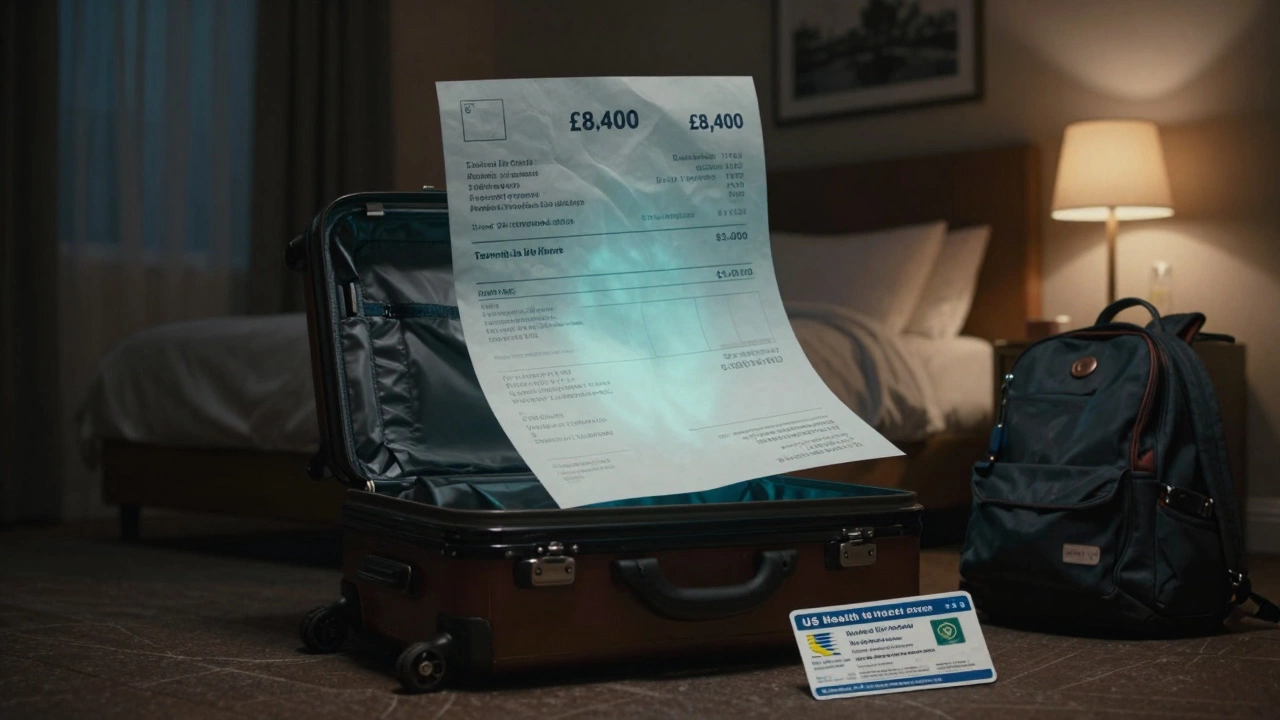
One man from Texas visited London for a business trip. He developed appendicitis. He went to A&E, got surgery, and spent three days in the hospital. He returned home without paying a penny-until he got a bill for £8,400 six months later. He didn’t have travel insurance. His US plan didn’t cover overseas care. He had to take out a loan.
A student from Florida came to study in Manchester. She didn’t pay the IHS right away because she thought her university insurance was enough. When she broke her wrist, she was charged £1,200 for X-rays and a cast. Her plan only covered $500. She ended up paying the rest out of pocket.
These aren’t rare cases. They happen every day.
Bottom Line: Free Healthcare? Not for You-Unless You Pay First
The UK’s NHS is generous. But it’s not a global safety net. As a US citizen, you’re not entitled to free care just because you’re standing on British soil. Emergency treatment? Yes. Everything else? You’ll pay-or you’ll risk a surprise bill months later.
If you’re visiting: buy travel insurance. Don’t gamble with your health or your wallet.
If you’re moving: pay the IHS before you arrive. Register with a GP as soon as possible. Don’t wait.
Healthcare isn’t free in the UK for Americans. But with the right preparation, you can make sure it doesn’t cost you more than you planned.
Can a US citizen get free emergency care in the UK?
Yes. The NHS provides emergency treatment to anyone, regardless of nationality or insurance status. This includes ambulance transport, A&E visits, surgery, and hospital admission for life-threatening conditions. But non-emergency follow-up care, prescriptions, and tests after the emergency may be billed.
Do US health insurance plans cover medical care in the UK?
Most don’t. Medicare and Medicaid don’t cover care outside the US. Even private plans like UnitedHealthcare or Cigna often only cover emergencies and have low limits abroad. Always check your policy before traveling. Many require you to pay upfront and then file for reimbursement-something you can’t do if you’re hospitalized and can’t pay.
How much does travel insurance cost for a trip to the UK?
For a two-week trip, basic travel insurance with medical coverage typically costs between $50 and $150. Plans with higher coverage limits ($100,000-$250,000), trip cancellation, or pre-existing condition waivers may cost $150-$250. It’s a small price compared to a single hospital bill.
What is the Immigration Health Surcharge (IHS) for the UK?
The IHS is a fee paid by most long-term visa holders to access the NHS. As of 2026, it’s £776 per year for adults and £582 for children under 18. It’s paid upfront when you apply for your visa. Once paid, you get the same NHS access as a UK resident, including free GP visits and prescriptions (with a small charge for some medications).
Can I use my US Medicare in the UK?
No. Medicare does not cover healthcare services received outside the United States, except in very limited cases (like emergencies near the Canadian or Mexican border). If you’re a Medicare beneficiary traveling to the UK, you must rely on private travel insurance or pay out of pocket.
What happens if I don’t pay a UK healthcare bill as a US citizen?
The NHS may send the bill to a collection agency, which could report it to credit bureaus. In some cases, they may block your future visa applications or deny you entry if you return to the UK. While they rarely pursue legal action across borders, unpaid bills can cause problems with future travel or immigration.