Telehealth App Cost Estimator (2026)
Select your requirements below to estimate the initial build cost and monthly operational expenses. Prices are estimates for the Irish/European market in 2026.
1. Project Scope
2. Key Features & Integrations
Check all that apply to add to base cost:
3. Compliance & Security
Estimated Costs
Monthly Operational Estimates
You have the idea. You see patients stuck in waiting rooms, doctors burning out from admin, and patients craving convenience. You want to build the next big Telehealth App that connects them all. But then you hit the wall: How much does it actually cost to build one? Is it £5,000 or £500,000? The answer is frustratingly vague until you break down exactly what you are building.
Think of it like buying a car. A second-hand hatchback costs differently than a new electric SUV with self-driving features. Your telehealth platform is no different. In 2026, the market has matured. Patients expect seamless video calls, instant prescriptions, and integrated wearables. This article cuts through the noise to give you real numbers for Ireland and the broader European market, so you can plan your budget without guessing.
The Quick Answer: What Are We Talking About?
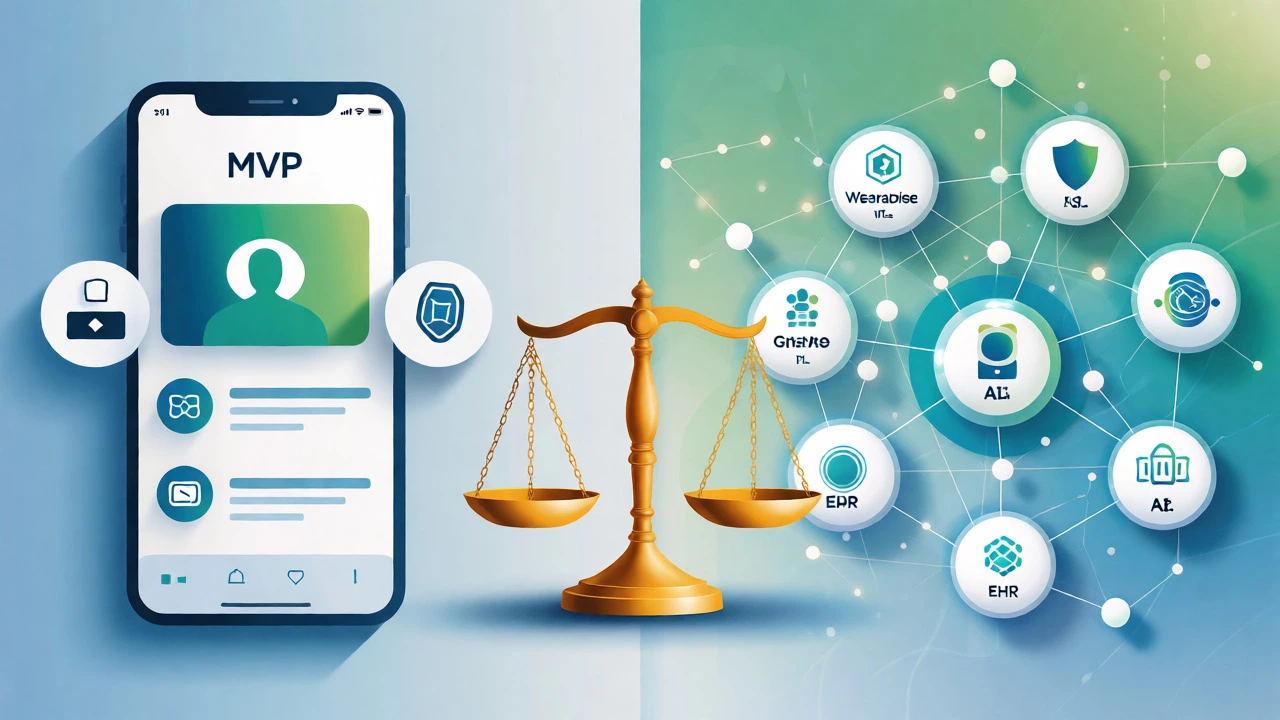
| App Complexity | Key Features | Estimated Cost Range (EUR) | Timeline |
|---|---|---|---|
| MVP (Minimum Viable Product) | Video chat, booking, basic profiles, text chat | €35,000 - €60,000 | 3-4 months |
| Mid-Level Platform | Adds e-prescriptions, payment gateway, EHR integration, admin dashboard | €70,000 - €120,000 | 5-7 months |
| Enterprise Solution | AI triage, wearable data sync, multi-specialty support, custom analytics, HIPAA/GDPR compliance audits | €150,000 - €300,000+ | 8-12+ months |
These figures cover design, development, testing, and initial deployment. They do not include ongoing server costs, marketing, or medical staff salaries. If you are starting from scratch, assume the lower end of these ranges only if you strip features aggressively. Most founders underestimate the complexity of online doctor consultation workflows by about 30%.
Why Prices Vary So Wildly
It’s not just about how many screens you need. It’s about the logic behind those screens. Let’s look at the three biggest cost drivers.
1. Compliance and Security (The Non-Negotiable)
If you are operating in Ireland or the EU, you are bound by GDPR. If you touch US markets, you need HIPAA compliance. This isn’t just a checkbox; it dictates your architecture. Data must be encrypted at rest and in transit. You need audit logs for every access to patient records. You might need specific certifications for your cloud provider. Building this into the foundation is cheaper than retrofitting it later. Expect compliance-related engineering to add 15-20% to your total bill. Ignoring this can lead to fines that dwarf your development budget.
2. Video Technology Integration
Do you build video calling from scratch using WebRTC? Or do you plug in a service like Twilio or Agora? Building from scratch gives you control but requires deep expertise in network protocols to ensure calls don’t drop when someone moves from Wi-Fi to 4G. Using an API-based solution speeds up development significantly but adds per-minute usage fees. For a mid-sized app, third-party APIs often save money initially but require careful monitoring as user volume scales.
3. Integration with Existing Health Systems
A standalone app is easy. An app that talks to a hospital’s Electronic Health Record (EHR) system is hard. Standards like HL7 FHIR help, but every hospital implements them slightly differently. If your app needs to pull patient history from a GP’s system or push prescription data to a pharmacy chain, you are paying for complex middleware development. This is where budgets explode. Decide early: will you integrate deeply, or will you let users manually upload documents?
Breakdown by Feature Set
Let’s dissect the typical modules. Knowing which ones you need helps you trim the fat.
- User Roles: Patient, Doctor, Admin, Pharmacy. Each role needs a distinct interface. Adding a "Care Coordinator" role increases complexity exponentially because they manage multiple patients and providers simultaneously.
- Booking System: Simple calendar slots are cheap. Dynamic scheduling that accounts for doctor time zones, holidays, and emergency cancellations is expensive.
- Consultation Interface: Basic video is standard. Adding screen sharing for reviewing X-rays or live vitals from connected devices adds significant dev time.
- Payments: Integrating Stripe or PayPal is straightforward. Handling insurance claims, partial payments, and refunds automatically is a heavy lift.
- Notifications: Push notifications for appointment reminders seem simple. Ensuring they comply with consent rules and don’t spam users requires smart backend logic.
Ongoing Costs: The Iceberg Beneath the Surface
Development is a one-time expense. Running a telehealth platform is a monthly commitment. Many startups fail here because they forget operational costs.
| Cost Item | Estimated Monthly Cost (EUR) | Notes |
|---|---|---|
| Cloud Hosting (AWS/Azure) | €500 - €2,000 | Scales with active users and data storage. |
| Video API Usage | €300 - €1,500 | Depends on minutes used. Volume discounts apply. |
| Maintenance & Updates | €1,000 - €3,000 | Bug fixes, OS updates, security patches. |
| Customer Support | Variable | Often overlooked. Needs human agents for tech issues. |
| Compliance Audits | Amortized €200/month | Annual GDPR/HIPAA checks. |
Note that maintenance is not optional. iOS and Android update their operating systems twice a year. If your app breaks on the latest iPhone, you lose trust instantly. Budget for continuous improvement, not just "keeping the lights on."
Build vs. Buy: The White Label Option
Not everyone needs a custom-built app. Several vendors offer white-label telehealth platforms. You pay a licensing fee plus setup costs. This route gets you to market in weeks, not months. However, you sacrifice customization. You cannot tweak the user experience easily, and you are locked into their feature roadmap. For a niche clinic wanting to start quickly, this is smart. For a startup aiming to disrupt the market with unique features, it’s a trap. You’ll eventually outgrow the platform and face costly migration.

Hidden Pitfalls That Blow Up Budgets
After working with several health-tech teams, I’ve seen the same mistakes repeat. Here’s what kills budgets:
- Underestimating QA: Healthcare apps cannot have bugs during a consultation. Testing across different devices and network conditions takes longer than you think.
- Scope Creep: Adding "just one more feature" like AI symptom checking mid-development resets timelines. Freeze your MVP scope strictly.
- Poor UX Design: Doctors are busy. If they can’t book a slot in two clicks, they won’t use it. Investing in professional UX/UI pays off in adoption rates.
- Ignoring Accessibility: Older patients need large fonts and voice navigation. Retrofitting accessibility is harder than designing for it from day one.
How to Save Money Without Cutting Corners
You don’t need to spend half a million euros to launch. Here’s how savvy founders keep costs down:
- Start with Web-First: Build a responsive web app first. It works on any device and is cheaper to develop than native iOS and Android apps. Add mobile wrappers later if needed.
- Use Open Source Components: Frameworks like React Native or Flutter allow code sharing between platforms. Libraries for video chat and authentication can save hundreds of hours.
- Hire Nearshore Teams: Developers in Eastern Europe or Portugal often offer better rates than Dublin or London agencies while maintaining high quality and overlapping time zones.
- Focus on Core Workflow: Strip away everything except: Sign up -> Book -> Consult -> Pay -> Prescription. Everything else is a v2 feature.
Final Thoughts on Your Investment
Building a Telehealth App is an investment in infrastructure. It’s not just software; it’s a regulated medical service delivery channel. The cheapest option rarely ends up being the most cost-effective long-term. Aim for a robust MVP that solves one problem exceptionally well-like fast mental health consultations or quick dermatology reviews. Expand from there. Remember, your competitors aren’t just other apps; they’re existing GP practices adding video links to their websites. Differentiate through speed, ease of use, and specialized care paths.
Can I build a telehealth app for under €20,000?
Yes, but it will likely be a very basic prototype or a heavily customized template. You would miss critical features like secure EHR integration, advanced scheduling, and comprehensive compliance auditing. It might work for a pilot project but rarely scales to thousands of users without significant rework.
Do I need separate apps for doctors and patients?
Usually, yes. The user journeys are vastly different. Patients need simplicity and reassurance. Doctors need efficiency, quick access to records, and billing tools. While you can technically use one app with role-switching, separate interfaces provide a better user experience and reduce cognitive load for both groups.
What is the biggest hidden cost in telehealth development?
Integration with legacy healthcare systems. Connecting to diverse EHR providers, lab results databases, and pharmacy networks often requires custom middleware development that wasn't anticipated in the initial quote. Always allocate a 15-20% contingency buffer for integrations.
Is GDPR compliance included in the development cost?
Good developers build with privacy-by-design principles, which covers technical aspects like encryption and data minimization. However, legal compliance involves policies, consent forms, and data processing agreements. These are legal costs, not just dev costs. Ensure your developer understands GDPR requirements, but hire a lawyer for the paperwork.
How long does it take to launch a compliant telehealth app?
For a solid MVP, expect 3 to 4 months of development. Add 1 month for rigorous security testing and compliance review. Realistically, plan for 4 to 5 months from kickoff to public launch. Rushing this process risks security vulnerabilities that could halt operations.