Breast Implant Cost Comparison Calculator
Compare Your Options
Calculate the total cost of breast implants in the UK versus popular medical tourism destinations. Input your details to see the real picture.
If you're thinking about breast implants and want to save money, you're not alone. Many people in the UK, Ireland, and other high-cost countries look overseas for cheaper options. But the cheapest country isn't always the best choice. The real question isn’t just about price-it’s about safety, results, and what happens if something goes wrong.
Where breast implants cost the least
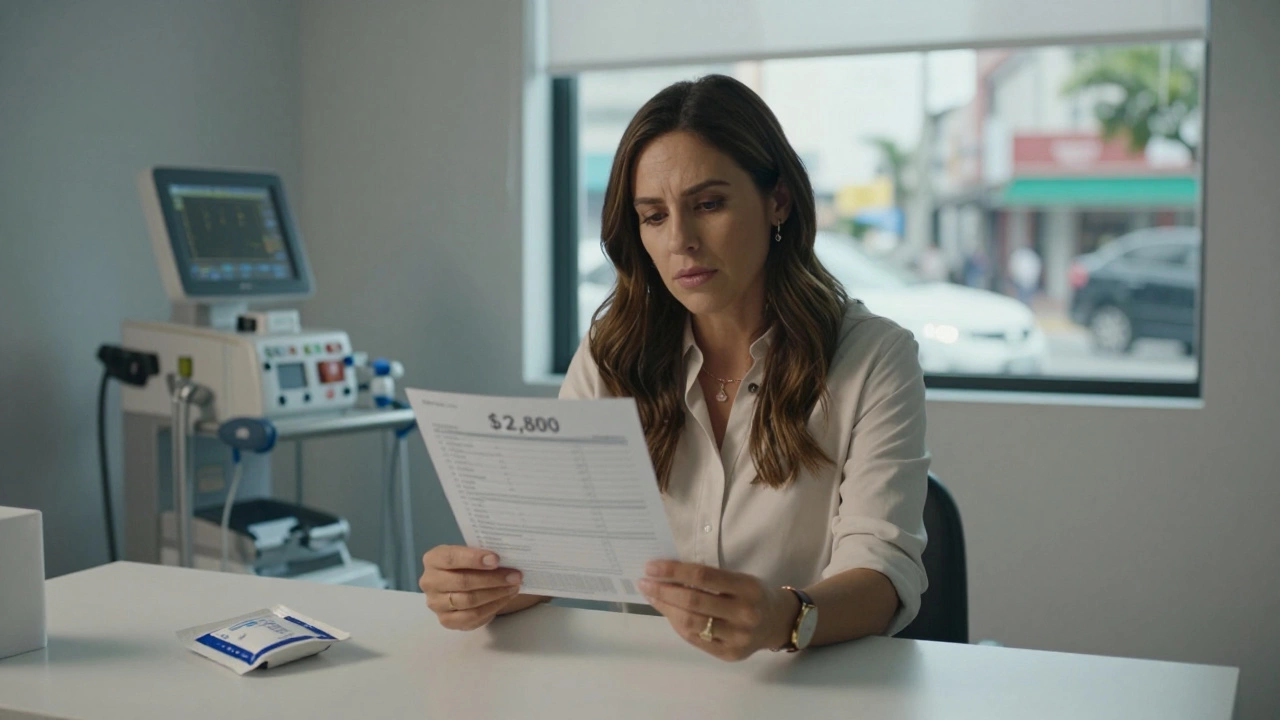
As of 2025, the top three cheapest countries for breast augmentation are Mexico, Poland, and Thailand. Each offers prices far below what you’d pay in the UK, where the average cost for breast implants ranges from £4,500 to £7,000. In Mexico, you can find procedures starting at $2,800 (around £2,200). In Poland, prices begin at €2,500 (£2,100). Thailand offers similar rates, with some clinics advertising packages under $3,000.
Why are these countries so much cheaper? Lower labor costs, fewer regulatory overheads, and high competition among clinics drive prices down. But here’s the catch: you’re not just paying for the surgery. You’re paying for travel, accommodation, recovery time, and potential follow-up care-all things most price lists don’t include.
What’s really included in the price?
A $2,500 quote in Poland might sound like a steal. But check the fine print. Does it include the implants themselves? Many low-cost clinics use cheaper, unbranded implants that aren’t approved by the European Medicines Agency or the FDA. In the UK, surgeons must use implants registered with the MHRA. In Mexico or Thailand, that’s not always the case.
Does the price cover anesthesia? Post-op garments? Pain medication? Follow-up visits? In many cases, these are extra. A clinic in Tijuana might charge $2,800 for the surgery, but then add $500 for implants, $300 for anesthesia, and $200 for a compression bra. Suddenly, you’re at $3,800-and you still haven’t paid for your flight or hotel.
Compare that to the UK, where a £5,000 quote typically includes everything: surgeon’s fee, hospital costs, implants, anesthesia, aftercare, and at least one follow-up. No hidden charges. No surprises.
Surgeon qualifications matter more than price
It’s not just about where you go-it’s who does the surgery. In the UK, all cosmetic surgeons must be registered with the General Medical Council (GMC) and listed on the Specialist Register for Plastic Surgery. They’ve completed at least six years of specialist training after medical school.
In some countries, the rules are looser. A doctor might call themselves a “cosmetic surgeon” after a six-month course. There’s no guarantee they’ve performed hundreds of breast augmentations. In fact, a 2023 investigation by the British Association of Aesthetic Plastic Surgeons found that over 40% of patients who had surgery abroad needed revision surgery within two years due to poor technique or complications.
Look for surgeons who are members of the International Society of Aesthetic Plastic Surgery (ISAPS). They follow global standards. Check their before-and-after photos. Ask how many breast implant procedures they do each year. If they can’t tell you, walk away.
Complications are more common abroad
Breast implant surgery is generally safe, but complications happen. Capsular contracture, implant rupture, infection, asymmetry-these are risks anywhere. But when you’re overseas, the risks go up.
One patient from Manchester had implants done in Turkey for £2,200. Six months later, she developed a severe infection. She couldn’t get her original surgeon to respond. She had to fly back to the UK for emergency surgery, costing her £4,000 more. Her implants were removed. She still has scarring and nerve damage.
Complications abroad often mean delayed treatment. Language barriers, unfamiliar healthcare systems, and lack of medical records make it harder to get help. In the UK, if something goes wrong, you can walk into a hospital and your records are digital and accessible. Overseas? Not so much.

Warranty and aftercare are almost always void
Most reputable implant manufacturers-like Mentor, Allergan, and Sientra-offer lifetime warranties on their products. But those warranties only apply if the surgery is performed by a certified surgeon in a licensed facility. If you get implants in a clinic in Tijuana or Manila, your warranty is gone.
That means if your implant ruptures in five years, you’re paying full price for replacement surgery. In the UK, if you have a warranty and your implant fails, the manufacturer often covers the cost of new implants and part of the surgery fee.
Aftercare is another issue. In the UK, you’ll have at least two follow-up appointments. Overseas, you might get a single check-up before you fly home. No one calls to see how you’re healing. No one checks for signs of infection or asymmetry. You’re on your own.
What about travel and recovery time?
You can’t fly home the day after surgery. Most surgeons recommend staying at least 5-7 days for initial recovery. That means adding hotel costs, meals, and time off work. A 7-day trip to Poland might cost you £800-£1,200 in travel and accommodation alone.
And recovery isn’t quick. You’ll need help for the first week. You can’t lift anything heavy. You’ll feel sore, swollen, and tired. If you’re alone in a foreign country, that’s stressful. In the UK, you have family, friends, or home care support nearby.
Hidden costs you can’t ignore
Here’s a realistic breakdown of what a “cheap” breast implant trip might actually cost:
- Surgery in Mexico: $2,800 (£2,200)
- Implants (if not included): $500 (£400)
- Anesthesia: $300 (£240)
- Compression bra: $150 (£120)
- Flight (return): £600
- 7-night hotel stay: £700
- Food and local transport: £300
- Emergency follow-up in UK (if needed): £1,500+
Total: £6,000+
That’s not cheaper than the UK. It’s just riskier.

What about UK payment plans?
Many UK clinics offer 0% interest payment plans. You can spread the cost of a £5,000 procedure over 12-24 months with no extra fees. That’s often cheaper than paying for a trip abroad and dealing with unexpected bills.
Plus, you’re covered by UK consumer law. If something goes wrong, you have legal recourse. Overseas? You’re at the mercy of local laws-and those vary wildly. In some countries, you can’t sue a clinic for medical errors.
When going abroad might make sense
There are exceptions. Some people combine surgery with a vacation-like a long holiday in Poland where they can recover in a quiet countryside retreat. Others have family nearby who can help with recovery. A few surgeons abroad are truly world-class, with UK-trained credentials and international accreditation.
If you’re considering going overseas, do this:
- Verify the surgeon’s credentials with ISAPS or equivalent international bodies.
- Confirm the implants are FDA or CE approved-not generic brands.
- Get a written quote that includes every single cost.
- Ask for references from past UK patients.
- Book a return flight at least 10 days after surgery.
- Arrange a follow-up with a UK surgeon before you leave.
If you can’t answer all of those, it’s not worth the risk.
Bottom line: Cheap isn’t always smart
The cheapest country for breast implants isn’t the best value. It’s the one that gives you safe, predictable results with proper care and support. In 2025, the UK still offers the best balance of quality, safety, and accountability-even if the upfront price is higher.
Don’t let a $2,500 deal blind you to the real cost: your health, your peace of mind, and the possibility of needing a second surgery to fix the first.
Is it safe to get breast implants abroad?
It can be, but only if you do your homework. Many clinics overseas use unapproved implants and unqualified surgeons. Complication rates are higher than in the UK, and follow-up care is often nonexistent. Always check if the surgeon is ISAPS-certified and if the implants are FDA or CE approved.
Why are breast implants cheaper in Mexico or Poland?
Lower labor costs, fewer regulations, and high competition drive prices down. But cheaper doesn’t mean safer. Many clinics use unbranded implants that aren’t approved in the UK or EU. You’re paying less because you’re taking on more risk.
Do UK warranties cover implants done overseas?
No. Major implant manufacturers like Mentor and Allergan only honor warranties if the surgery is performed by a certified surgeon in a licensed facility. Surgery abroad typically voids your warranty, meaning you pay full price for any future repairs or replacements.
What’s the most common problem after getting implants abroad?
Capsular contracture-where scar tissue hardens around the implant-is the most common issue. Infection, asymmetry, and implant rupture are also frequent. Many patients return to the UK needing revision surgery, which costs more than the original procedure.
Can I get a payment plan in the UK for breast implants?
Yes. Most reputable UK clinics offer 0% interest payment plans over 12 to 24 months. This lets you pay in manageable amounts without added fees, making the procedure more affordable without leaving the country.
What should I look for in a UK breast implant surgeon?
Check if they’re on the GMC’s Specialist Register for Plastic Surgery. Ask how many breast augmentations they perform each year. Look for before-and-after photos of real patients. Make sure they explain risks clearly and don’t pressure you into a decision.