Social Security Taxability Estimator
Will Your Benefits Be Taxed?
Based on IRS Combined Income Formula
Enter your financial details to see where you stand regarding the IRS combined income thresholds.
Your results will appear here.
Quick Tip:
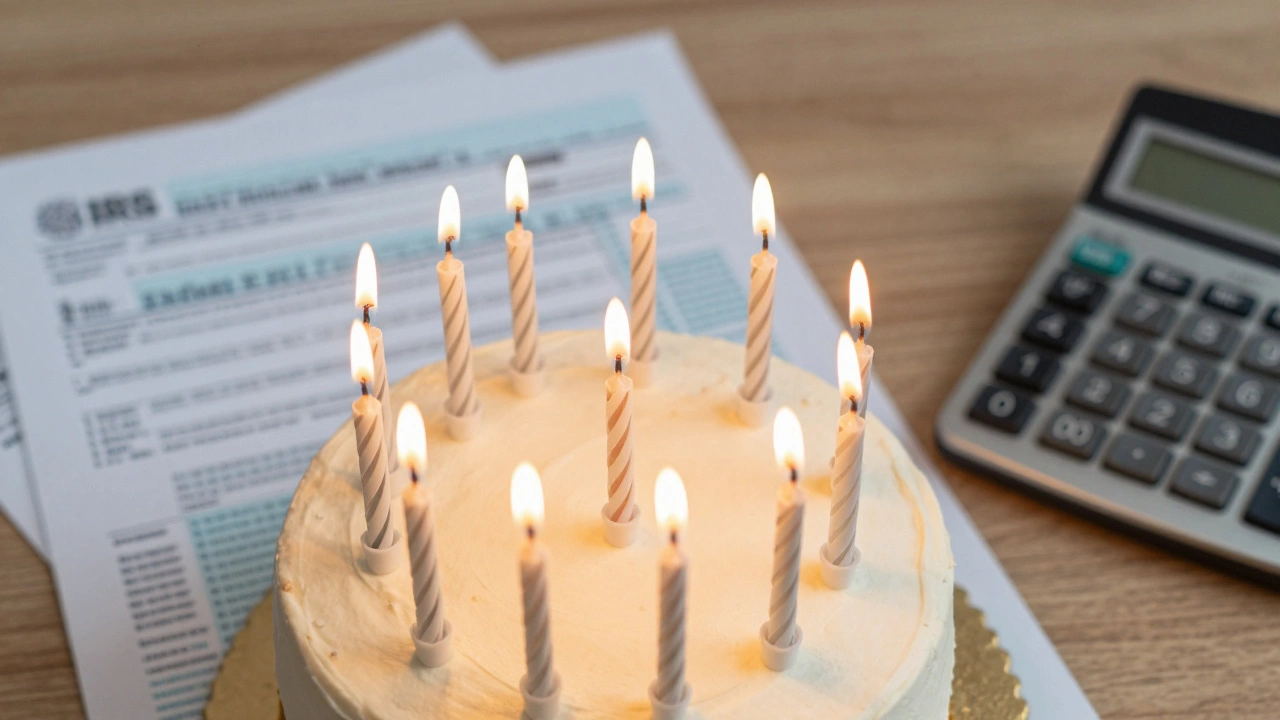
You might have heard a rumor that once you hit a certain age, your government checks suddenly become tax-free. It sounds like a great deal, but here is the cold truth: there is no magic age where Social Security is no longer taxed. Whether you are 67, 82, or 105, the rules for paying taxes on your benefits stay exactly the same. The tax man doesn't care how many candles are on your birthday cake; he cares about how much money you make from other sources.
The Quick Answer: Why Age Doesn't Matter
If you are searching for a specific birthday that triggers a tax exemption, you won't find one. The Internal Revenue Service (IRS) doesn't have an age-based cutoff for taxing benefits. Instead, they use a formula based on your "combined income." This means your total earnings from other sources, plus half of your Social Security benefits, determine if you owe a dime.
For most people, the real question isn't "when" they stop paying taxes, but "if" they ever will. If you live a modest lifestyle with no pension or significant investments, you might never pay taxes on your benefits. But if you have a 401(k) or a part-time job, you might be paying a percentage of your check back to the government for the rest of your life.
| Filing Status | 0% Taxed (Combined Income) | Up to 50% Taxed | Up to 85% Taxed |
|---|---|---|---|
| Individual | Below $25,000 | $25,000 - $34,000 | Above $34,000 |
| Joint Filers | Below $32,000 | $32,000 - $44,000 | Above $44,000 |
How the "Combined Income" Formula Actually Works
To figure out if you'll pay taxes, you need to calculate your combined income. It isn't just the money in your bank account. You take your adjusted gross income, add any non-taxable interest, and then add exactly half of your Social Security benefits. This is the number the IRS looks at to decide your tax bracket.
Let's look at a real scenario. Imagine a retiree, Sarah, who has a small pension of $10,000 a year and receives $20,000 in Social Security. Her combined income would be $10,000 (pension) plus $10,000 (half of her benefits), totaling $20,000. Since she is below the $25,000 threshold for individuals, her Social Security remains tax-free. However, if Sarah started a small consulting business and made an extra $15,000, her combined income would jump to $35,000, pushing her into the bracket where up to 85% of her benefits are taxable.
The Impact of Other Retirement Accounts
Many people forget that withdrawals from a Traditional IRA or a 401(k) count as taxable income. This is where things get tricky. If you take a large lump sum out of your retirement account to pay for a new roof or a medical emergency, you might accidentally push yourself into a higher combined income bracket, making your Social Security benefits taxable for that year.
This creates a "tax torpedo" effect. You might think you're only paying tax on the IRA withdrawal, but that withdrawal effectively "unlocks" your Social Security benefits for taxation. For those managing high prescription costs or chronic health issues, this can be a double hit to the budget. Many seniors find that diverting funds into a Roth IRA-where withdrawals are tax-free-helps keep their combined income low enough to avoid taxing their benefits.

State vs. Federal Taxes
While we've focused on the federal government, you also have to consider your state. The good news is that many states are more generous than the IRS. A significant number of states do not tax Social Security benefits at all, regardless of your income or age. However, some states still do. Since these laws change frequently, it's worth checking your local Department of Revenue every year.
If you move from a state that taxes benefits to one that doesn't, you've effectively given yourself a raise. This is why some retirees migrate to states like Florida or Nevada. It's not just about the weather; it's about keeping more of those monthly checks in their own pockets.
Strategies to Lower Your Taxable Benefits
If you're hovering right on the edge of a tax bracket, there are a few moves you can make. You can't change your age, but you can change how you manage your money. One effective method is "tax bracket management." Instead of taking a huge withdrawal from your Traditional IRA in one year, spread it out over several years to keep your annual combined income below the thresholds.
Another option is increasing your contributions to charitable organizations. While this doesn't change your combined income formula for Social Security taxation, it can lower your overall tax bill, offsetting the cost of the taxes you do owe on your benefits. If you're over 70.5, look into Qualified Charitable Distributions (QCDs). This allows you to send money directly from your IRA to a charity without it ever counting as taxable income, which can prevent your Social Security from being taxed in the first place.

Common Pitfalls and Misunderstandings
One of the biggest mistakes people make is assuming that "taxable" means "taxed at 85%." If the IRS says 85% of your benefits are taxable, it doesn't mean they take 85% of your money. It means 85% of that money is added to your other income and taxed at your normal income tax rate. If your tax rate is 10%, you're only paying 10% on that 85% portion.
Another misconception is that Social Security is the only thing to worry about. For those with high medication expenses, remember that certain medical deductions can lower your adjusted gross income. While this won't always lower your "combined income" for Social Security purposes, it can lower the actual amount of tax you owe at the end of the year.
Does reaching age 70 make Social Security tax-free?
No. Age 70 is significant for maximizing your monthly benefit amount, but it has no impact on whether those benefits are taxed. Taxation is based solely on your combined income, not your age.
What is combined income?
Combined income is your Adjusted Gross Income (AGI) plus non-taxable interest, plus 50% of your Social Security benefits. This figure determines if you fall into the 0%, 50%, or 85% taxable brackets.
Can I avoid taxing my Social Security if I have a pension?
It depends on the size of the pension. If your pension and half of your benefits combined stay below $25,000 (for individuals) or $32,000 (for couples), your benefits remain tax-free. If the pension is larger, you will likely owe taxes.
Will I pay taxes on Social Security if I don't have any other income?
Generally, no. If Social Security is your only source of income and you have no other earnings or taxable investments, your combined income will likely fall below the IRS thresholds, making your benefits tax-free.
Do Roth IRA withdrawals count toward combined income?
No, qualified withdrawals from a Roth IRA are not counted as taxable income. This makes them a powerful tool for keeping your combined income low and avoiding taxes on your Social Security benefits.
Next Steps for Your Financial Plan
If you're worried about the tax hit, start by auditing your income sources. List every pension, rental property, and investment account. If you find you're just over the threshold, talk to a tax professional about shifting your withdrawal strategy. Instead of pulling from a Traditional IRA, see if you have funds in a Roth account or a standard brokerage account where only the capital gains are taxed.
For those struggling with the high cost of living-especially those facing steep healthcare or pharmacy bills-look into the "extra version" of the standard deduction for seniors. The IRS allows people 65 and older to claim a higher standard deduction, which can lower your overall taxable income and give you a bit more breathing room in your monthly budget.