Full Mouth Implant Cost Estimator
Cost Breakdown
Select options to see breakdown.
You’re staring at a mouth full of failing teeth. Maybe they’re loose, maybe they’re rotten, or perhaps you’ve just had enough of dentures slipping around when you try to eat an apple. The dream is simple: get rid of the mess and replace everything with permanent, natural-looking dental implants that feel like your own again. But can you actually have every single tooth pulled out and replaced with screws in one go? And if so, what does that cost in the UK right now?
The short answer is yes, but it’s rarely as straightforward as "pull them all, screw them in." It involves surgery, bone grafting, significant healing time, and a price tag that makes most people wince. Let’s break down exactly how this works, what options exist beyond the basic idea, and whether it’s worth the hassle for you.
The Reality of Full Arch Restoration
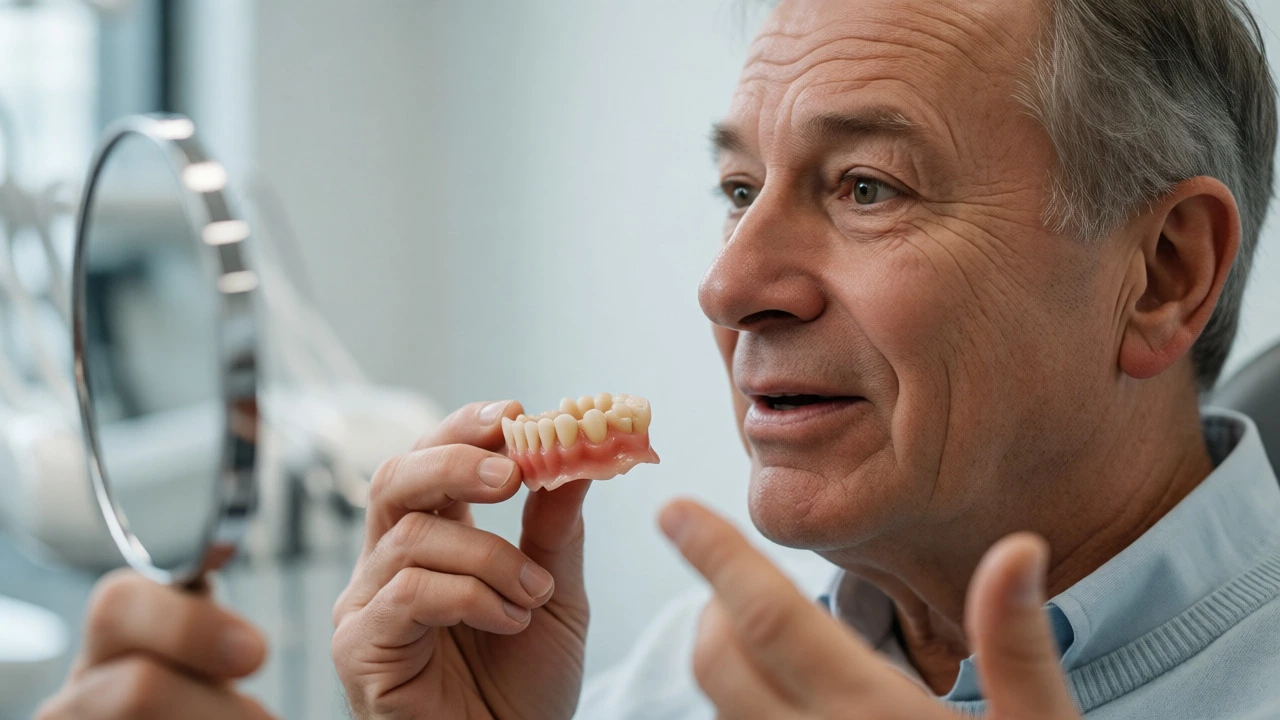
When people talk about replacing "all their teeth," they usually mean restoring the upper arch, the lower arch, or both. This isn't just about aesthetics; it's about function. Traditional removable dentures rest on your gums. Over time, your jawbone shrinks because there are no tooth roots to stimulate it. This causes the "witch’s chin" look and makes dentures fit poorly.
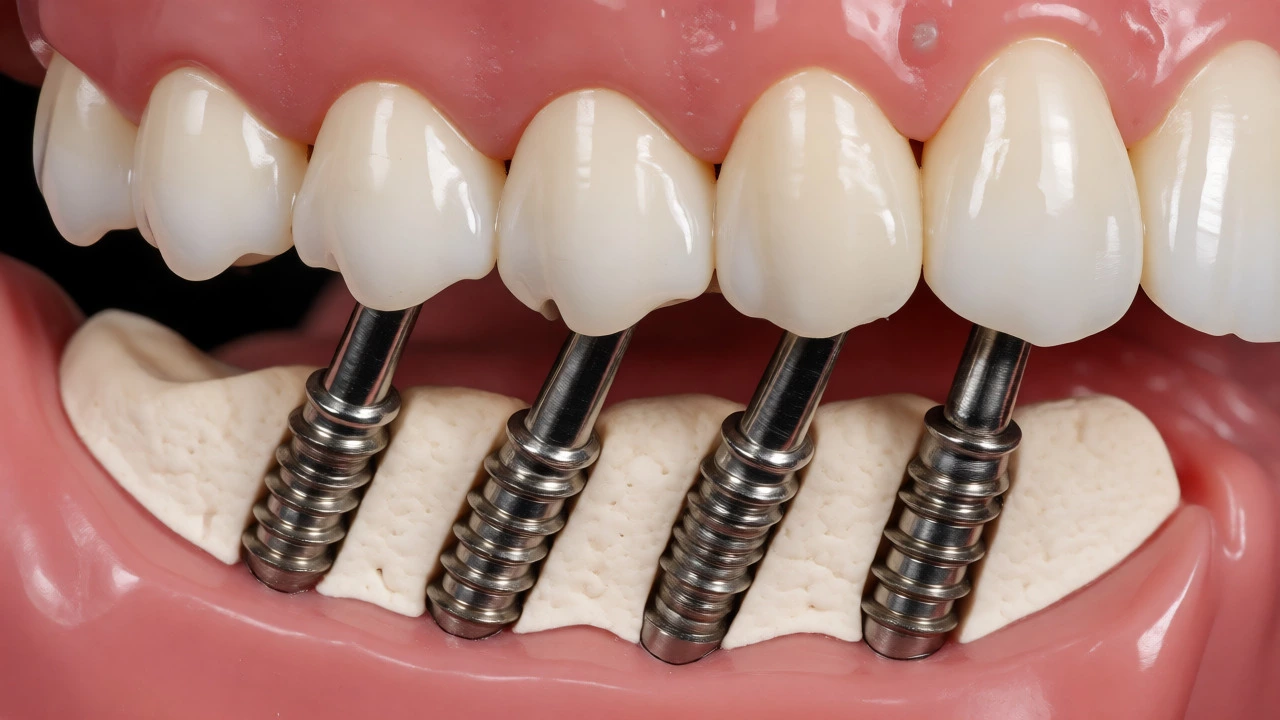
Full arch implant restoration, often referred to as All-on-4 or All-on-6, solves this by anchoring a fixed bridge to titanium posts embedded in your jaw. Unlike individual implants (one screw per tooth), these systems use fewer implants to support a whole row of teeth. For example, the All-on-4 technique uses four strategically angled implants to hold up a full set of prosthetic teeth. This reduces the need for extensive bone grafting, which is a huge plus if your bone density has dropped due to years of missing teeth.
Is it possible to extract every tooth and place implants immediately? Yes, this is called immediate loading. However, not everyone qualifies. Your surgeon needs to check if you have enough healthy bone left after extractions to stabilize the implants. If the bone is too thin, you might need to wait months for grafts to heal before placing the implants, meaning you’d wear temporary dentures in the meantime.
NHS vs Private: Who Pays What?
Here is where many patients get confused. The National Health Service (NHS) covers basic dental care, including extractions and standard dentures. Does it cover full mouth implants? Generally, no.
The NHS rarely funds implant treatment unless there are specific clinical reasons why other treatments won’t work. These exceptions are strict and usually involve congenital conditions, trauma, or severe pathology where conventional dentures fail completely. Even then, approval is hard to get. Most patients seeking full mouth implants in the UK pay privately.
Private clinics offer a range of packages. You might see ads for "£9,995 per arch," but be careful. These prices often exclude essential extras like:
- CT scans and diagnostic imaging
- Bone graft materials
- Sinus lifts (if needed for upper jaw)
- Temporary teeth while healing
- Follow-up adjustments
A realistic budget for full mouth implants in the UK ranges from £15,000 to £30,000+ depending on complexity. Always ask for a comprehensive quote that includes all surgical and prosthetic components.
| Treatment Type | Estimated Cost Per Arch | Stability | Bone Preservation |
|---|---|---|---|
| Traditional Dentures | £300 - £1,000 (NHS Band 3) | Low (Slip risk) | Poor (Bone resorption) |
| Denture Stabilizers (2 Implants) | £2,500 - £4,000 | Moderate | Fair |
| All-on-4 / All-on-6 | £12,000 - £20,000 | High (Fixed) | Excellent |
| Individual Implants (Full Set) | £25,000 - £40,000+ | Very High | Excellent |
The Procedure: What Actually Happens?
If you decide to go ahead, here is the typical journey. First, you’ll undergo a detailed assessment. This isn't just a quick look in the chair. You’ll need a CBCT scan-a 3D X-ray-to map your bone structure, nerve positions, and sinus cavities. Your dentist will also check your overall health. Conditions like uncontrolled diabetes or heavy smoking can affect healing and osseointegration (the process where bone fuses to the titanium).
On surgery day, if you qualify for immediate loading, the process looks like this:
- Extraction: Remaining hopeless teeth are removed.
- Preparation: The gum tissue is lifted, and pilot holes are drilled into the jawbone.
- Implant Placement: Titanium posts are inserted. In All-on-4 cases, two posterior implants are tilted to avoid nerves and maximize bone contact.
- Abutment Connection: Connectors are attached to the implants.
- Provisional Bridge: A pre-made acrylic bridge is screwed onto the abutments. You leave with teeth!
You’ll likely be sedated or given local anesthesia with conscious sedation. You shouldn’t feel pain during the procedure, though soreness afterward is normal. Swelling peaks around day three. Stick to a soft diet-think soups, smoothies, and mashed potatoes-for six weeks to protect the healing sites.
Risks and Complications
No surgery is risk-free. With full mouth implants, the stakes are higher because you’re dealing with multiple surgical sites. Common issues include infection at the implant site, nerve injury (leading to numbness in the lip or chin), and sinus problems if upper implants protrude into the maxillary sinuses.
Long-term, peri-implantitis is a concern. This is essentially gum disease around the implant. Because the bridge is fixed, cleaning under it requires special tools like water flossers or interdental brushes. Neglecting hygiene can lead to bone loss and eventual implant failure. Regular professional cleanings every six months are non-negotiable.
Also, consider the lifespan. While implants themselves can last a lifetime, the prosthetic teeth (the white part you see) typically need replacement every 10-15 years due to wear and tear. Factor this future cost into your decision.

Who Is Not a Good Candidate?
You might think you’re perfect for this, but certain factors rule it out. Heavy smokers face a significantly higher failure rate. Nicotine constricts blood vessels, starving the healing bone of oxygen. Many surgeons require quitting three months before and after surgery.
Uncontrolled diabetes impairs healing similarly. Osteoporosis medications, particularly bisphosphonates, can interfere with bone remodeling. Tell your dentist if you take these drugs. Finally, poor oral hygiene habits or bruxism (teeth grinding) without a night guard can overload the implants, causing mechanical failures.
Alternatives to Full Extraction
Do you really need to lose all your teeth? Sometimes, saving even a few natural roots helps preserve bone. A hybrid approach might involve keeping strategic teeth for overdentures or placing individual implants only where needed. This costs less and is less invasive.
Another option is snap-on dentures. These use two implants per arch to clip onto a bar or ball attachments. They offer more stability than traditional dentures but aren’t fixed like All-on-4. They’re cheaper and easier to repair if a tooth breaks. If budget is tight, this is a solid middle ground.
Remember, the goal is function and confidence. If your current dentures work fine and you don’t mind removing them at night, jumping straight to expensive implants might not be necessary. Talk to your dentist about your specific bite forces and aesthetic goals before committing to full-mouth reconstruction.
Can I get all my teeth pulled and implants put in the same day?
Yes, this is known as 'immediate loading' or 'teeth in a day.' However, it depends on having sufficient bone quality and quantity to achieve primary stability. If your bone is too soft or insufficient, your surgeon may choose to let the extraction sites heal first, delaying implant placement by 3-6 months.
Does the NHS pay for full mouth dental implants?
Generally, no. The NHS covers extractions and standard dentures. Implants are considered cosmetic or elective unless there are exceptional clinical circumstances, such as severe trauma or congenital defects where conventional treatments fail. Approval is rare and requires specialist referral.
How much do full mouth implants cost in the UK?
In 2026, expect to pay between £12,000 and £20,000 per arch for All-on-4 or All-on-6 systems. Costs vary based on location, clinic reputation, and additional procedures like bone grafting. Individual implant sets can exceed £30,000 per arch.
Are full mouth implants painful?
The surgery itself is performed under local anesthesia or sedation, so you won't feel pain during the procedure. Post-operative discomfort is common for 3-7 days and is managed with prescribed painkillers. Swelling and bruising are typical but usually subside within two weeks.
How long do full mouth implants last?
With proper care, the titanium implants can last a lifetime. However, the prosthetic teeth (the visible part) typically last 10-15 years before needing replacement due to material wear. Regular maintenance and good oral hygiene are critical to prevent peri-implantitis.