
UK Health Insurance Cost Calculator
Calculate Your Estimated Premium
Most people in the UK assume the NHS covers everything. But if you’ve ever waited months for a specialist appointment or been told you can’t get an MRI until next year, you’ve probably wondered: How does UK health insurance work?
It’s not magic. It’s not a luxury for the rich. It’s a practical tool thousands use every year to skip long waits, choose their doctor, and get treatment on their schedule. And it’s not as complicated as it sounds.
What UK health insurance actually covers
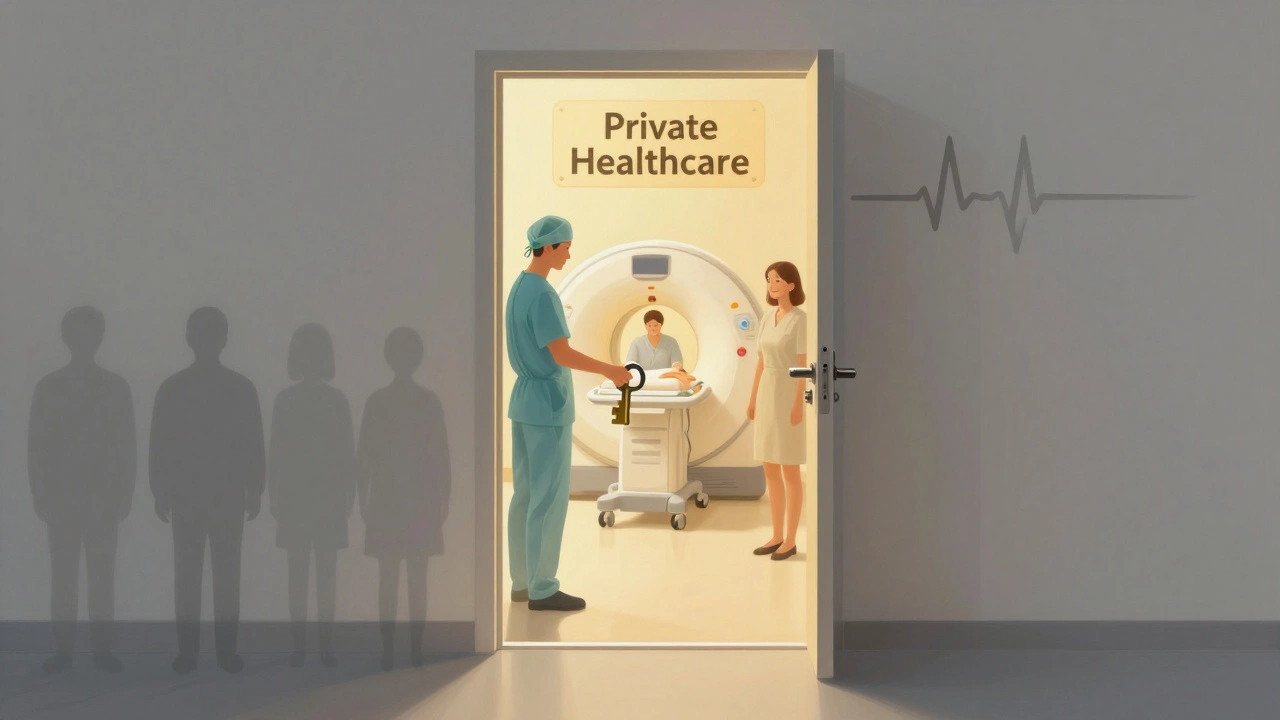
Private health insurance in the UK doesn’t replace the NHS. It gives you an alternative path. Most basic plans cover inpatient care-anything that requires an overnight hospital stay. That includes surgery, specialist consultations, diagnostic scans like MRIs and CTs, and cancer treatments.
Some plans go further. Mid-tier policies often add outpatient services: physiotherapy, mental health counselling, specialist GP visits, and even some diagnostic tests done without admission. Top-end plans might include dental, optical, and alternative therapies like acupuncture.
But here’s what most policies don’t cover: emergency care (you still go to A&E if it’s life-threatening), chronic conditions you had before taking out the policy, and routine pregnancy care. Pre-existing conditions are usually excluded unless you’ve been symptom-free for 2-5 years, depending on the insurer.
How it’s different from the NHS
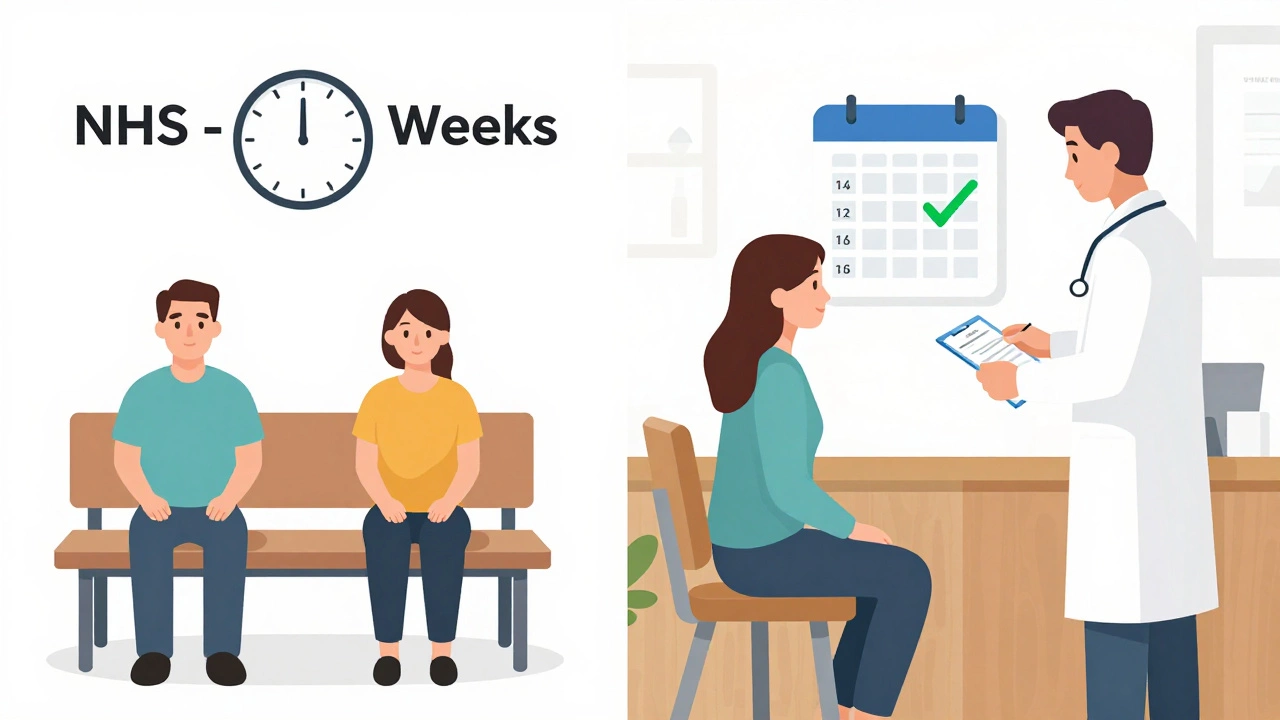
The NHS is free at the point of use, funded by taxes. But it’s stretched thin. In 2024, the average wait for a non-urgent specialist appointment was 14 weeks. For hip replacements, it was over 20 weeks in some regions.
Private insurance cuts that down. Most people get seen within 1-2 weeks. You pick the hospital, the consultant, and the date. No chasing referrals. No being bumped for urgent cases.
It’s not about better care-it’s about faster access. The same surgeons, same hospitals (many private hospitals contract with the NHS), same drugs. You’re not getting a VIP version of medicine. You’re getting your turn sooner.
Who buys it and why
It’s not just CEOs and celebrities. Over 11 million people in the UK have private health insurance. That’s about 1 in 6. Most are middle-income workers who get it through their employer.
Corporate plans are the most common. Employers pay part or all of the premium as a benefit. It’s a way to attract talent, especially in competitive industries like tech or finance. If your company offers it, you’re usually automatically enrolled unless you opt out.
Individual plans are bought directly from insurers like Bupa, AXA PPP, Aviva, or Vitality. These cost more-anywhere from £50 to £200 a month depending on age, location, and coverage. People buy them when they’re tired of waiting, have a family history of illness, or want control over their care.
How much does it cost?
There’s no one price. A 30-year-old in Manchester with a basic plan might pay £65 a month. A 55-year-old in London with full coverage could pay £180. Age is the biggest factor. A 65-year-old might pay over £300.
Location matters too. Hospitals in London and the Southeast cost more to run, so premiums are higher. You can lower your bill by choosing a plan with a higher excess (the amount you pay before the insurer steps in). A £500 excess can cut your monthly premium by 30%.
Some insurers offer discounts for healthy living. Vitality, for example, gives cashback for gym visits, step counts, and health screenings. If you stay active, you can reduce your bill by up to 25% a year.
What you can’t do with private insurance
Private insurance won’t help you if you’re in a car crash. That’s covered by the NHS. It won’t pay for your insulin if you have Type 1 diabetes-that’s still free on the NHS. And it won’t cover long-term care for dementia or mobility issues.
Also, you can’t use it to jump the queue for NHS services. If you’re on an NHS waiting list and buy insurance later, you still have to wait. Insurance only applies to new conditions after your policy starts.
And here’s a big one: you can’t use it to get banned treatments. If the NHS won’t fund a drug because it’s too expensive, private insurance often won’t either. Insurers follow NICE guidelines just like the NHS.
How to choose a plan
Start by asking yourself: What do you actually need?
- If you’re young and healthy, a basic plan covering surgery and scans is enough.
- If you’ve had back pain or anxiety before, look for outpatient mental health or physio coverage.
- If you travel often, check if your plan includes international emergency care.
- If you have kids, see if paediatric care is included.
Don’t just pick the cheapest. Read the small print. Look for:
- Exclusions: What’s not covered?
- Waiting periods: Do you have to wait 3 months before claiming for back surgery?
- Hospital networks: Can you go to any hospital, or just approved ones?
- Renewal terms: Will your premium jump 20% next year if you make a claim?
Use comparison sites like MoneySuperMarket or Compare the Market. But don’t rely on them alone. Call insurers and ask for a sample policy document. Read the terms yourself.
What happens when you need treatment
Step 1: Your GP refers you. Even with private insurance, you usually need a referral from your NHS GP. Some insurers let you go straight to a private GP, but that’s rare.
Step 2: Contact your insurer. They’ll give you a pre-authorisation code. Don’t book anything until you get this.
Step 3: Choose your consultant and hospital. Your insurer will send you a list of approved providers. You can pick based on reputation, location, or waiting times.
Step 4: Get treated. You’ll pay nothing at the time of service. The insurer bills the hospital directly. You might get a bill later if you chose a hospital outside your plan’s network.
Step 5: Follow-up. Many plans include post-op check-ups and physio. Check your policy to see what’s included.
Is it worth it?
If you’ve ever sat in a waiting room for 3 months hoping for a knee scan, then yes. If you’re fine with NHS timelines and don’t mind waiting, then maybe not.
Think of it like car insurance. You hope you never need it. But when you do, you’re glad it’s there. For many, private health insurance isn’t about luxury. It’s about peace of mind. It’s about knowing that if something goes wrong, you won’t be stuck in a system that’s overwhelmed.
It’s not a cure-all. The NHS still handles the vast majority of care in the UK. But for those who need speed, choice, and control, private health insurance isn’t a luxury-it’s a practical solution.
Can I use UK health insurance alongside the NHS?
Yes. Many people use both. You can get routine care like blood tests or flu shots through the NHS, then use private insurance for faster specialist appointments or elective surgery. The two systems work side by side. You don’t have to choose one over the other.
Does private health insurance cover mental health?
Basic plans usually don’t. But most mid- and top-tier policies now include mental health support-up to 6-12 sessions with a psychologist or psychiatrist. Some even cover online therapy apps. Always check the policy wording, as limits vary by insurer.
Can I get health insurance if I have a pre-existing condition?
Yes, but coverage is limited. Most insurers will exclude the specific condition you already have. If you’ve been symptom-free for 2-5 years, some may reconsider. You’ll need to disclose your full medical history-hiding it can void your policy.
Is private health insurance cheaper than paying for treatment out of pocket?
Usually yes. A private knee replacement can cost £12,000-£18,000 if paid directly. A monthly premium of £100-£150 adds up to £1,200-£1,800 a year. Even if you never use it, the cost is far lower than paying for one major procedure alone. For frequent users, the savings are massive.
Do I still need private insurance if I’m covered by my employer?
It depends. Employer plans often have lower coverage limits and fewer hospital choices. If you want more control, better networks, or coverage for your family, you might want to top it up with an individual plan. Check what your employer’s policy actually includes before deciding.