Ovulation Calculator
Calculate your fertile window based on your menstrual cycle history. This tool uses scientific data to estimate when you're most likely to conceive.
Trying to start a family can be exciting-but it can also be confusing. If you’ve been trying to get pregnant for over a year (or six months if you’re over 35) and it hasn’t happened yet, you might be wondering: fertility-is it an issue? The good news is, there are clear, science-backed ways to check your fertility without jumping straight to expensive clinics or invasive tests. You don’t need to wait for a doctor to tell you something’s wrong. You can start gathering answers yourself, right now.
Track Your Cycle-It’s More Than Just a Calendar
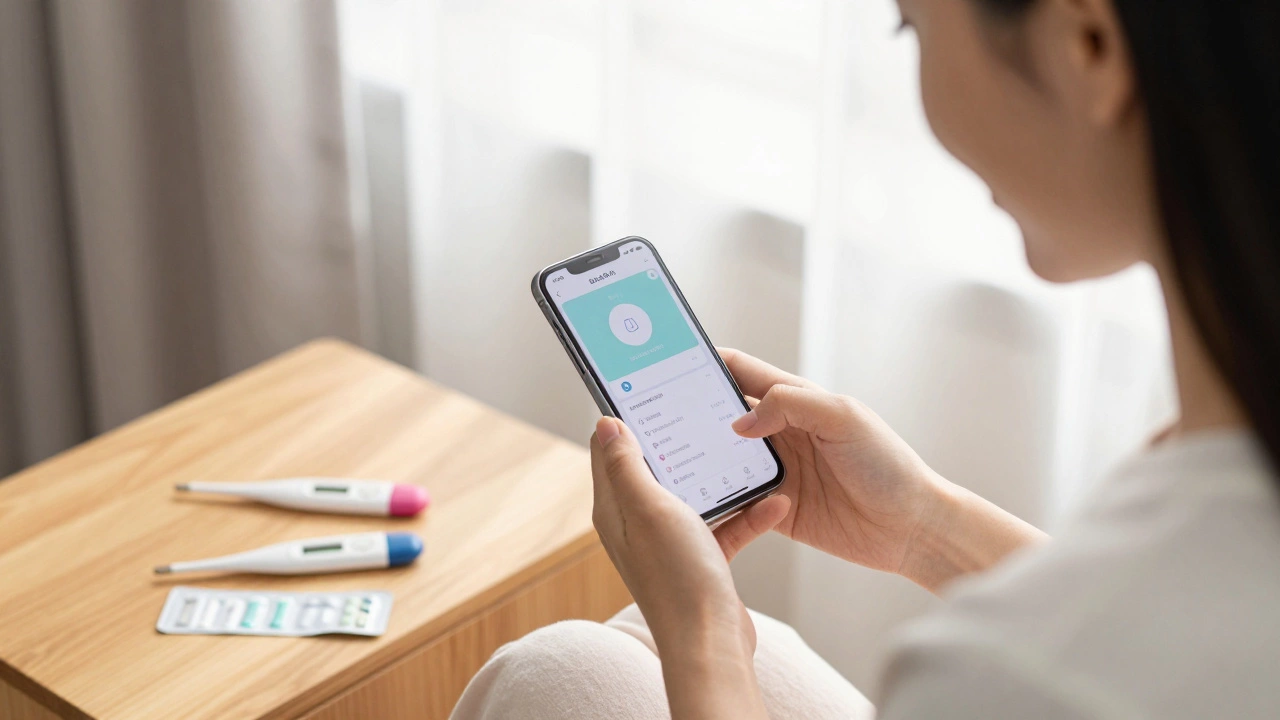
Your menstrual cycle is your body’s most reliable fertility report card. If you’re not tracking it, you’re flying blind. Start by marking the first day of your period on a calendar or app like Clue or Flo. Then note symptoms: cervical mucus changes, basal body temperature shifts, and any mid-cycle cramping.Here’s what to look for: Around ovulation, cervical mucus becomes clear, stretchy, and looks like raw egg white. That’s your body saying, "Now’s the time." Your basal body temperature (BBT) drops slightly just before ovulation, then rises by 0.3-0.5°C after. You need a special thermometer for this-regular ones won’t cut it. Take your temperature first thing in the morning, before getting out of bed.
Women with regular 28-day cycles usually ovulate around day 14. But cycles between 21 and 35 days are normal. If your cycle is irregular, unpredictable, or skips months entirely, that’s a red flag. Polycystic ovary syndrome (PCOS) affects about 1 in 10 women of reproductive age in Ireland, and one of its main signs is missed or irregular periods.
Use Ovulation Predictor Kits (OPKs)
These are cheap, easy, and available at any pharmacy. OPKs detect the surge in luteinizing hormone (LH) that happens 24-36 hours before ovulation. Buy a pack of 10 sticks and test daily from day 10 of your cycle until you get a positive result.Don’t skip this step just because you think you "know" when you ovulate. Many women guess wrong. I’ve spoken to women who thought they ovulated on day 12-only to find out through testing they actually ovulated on day 21. That means they were having sex too early. Timing matters. Have sex every other day from day 10 to day 18. That covers your fertile window without burning out.
Check Your Sperm Count-It’s Not Just Her Problem
Too often, fertility is assumed to be a woman’s issue. But male factors contribute to about 40% of infertility cases. A simple semen analysis can tell you if sperm count, motility, or morphology is below normal.You don’t need a clinic for this. At-home sperm tests like the YO Sperm Test or SpermCheck are available online and in pharmacies. They give you a quick readout: low, normal, or high. They’re not as detailed as a lab test, but they’re good enough to rule out major issues. If the result is low, see a GP. They can refer you for a full semen analysis, which looks at sperm shape, movement, and concentration.
Men should avoid hot tubs, tight underwear, and excessive alcohol or smoking for at least three months before testing. Sperm take about 74 days to fully develop. Anything that stresses the body during that window can affect results.
Look for Physical Signs of Hormonal Imbalance
Fertility isn’t just about eggs and sperm-it’s about hormones. If your body isn’t producing the right balance, conception becomes harder.Signs to watch for:
- Excess facial or body hair (hirsutism)
- Acne that won’t go away, especially around the jawline
- Unexplained weight gain, especially around the waist
- Thin hair or hair loss
- Very light or very heavy periods
- Mood swings, fatigue, or low sex drive
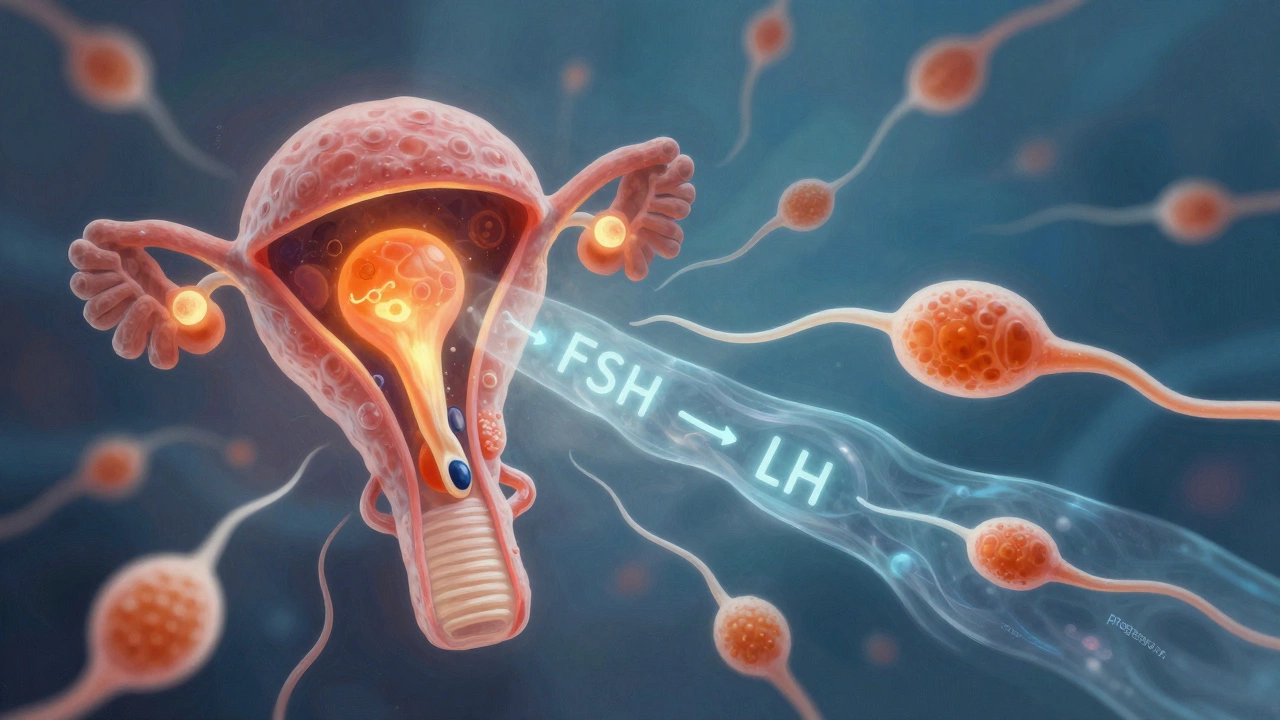
These aren’t just "annoyances." They can point to thyroid problems, PCOS, or low progesterone-all conditions that impact fertility. If you notice two or more of these, talk to your doctor. A simple blood test can check your levels of FSH, LH, estrogen, progesterone, thyroid hormones, and prolactin.

Get a Basic Fertility Workup at Your GP
You don’t need to wait six months or a year to ask for help. In Ireland, your GP can order basic fertility tests even if you’ve only been trying for three months. Don’t feel like you’re being "pushy." Fertility is medical, not just personal.Here’s what your GP can do:
- Order a blood test to check your ovarian reserve (AMH level)-this estimates how many eggs you have left
- Check your thyroid and prolactin levels
- Arrange a transvaginal ultrasound to count antral follicles
- Refer you for a hysterosalpingogram (HSG)-an X-ray to see if your fallopian tubes are open
- Refer your partner for a semen analysis
AMH levels below 1.0 ng/mL suggest low ovarian reserve. Levels above 3.0 may indicate PCOS. These numbers aren’t final verdicts-they’re clues. But they help you understand where to go next.
Age Matters-But Not as Much as You Think
Yes, fertility declines with age. But the drop isn’t sudden. A healthy 30-year-old woman has about a 20% chance of getting pregnant each month. At 35, it’s around 15%. At 40, it’s about 5%. That’s lower-but not zero.What’s more important than age is how your body is functioning right now. A 38-year-old with regular cycles, normal hormone levels, and no history of pelvic surgery can have better odds than a 28-year-old with PCOS and irregular periods.
Don’t panic if you’re over 35. But do act sooner. Don’t wait a full year. Go to your GP after six months of trying. The sooner you start, the more options you have.
What If Everything Looks Normal?
Sometimes, couples do all the checks-and everything comes back normal. That’s called unexplained infertility. It happens in about 1 in 5 cases.It doesn’t mean there’s no problem. It just means current tests can’t find it. In these cases, doctors often recommend timed intercourse with ovulation tracking, or a short course of fertility drugs like Clomid to boost ovulation. In vitro fertilization (IVF) isn’t always the next step. Many couples conceive with just a few cycles of ovulation induction.
Don’t assume "normal" means you’re fine. It means you need a different approach-not that you’re broken.
Stop the Myths
There are so many myths about fertility:- "Lying down after sex helps." (It doesn’t. Sperm swim regardless.)
- "You need to have sex every day." (That lowers sperm count. Every other day is better.)
- "Stress causes infertility." (It can delay ovulation, but it rarely causes it outright.)
- "If you got pregnant before, you’re fine now." (Fertility changes. Secondary infertility is common.)
Focus on facts, not folklore. Track, test, talk. Don’t guess.
When to See a Specialist
If you’re under 35 and have been trying for 12 months, or over 35 and trying for 6 months, it’s time to see a fertility specialist. Also go sooner if:- You’ve had pelvic surgery, endometriosis, or PID
- Your partner has a known low sperm count
- You have irregular or absent periods
- You’ve had two or more miscarriages
In Ireland, you can access public fertility services through the HSE-but wait times can be long. Private clinics like IVF Ireland, Bourn Hall, or The Fertility Centre offer faster access. Many GPs can refer you to both.
Don’t wait for perfection. Don’t wait for "the right time." Fertility is time-sensitive. The best time to act is now.
Can I check my fertility at home without going to a doctor?
Yes, you can start with at-home tools: ovulation predictor kits, basal body temperature tracking, and at-home sperm tests. These give you useful clues. But they don’t replace medical tests like AMH blood work, ultrasounds, or semen analysis. Home tools help you decide when to see a doctor-not replace the need for one.
How long should I try before worrying about fertility?
If you’re under 35, try for 12 months. If you’re over 35, start asking questions after 6 months. If you have irregular periods, a history of pelvic infection, or your partner has known sperm issues, see a GP right away. Don’t wait for a full year.
Does having regular periods mean I’m fertile?
Regular periods mean you’re likely ovulating-but not necessarily that you’re fertile. You could have normal cycles but blocked tubes, low egg quality, or a partner with low sperm count. Periods are one piece of the puzzle, not the whole picture.
Can stress make me infertile?
Extreme stress can delay ovulation or make your cycle irregular, but it rarely causes permanent infertility. If you’re under chronic stress and your cycles are unpredictable, managing stress might help. But if you’ve been trying for over a year with normal cycles, stress isn’t the main issue.
Is IVF the only option if I’m infertile?
No. Many couples conceive with simpler treatments: ovulation induction with Clomid, intrauterine insemination (IUI), or even just better timing of intercourse. IVF is often the last step, not the first. Your doctor will suggest the least invasive option that fits your situation.
Can I improve my fertility naturally?
Yes. Maintaining a healthy weight, quitting smoking, reducing alcohol, eating more whole foods, and taking a prenatal vitamin with folic acid can improve your chances. For men, avoiding heat (hot tubs, laptops on laps) and getting enough zinc and vitamin D helps sperm quality. These won’t fix major medical issues-but they remove barriers to conception.
Next Steps: What to Do Today
If you’re reading this because you’re trying to conceive, here’s what to do right now:- Download a period tracking app and log your cycle for the next 3 months.
- Buy a basal body temperature thermometer and start taking your temperature daily.
- Get an ovulation predictor kit and start testing around day 10 of your cycle.
- If you’re a man, consider an at-home sperm test.
- Write down any symptoms you’ve noticed-acne, weight gain, hair loss, mood changes.
- Book an appointment with your GP. Say: "We’ve been trying for [X] months and want to check our fertility. What tests can we do?"
You don’t need to have all the answers. You just need to start asking the right questions. Fertility isn’t a mystery. It’s a process-and you’re already on the path by looking for answers.