
Health Insurance Cost & Value Estimator
Configure Your Scenario
Estimated Annual Cost Analysis
Gross Annual Premium
€2,500
Tax Relief Savings
-€1,000
Net Cost to You
€1,500
What Does This Price Buy?
Have you ever looked at a quote for health insurance and felt like your wallet was going into shock? It’s not just about paying more; it’s about understanding what drives those numbers up. When people ask what is the most expensive health insurance, they aren’t usually looking for a single policy name. They are asking why some policies cost three or four times more than others. The answer lies in exclusivity, speed, and access to resources that standard plans simply don’t offer.
In the world of private healthcare, price isn’t just a number-it’s a reflection of how much freedom you buy. Are you willing to pay a premium to skip every waiting list? To see any specialist you want, anywhere in the country? Or to have a private room with a TV that actually works? These choices define the top tier of health coverage. Let’s break down exactly what makes these policies so costly and whether that extra cost is worth it for you.
The Anatomy of a High-Priced Policy
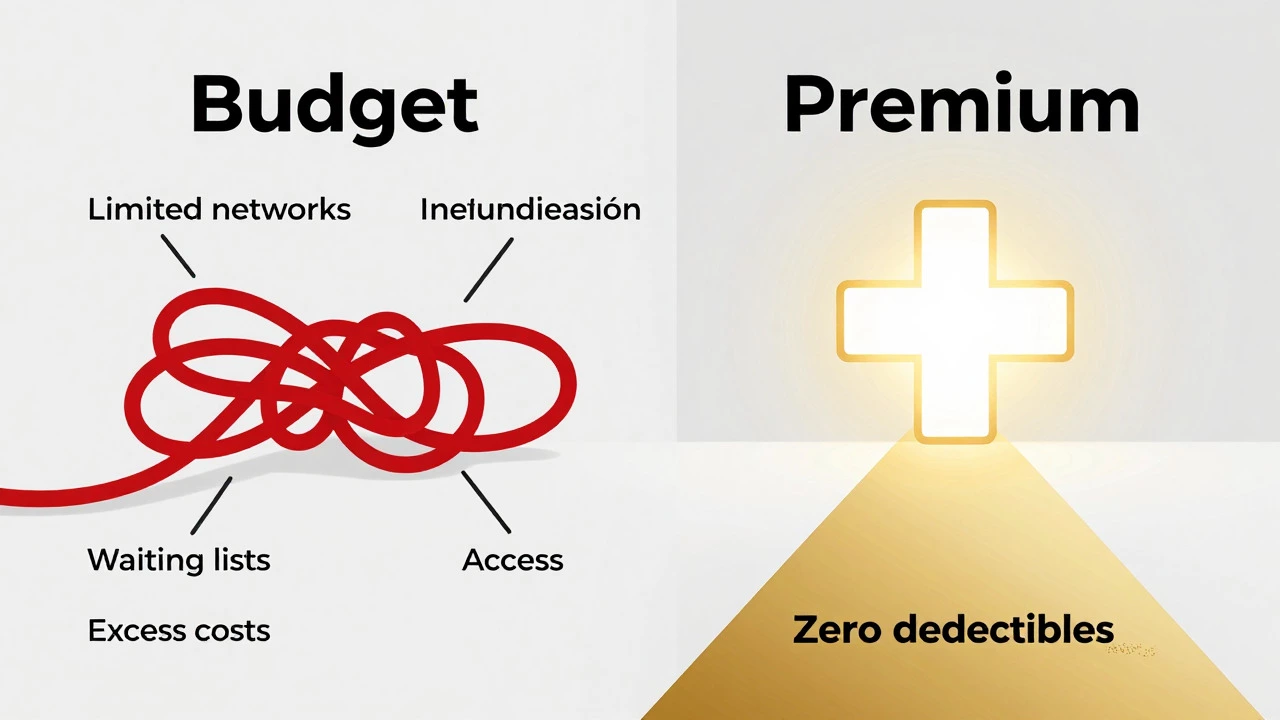
To understand why certain policies sit at the top of the price ladder, we need to look at their structure. Cheap insurance often comes with hidden traps: long waiting periods, limited hospital networks, and strict caps on treatment days. The most expensive plans strip these barriers away completely.
Consider the concept of "no excess" or "zero deductible." In cheaper plans, you might pay the first €500 or €1,000 of any claim out of pocket. Premium plans absorb this entirely. Then there is the issue of network restrictions. Budget insurers often tie you to specific hospitals where they have negotiated lower rates. Top-tier plans allow you to choose from the entire spectrum of private facilities, including those known for superior amenities and shorter wait times. This flexibility commands a higher monthly premium because the insurer assumes a higher risk of you choosing more expensive providers.
Another major factor is the breadth of coverage. Standard plans might cover acute conditions-like a broken leg or an appendix removal-but exclude chronic illnesses or pre-existing conditions. The most expensive policies often include comprehensive chronic care management, mental health support, and even alternative therapies like acupuncture or osteopathy. They cover the whole person, not just the immediate crisis.
| Feature | Standard/Budget Plan | Premium/High-End Plan |
|---|---|---|
| Hospital Network | Limited selection; may exclude top-tier private hospitals | Unrestricted access to all accredited private hospitals |
| Excess/Deductible | Often €500-€1,500 per claim | €0 excess; full coverage from day one |
| Waiting Periods | 3-12 months for new treatments | Immediate or very short waiting periods (e.g., 1 month) |
| Specialist Choice | Must use panel doctors only | Freedom to choose any consultant or specialist |
| Chronic Care | Often excluded or capped low | Comprehensive coverage with annual limits |
The Role of Age and Pre-Existing Conditions
If you are young and healthy, your insurance will naturally be cheaper. But as we age, the cost skyrockets. The most expensive health insurance policies are often held by individuals over 60 who require extensive coverage without the penalty of age-related loading. Insurers calculate risk based on actuarial tables. If you have a history of heart disease, diabetes, or cancer, standard insurers might reject you outright or charge exorbitant rates.
However, the truly high-end market offers solutions for complex medical histories. These policies come with significant premiums because the likelihood of a claim is statistically higher. For someone with multiple pre-existing conditions, finding a plan that covers them fully can mean paying thousands of euros annually. This isn’t just about buying peace of mind; it’s about buying access to care that would otherwise be financially ruinous.
In Ireland, for example, the Community Rating model under the VHI Act helps level the playing field, but loadings still apply for late entry into the system. A person entering the private insurance market at age 45 after years of no coverage faces a substantial loading compared to someone who has been insured since birth. This loading compounds over time, making older entrants some of the highest-paying customers in the system.
Bespoke and Concierge Medical Services
There is a tier above standard private health insurance, often referred to as concierge medicine or executive health plans. These aren’t always traditional insurance products in the sense of paying for hospital stays. Instead, they provide direct access to top specialists, 24/7 personal physicians, and rapid diagnostics. Think of it as having a personal medical team on retainer.
Services like this can cost tens of thousands of euros a year. They include things like same-day appointments, home visits for minor ailments, and coordination of care across multiple specialists. For high-net-worth individuals, time is the most valuable asset. Waiting six weeks for an MRI scan is unacceptable when you could have it done tomorrow if you paid enough. These plans eliminate friction from the healthcare experience. They don’t just cover the bill; they manage the entire process.
Companies offering these services often partner with elite clinics worldwide. If you travel frequently, your coverage extends globally, ensuring you can receive treatment in New York, London, or Singapore without navigating foreign systems alone. This global reach adds significant complexity and cost to the policy, pushing it into the realm of the most expensive health insurance available.
Why Do People Pay So Much?
You might wonder if anyone really needs this level of coverage. For the average person, a mid-tier plan offers good value. But for certain groups, the high cost is justified. Business executives, for instance, cannot afford downtime. A serious illness could disrupt company operations. Having immediate access to top-tier care ensures they can recover quickly and return to work.
Then there is the psychological benefit. Knowing that you and your family can get the best possible care, regardless of cost, reduces stress. In a system where public waiting lists can stretch for months, private insurance offers control. You decide when you go in, who treats you, and where you stay. That sense of agency has a tangible monetary value.
Additionally, some employers offer top-tier group health schemes as part of executive compensation packages. While the employee doesn’t pay the full premium directly, the cost is reflected in their overall salary package. This shifts the burden to the employer but keeps the individual covered by the most robust plans available.

Hidden Costs and Limitations to Watch For
Even the most expensive policies have fine print. It’s crucial to read beyond the headline features. Some high-premium plans cap the total amount they will pay out per year or per lifetime. Others might exclude specific high-cost treatments like experimental cancer drugs or organ transplants unless explicitly added as riders.
Another pitfall is the definition of "medical necessity." Insurers may deny claims if they deem a treatment cosmetic or non-essential, even if you’ve paid a premium. Always check what constitutes a covered service. Also, be aware of inflation adjustments. Healthcare costs rise faster than general inflation. Your premium today might seem manageable, but it could double in ten years. Look for policies with predictable renewal terms.
Don’t forget about ancillary costs. Even with full hospital cover, you might still pay for prescriptions, physiotherapy sessions, or dental work separately. Some premium bundles include these, but many do not. Calculate the total potential out-of-pocket expense, not just the monthly premium.
Is the Most Expensive Option Right for You?
Choosing the most expensive health insurance isn’t always the smartest financial move. It depends on your health profile, lifestyle, and budget. If you are young, active, and rarely visit the doctor, a basic plan might suffice. You save money on premiums and accept longer waits if something goes wrong.
However, if you have a family history of serious illness, work in a high-stress job, or value convenience above all else, investing in a higher-tier plan makes sense. Look for plans that offer strong chronic care coverage and broad hospital networks. Compare quotes from multiple providers, including VHI, Laya, Irish Life, and HSC Health. Don’t just look at the price; look at the exclusions.
Remember, the goal of insurance is protection, not profit. You want a partner who pays out when you need it, not one that finds reasons to deny claims. Read customer reviews, check complaint ratios with the Central Bank of Ireland, and talk to brokers who specialize in private healthcare. They can help you navigate the complexities and find the right balance between cost and coverage.
What is the average cost of private health insurance in Ireland?
As of 2026, the average annual premium for a single adult in Ireland ranges from €1,800 to €2,500 for standard plans. However, comprehensive family plans or those covering pre-existing conditions can exceed €5,000 to €8,000 annually. Executive and concierge-style plans can cost significantly more, often reaching into five figures.
Does more expensive insurance mean better care?
Not necessarily. The quality of medical care depends on the skill of the doctors and the facilities, which are often similar across different tiers. What you pay for in expensive plans is primarily speed, choice, and comfort. You get shorter waiting times, the ability to choose your specialist, and private rooms. The clinical outcome for common procedures is often comparable between budget and premium plans.
Can I switch to a cheaper plan later?
Yes, you can usually downgrade your plan within the same insurer or switch to a different provider. However, if you switch to a plan with fewer benefits, you may face new waiting periods for treatments that were previously covered. Additionally, if you cancel your insurance entirely, re-entering the market later will likely result in higher premiums due to age-related loadings.
What does "pre-existing condition" mean in insurance?
A pre-existing condition is any illness, injury, or symptom you had before your insurance policy started. Insurers often exclude these conditions from coverage for a set period or permanently. Premium plans may offer better options for managing these conditions, but they will still typically charge higher premiums to account for the increased risk.
Are there tax benefits for private health insurance?
In Ireland, private health insurance premiums are eligible for tax relief at your marginal rate through the Revenue Pay-As-You-Earn (PAYE) system. This means if you are a higher-rate taxpayer, you effectively get 40% back on your premiums. This can make even the most expensive plans more affordable than the sticker price suggests.