
Private Hospital Cost Estimator
Estimate Your Private Hospital Costs
Your Estimated Costs
Enter your details above to see estimated costs
Important: These are estimates based on UK private hospital averages. Actual costs may vary significantly based on individual circumstances.
Staying in a private hospital in the UK isn’t just about getting faster care-it’s about control, comfort, and clarity. But before you decide, you need to know what you’re actually paying. There’s no single price. A private hospital stay can cost anywhere from £1,500 to over £20,000, depending on what you need, where you are, and how long you stay. If you’re considering private care, whether you’re paying out-of-pocket or through insurance, understanding these costs helps you avoid surprises.
What’s included in a private hospital stay?
When you book a private hospital stay, you’re not just paying for a bed. You’re paying for a full package: a private room, nursing care, meals, diagnostic tests, surgery, medications, and follow-up appointments. Some hospitals even throw in Wi-Fi, TV, and complimentary parking. But not all packages are equal. A basic overnight stay for a minor procedure like a knee arthroscopy might cost £3,500. That includes the surgeon’s fee, anaesthetist, operating room use, and one night’s recovery. But if you need a hip replacement, you’re looking at £12,000-£18,000. For complex cardiac surgery? It can hit £25,000 or more.
Many private hospitals list their prices online. Bupa, Nuffield Health, and The London Clinic all have price guides. But don’t trust those numbers blindly. They often show the starting rate. The real cost depends on your condition, the hospital’s location, and whether you need specialist consultants. A procedure in central London will always cost more than one in Manchester or Newcastle.
How private hospital pricing works
Private hospitals don’t use NHS tariffs. Instead, they set their own fees based on overhead, reputation, and demand. Surgeons bill separately. Anaesthetists bill separately. Radiologists bill separately. That’s the biggest shock for many people. You might see a quote for £8,000 for your surgery-but then get three more bills for £1,200, £900, and £700 from other providers. This is called ‘fragmented billing’.
Some hospitals offer all-inclusive packages. These are safer if you’re paying yourself. A package might cover: surgeon, anaesthetist, hospital fees, pre-op tests, post-op visits, and even physiotherapy. Ask for a written quote that lists every single cost. If they say, “It’s all included,” get it in writing. Verbal promises don’t hold up when the bill arrives.
Location matters more than you think
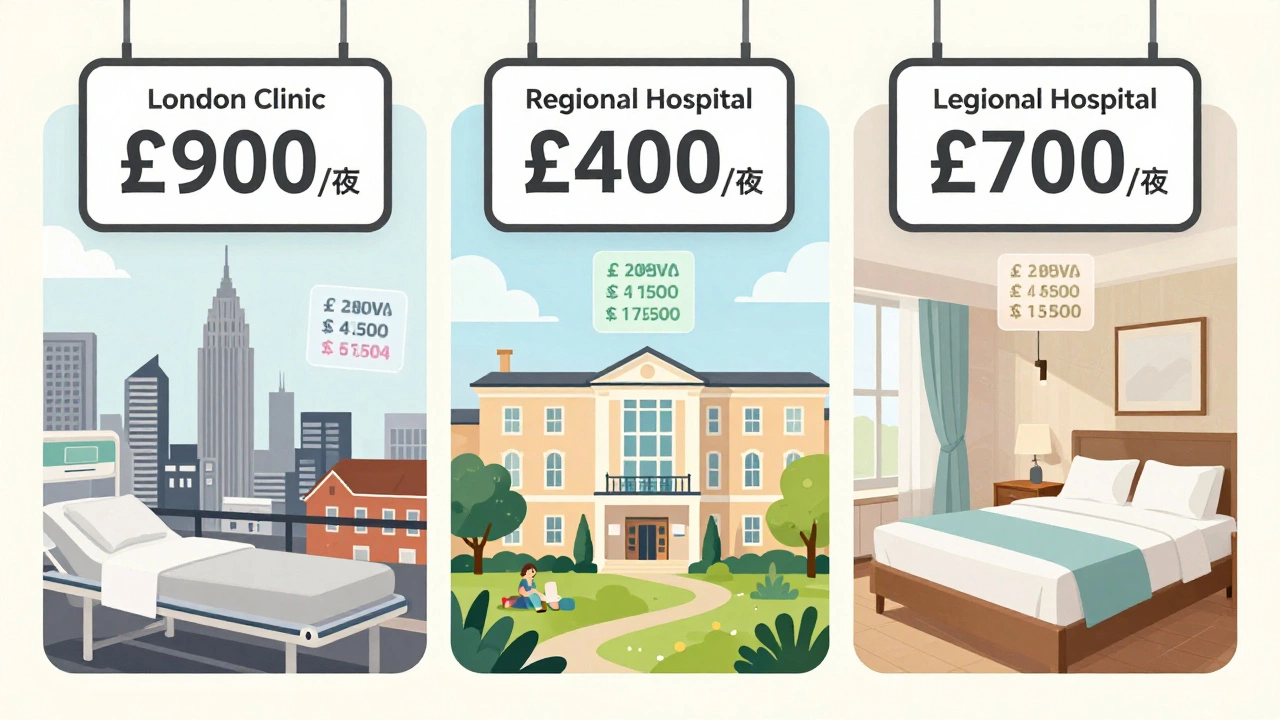
London hospitals charge the most. A private room at The London Clinic or King’s College Hospital can cost £600-£900 per night. Outside London, the same room might be £300-£500. In cities like Birmingham, Leeds, or Bristol, you can save 30-40% on accommodation alone. But don’t assume rural means cheaper. A private hospital in the Cotswolds might charge more because it’s a luxury facility with spa-style recovery suites.
One patient we spoke to chose a private hospital in Reading for her gallbladder surgery. Her total cost was £6,200. Her sister, who had the same procedure in London, paid £10,800. The difference? Location, not care quality. Both surgeons were equally qualified. The only real difference was the rent the hospital paid.
Insurance vs. self-pay: what’s the real difference?
If you have private health insurance, you might think you’re off the hook. But you’re not. Most policies have excesses, co-pays, or exclusions. A typical policy might cover 80% of a £15,000 procedure, leaving you with £3,000. Some insurers won’t cover certain treatments-like bariatric surgery or IVF-unless you’ve held the policy for over two years. Others require pre-approval. If you skip that step, you’re on the hook for the full bill.
Self-paying gives you more control. You can pick any hospital, any surgeon, any date. But you also bear the full cost. Some people use payment plans. Hospitals like Spire Healthcare and The Harley Street Clinic offer interest-free financing over 12-24 months. That turns a £12,000 bill into £500/month payments. It’s not cheap, but it’s manageable.
What you’re really paying for
Private hospitals aren’t just about speed. They’re about comfort and predictability. You won’t wait months for a scan. You won’t share a room with strangers. You’ll have a dedicated nurse, fresh meals, and quiet recovery. For some, that peace of mind is worth the cost. For others, it’s a financial risk.
Here’s what private care delivers that the NHS can’t always match:
- Same-week appointments for consultations and scans
- Private rooms with en-suite bathrooms and TV
- Flexible scheduling-no waiting for operating theatre slots
- Choice of consultant-you can pick the surgeon you trust
- Faster discharge-no pressure to leave before you’re ready
But here’s what it doesn’t guarantee: better outcomes. Studies from the King’s Fund and the Nuffield Trust show that for most common procedures-like hip replacements or hernia repairs-outcomes in private and NHS hospitals are nearly identical. The difference isn’t in the cure. It’s in the experience.
Hidden costs you can’t ignore
Most people forget about follow-up care. A private hospital might include two post-op visits in their quote. But what if you need a third? Or an MRI because something doesn’t feel right? Those aren’t always covered. Physiotherapy, home nursing, specialist consultations-all can add hundreds or thousands more.
Medications are another trap. Private hospitals often use branded drugs instead of generics. A week’s supply of painkillers might cost £40 instead of £8. If you’re on long-term medication, that adds up fast. Always ask: “Can I use my own prescriptions from my GP?”
Transportation and accommodation for family members? That’s on you. One patient we spoke to had to pay £200 for her daughter to stay in a nearby hotel during her recovery. No hospital offered free lodging.

How to reduce your costs
You don’t have to pay full price. Here’s how to cut it:
- Compare hospitals-use NHS England’s private hospital comparison tool (yes, it exists). It shows price ranges, patient satisfaction, and complication rates.
- Ask for a fixed-price package-insist on an all-inclusive quote. Avoid itemised billing.
- Choose a hospital outside London-you’ll save 25-40% with no loss in quality.
- Check your insurance policy-know your excess, exclusions, and pre-authorisation rules.
- Use payment plans-many hospitals offer 0% interest over 12-24 months.
- Ask about cash discounts-some hospitals give 5-10% off if you pay upfront.
One woman in Manchester paid £9,500 for a private hysterectomy. She found a hospital that offered a 10% discount for upfront payment. She paid £8,550. She didn’t sacrifice care. She just asked.
What happens if you can’t afford it?
If you’re uninsured and can’t pay, private hospitals won’t turn you away in an emergency. But non-emergency care? They’ll ask for payment upfront. Some offer charity care for low-income patients, but it’s rare. You’ll need to apply formally and prove financial hardship. It’s not automatic.
Many people end up switching back to the NHS. It’s not a failure. It’s a smart financial decision. For most procedures, the NHS provides excellent care. The wait might be longer, but the outcome is just as good.
Final reality check
Private hospital care in the UK is expensive-but not always necessary. It’s best for people who value time, privacy, and control. It’s not best for people who just want to get better. If you’re healthy enough to wait six months for an NHS appointment, you’re probably better off waiting. But if you can’t wait, if your pain is unbearable, if your job or family life depends on quick recovery-then private care might be worth every penny.
The key? Know what you’re paying for. Get everything in writing. Compare options. Ask questions. And don’t let fear or urgency push you into a bill you can’t afford.