DBT Distress Tolerance Skill Practice Tool
How to Use This Tool
This tool helps you practice the TIPP distress tolerance skill from Dialectical Behavior Therapy (DBT), which is proven to help reduce intense emotional pain quickly. Select a skill, follow the instructions, and track your emotional intensity before and after practice.
Before Practice
Rate your emotional intensity from 1-10 (1 = minimal, 10 = overwhelming)
TIPP Skills
Select a skill to see instructions
After Practice
What the Research Shows
A study published in the Journal of Personality Disorders found that 78% of people with BPD reported significant emotional regulation after practicing TIPP skills. The TIPP method can reduce intense emotional states within 2-5 minutes by activating the body's calming mechanisms.
There’s no single answer to which mental illness is the most painful to live with-but if you’ve ever sat in silence, wondering why your mind feels like a war zone, you already know the question isn’t about rankings. It’s about survival. For many, the deepest suffering doesn’t come from hallucinations or panic attacks. It comes from a constant, unrelenting sense of being broken, unlovable, and alone-even when surrounded by people who care.
Borderline Personality Disorder: The Invisible Wound
Borderline Personality Disorder (BPD) is often called the most painful mental illness to live with-and not because it’s the rarest, or the most dramatic, but because it turns your own mind into your worst enemy. People with BPD don’t just feel emotions. They feel them with the intensity of a wildfire. One moment, they’re glowing with connection; the next, they’re convinced everyone they love has abandoned them. And that shift? It can happen in minutes.
Studies from the National Institute of Mental Health show that over 75% of people diagnosed with BPD have attempted suicide at least once. The rate of self-harm is five times higher than in depression or anxiety disorders. This isn’t attention-seeking. It’s an attempt to stop the internal screaming. The pain isn’t just emotional-it’s physical. Many describe it as a burning sensation in the chest, a crushing weight on the ribs, or a hollow ache that never goes away.
Imagine waking up every day not knowing if you’re worthy of being alive. You love deeply, but fear being left. You crave closeness, but push people away before they can leave. You feel nothing but shame after every argument, every mistake, every moment you didn’t say the right thing. And no matter how hard you try to fix it, your brain keeps replaying the same thought: “I’m too much. I’m not enough.”
Why It’s Harder Than Depression or Anxiety
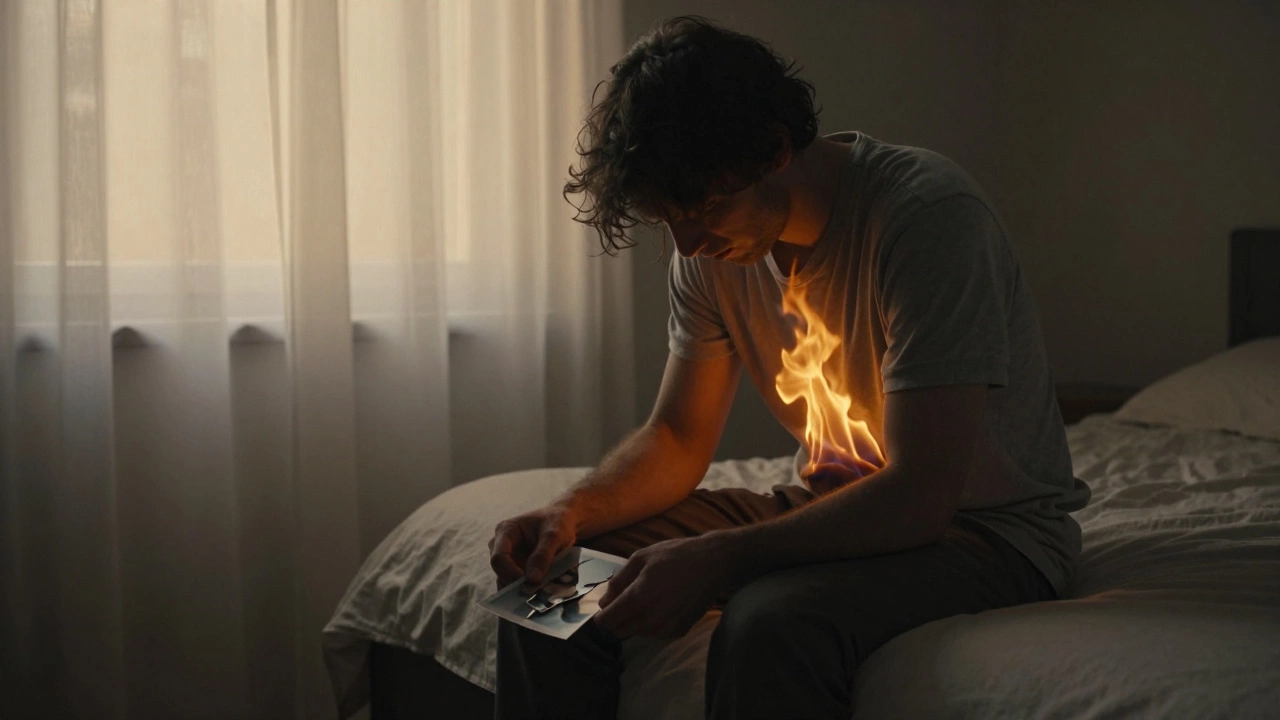
Depression feels like heavy fog. Anxiety feels like constant alarms. But BPD feels like being trapped in a house that’s on fire-and the fire is inside you. You can’t escape it. You can’t turn it off. And the people around you don’t understand why you can’t just “calm down.”
People with depression often feel numb. People with anxiety feel overwhelmed by what might happen. But people with BPD feel everything-too much, too fast, too raw. They don’t just worry about rejection. They feel it before it happens. They don’t just get sad. They collapse under the weight of it. And because their emotions shift so quickly, they’re often labeled as “dramatic,” “manipulative,” or “difficult.”
That stigma kills. A 2023 study in the Journal of Personality Disorders found that nearly 60% of people with BPD reported being dismissed by mental health professionals. One woman in the study said, “I went to three therapists before one finally said, ‘This isn’t just you being dramatic. This is real.’”
The Body Remembers What the Mind Tries to Forget
The pain of BPD isn’t just in the mind. It lives in the body. Chronic stress from emotional instability leads to real physical damage. People with BPD have higher levels of cortisol-the stress hormone-throughout the day. That means higher risks for heart disease, digestive problems, chronic fatigue, and autoimmune conditions.
Many develop fibromyalgia, IBS, or migraines not as separate illnesses, but as direct results of their emotional trauma. One patient in Dublin described it this way: “My stomach hurts every time I think someone might leave. My shoulders ache like I’m carrying the whole world. I don’t know if it’s in my head or my body anymore. It’s all the same.”
Recovery Is Possible-but It’s Not Linear
The good news? BPD is treatable. Dialectical Behavior Therapy (DBT), developed by Dr. Marsha Linehan, has been proven to reduce suicide attempts by 50% and hospitalizations by 75% in clinical trials. DBT teaches skills to manage emotions, tolerate distress, and build relationships without self-sabotage.
But recovery isn’t about fixing yourself. It’s about learning to live with the pain without letting it control you. It’s about learning that your emotions are valid-even when they’re overwhelming. It’s about finding people who won’t run when you fall apart.
Medication doesn’t cure BPD. But for many, mood stabilizers or antidepressants help take the edge off the rawness, making therapy possible. Group therapy, peer support, and trauma-informed care make a difference. One man in his 40s told me, “I didn’t get better because I stopped feeling. I got better because I learned how to feel without destroying everything around me.”
What No One Tells You About Healing
Healing from BPD isn’t about becoming “normal.” It’s about becoming whole. You don’t stop feeling deeply. You learn how to hold your feelings without letting them break you. You stop apologizing for needing space. You stop punishing yourself for having needs.
Many people with BPD spend years trying to “be better” so they’ll be loved. The truth? You’re not broken. You’re wounded. And wounds heal-but they leave scars. And scars don’t mean failure. They mean survival.
There’s no magic cure. But there is hope. And that hope isn’t in some distant future where you’re finally “fixed.” It’s in the small moments: the friend who texts “I’m here,” the therapist who doesn’t flinch when you cry, the day you choose to breathe instead of cut, the night you sleep through without panic.

What You Can Do If You or Someone You Love Has BPD
- Learn about BPD-not from memes or TV shows, but from trusted sources like the National Education Alliance for Borderline Personality Disorder.
- Don’t try to fix it. Listen. Say, “I’m here,” not “You’re overreacting.”
- Encourage therapy. DBT is the gold standard. If it’s not offered locally, ask about online programs or group sessions.
- Take care of yourself. Supporting someone with BPD is exhausting. You need boundaries, rest, and your own support.
- Know the warning signs: sudden isolation, self-harm, threats of suicide, extreme mood swings. Don’t ignore them.
It’s Not About Ranking Pain
Some will say depression is worse because it steals your will to live. Others say PTSD is worse because trauma haunts you every day. OCD traps you in loops. Schizophrenia shatters your sense of reality.
But pain doesn’t compete. It just is.
BPD is the most painful because it attacks the core of human connection-the need to be loved, to belong, to matter. And when your own mind tells you you’re unlovable, no amount of logic can silence it.
If you’re reading this and you’re struggling, know this: you’re not too much. You’re not broken. You’re not a burden. You’re a person who’s been through hell-and you’re still here. That’s not weakness. That’s courage.
Healing doesn’t mean the pain disappears. It means you learn to carry it without letting it carry you.
Is borderline personality disorder the same as bipolar disorder?
No. Bipolar disorder involves distinct episodes of mania and depression that last days or weeks. Borderline Personality Disorder (BPD) involves rapid, intense emotional shifts that can happen within hours. People with BPD struggle with identity, fear of abandonment, and unstable relationships-not mood cycles. The treatments are different too: mood stabilizers help bipolar, while DBT is the gold standard for BPD.
Can BPD be cured?
There’s no cure, but many people with BPD achieve long-term remission. Studies show that after 10 years of treatment, over 85% of people no longer meet the full diagnostic criteria. They still feel deeply, but they no longer feel controlled by their emotions. Recovery means learning to live with the pain, not eliminating it.
Why do people with BPD push others away?
It’s a defense mechanism. The fear of being abandoned is so intense that they test relationships-by getting angry, withdrawing, or acting out-to see if the other person will leave. If the person stays, it confirms their worst fear: they’re only loved when they’re perfect. So they push harder. It’s not manipulation. It’s survival.
Can someone with BPD have healthy relationships?
Yes-but it takes work. People with BPD can have deep, loving relationships when they learn emotional regulation, communication skills, and how to trust without clinging. Partners who are patient, consistent, and set clear boundaries make a huge difference. Many couples in therapy report stronger connections after learning how to navigate BPD together.
Is BPD genetic?
Research shows genetics play a role, but trauma is the biggest trigger. People with a family history of BPD or other mood disorders are more vulnerable. But most people with BPD also experienced childhood neglect, abuse, or emotional invalidation. It’s not just biology-it’s biology shaped by experience.
What’s the best therapy for BPD?
Dialectical Behavior Therapy (DBT) is the most researched and effective. It teaches mindfulness, distress tolerance, emotion regulation, and interpersonal effectiveness. Other therapies like Mentalization-Based Therapy (MBT) and Transference-Focused Psychotherapy (TFP) also work well. The key is finding a therapist trained in trauma-informed, evidence-based approaches-not just any counselor.
Where to Start If You’re Ready to Heal
If you’re reading this and thinking, “That’s me,” you’re not alone. Start with one step: reach out. Call a helpline. Text a crisis line. Book a session with a therapist who specializes in BPD. You don’t need to be “ready.” You just need to be willing to try.
There’s no shame in needing help. There’s only shame in believing you don’t deserve it. You do. You always have.