Dental Implant Cost Estimator
Calculate your potential savings when choosing dental implants abroad versus in the UK.
Estimated Costs
Note: These estimates are based on standard dental implant procedures. Actual costs may vary depending on individual circumstances, implant brand, and specific clinic pricing.
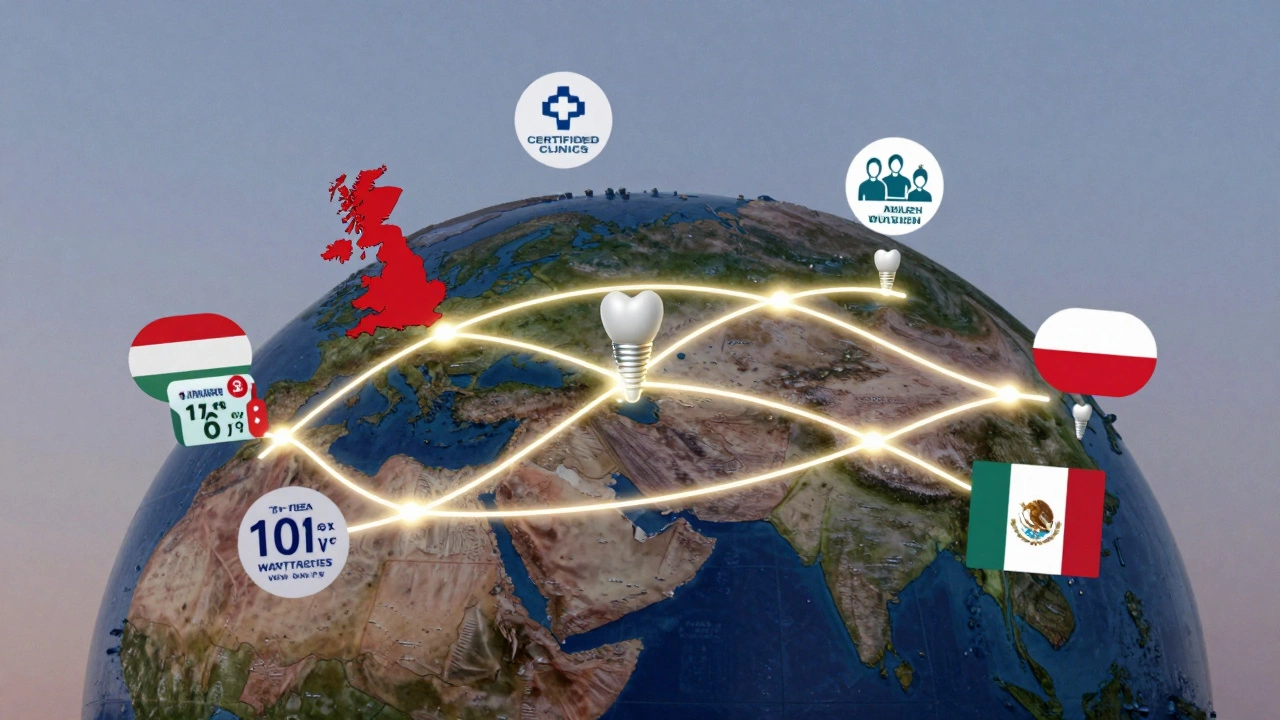
Thousands of people from the UK travel abroad each year for dental implants-not because they can’t find a dentist at home, but because they can get the same quality care at a fraction of the cost. The average cost of a single dental implant in the UK is £2,500 to £3,500. In countries like Hungary, Poland, and Mexico, you can get the same procedure for £600 to £1,200, including flights and accommodation. That’s a savings of 60% to 70%. But not all destinations are equal. Some clinics are world-class. Others are risky. So where’s the real best place?
Why Go Abroad for Dental Implants?
If you’re considering dental implants abroad, you’re not alone. In 2024, over 75,000 UK residents traveled for dental work, according to the British Dental Association. Most went for implants. Why? Long NHS waiting lists, high private practice fees, and insurance that rarely covers full implant costs. Many people wait years just to get an appointment. Others pay £3,000 upfront and still get a long-term guarantee that’s not worth the paper it’s printed on. Going abroad gives you control: choose your clinic, see the dentist before you book, and get everything done in one or two trips.
But here’s the catch: cheap doesn’t always mean good. A £400 implant in a country with no regulation might cost you £2,000 in repairs two years later. So you need to know where quality meets value.
Top 5 Countries for Dental Implants
Based on patient reviews, clinic certifications, and dentist training standards, these five countries consistently deliver reliable, affordable, high-quality dental implants.
- Hungary - Often called the dental tourism capital of Europe. Budapest alone has over 150 clinics specializing in implants. Dentists here train in German and Austrian universities. Many speak fluent English. The average cost: £700-£900 per implant. Most clinics use Swiss or German implants (Nobel Biocare, Straumann). They offer 10-year warranties. Over 80% of patients report zero complications.
- Poland - A close second. Warsaw and Kraków have modern clinics with CT scanners, 3D printing for custom implants, and EU-certified sterilization. Prices start at £650. Polish dentists often train in the UK or Ireland. Many clinics are owned by British expats who know exactly what UK patients expect. Guarantee: 5-10 years.
- Mexico - Especially Tijuana and Cancún. Popular for Americans and Canadians, but increasingly chosen by Brits too. Clinics here often have UK-trained staff. The cost: £500-£800. The downside? Travel time. It’s a 3-4 hour flight from London. But many clinics offer all-inclusive packages: hotel, airport pickup, implant, and follow-up scans.
- Thailand - Bangkok and Chiang Mai have world-class dental hospitals. Thai dentists train in Australia, the US, and the UK. They use premium implants and offer 15-year warranties. Price: £750-£1,000. The bonus? You can combine your trip with a vacation. But language can be a barrier-choose clinics with English-speaking staff.
- Turkey - Istanbul has become a hub for medical tourism. Implants start at £550. Many clinics are accredited by the International Society of Oral Implantology. But be careful: some clinics overbook and rush procedures. Look for clinics with ISO 9001 certification and patient testimonials from the UK.
What to Look for in a Clinic
Price matters, but it shouldn’t be the only factor. Here’s what separates good clinics from bad ones:
- ISO 9001 or EU certification - This means they follow strict hygiene and quality standards. Ask for their certificate.
- Same-day 3D scans - Good clinics use cone beam CT scans to map your jawbone before surgery. This reduces risks and ensures implants fit perfectly.
- English-speaking staff - Not just the dentist. The receptionist, translator, and aftercare team should all communicate clearly.
- Before-and-after galleries - Real patient photos, not stock images. Look for cases similar to yours.
- Guarantee in writing - A 5-year guarantee is standard. Anything less? Walk away. Make sure the guarantee covers implant failure, not just workmanship.
- Post-op support - Will they email you after you return home? Can they coordinate with your UK dentist if something goes wrong?
Red Flags to Avoid
Some clinics are too good to be true. Watch out for:
- “£299 for a full set of implants” - That’s not possible. Even in the cheapest countries, the cost of materials, scans, and surgery won’t drop below £500 per implant.
- No online reviews - If a clinic has zero reviews on Google or Trustpilot, assume they’re hiding something.
- Pressure to book on the spot - Legit clinics give you time. They’ll send you a quote, photos, and even a video tour of the facility.
- Using cheap, unknown implant brands - Stick to Nobel Biocare, Straumann, or Zimmer. These are the gold standard. Avoid brands you’ve never heard of.
- No pre-travel consultation - A good clinic will do a video call with you before you fly. They’ll review your X-rays and explain the plan.
How to Plan Your Trip
Don’t just book a flight and hope for the best. Here’s how to do it right:
- Get your dental records. Ask your UK dentist for recent X-rays or a CBCT scan. Email them to the clinic.
- Request a detailed treatment plan. It should list the number of implants, brand, bone grafting (if needed), and total cost.
- Compare 3 clinics. Don’t pick the cheapest. Pick the one with the clearest communication and best reviews.
- Book flights and accommodation together. Many clinics partner with hotels and offer free stays.
- Plan for 2-3 visits. First visit: consultation and implant placement. Second: crown fitting. Third: check-up.
- Buy travel insurance that covers medical complications. Most standard policies won’t, so get a specialist one.
What About Aftercare?
Many people worry: “What if my implant fails after I’m back in the UK?”
Good clinics will give you a written guarantee and contact details. If something goes wrong, you can email photos, and they’ll advise. Some even offer free return visits. But here’s the reality: most implant failures happen within the first year, and 90% of those are due to poor oral hygiene-not the clinic’s fault.
After you return, see your UK dentist for regular cleanings. Tell them you had implants abroad. They’ll know what to look for. Many UK dentists now work with international clinics and are happy to help.
Real Cost Breakdown: Hungary vs UK
| Item | UK Price | Hungary Price |
|---|---|---|
| Implant (Nobel Biocare) | £1,800 | £550 |
| Abutment | £400 | £150 |
| Crown (porcelain) | £800 | £250 |
| CT Scan | £150 | £70 |
| Consultation | £100 | £0 |
| Travel & Accommodation | £0 | £300 |
| Total | £3,250 | £1,320 |
That’s a saving of nearly £2,000. And you still get the same implant brand, same dentist qualifications, same results.
Is It Safe?
Yes-if you do your homework. Dental tourism is regulated in Hungary, Poland, and Turkey. Clinics must meet EU standards. In Thailand and Mexico, top clinics are accredited by international bodies. The risk isn’t the procedure-it’s picking the wrong clinic. A 2023 study in the Journal of Oral Implantology found that patients who chose accredited clinics abroad had a 98% success rate over five years. The same rate as those treated in the UK.
Don’t let fear stop you. Millions have done it. You just need to be smart about it.
Final Tip: Start with a Video Consultation
Before you book anything, ask for a free 15-minute video call. Ask: “Can you show me your implant brand? Can you show me your sterilization room? Can you send me a patient testimonial from the UK?” If they hesitate, move on. The best clinics don’t mind answering questions. They want you to feel confident.
Are dental implants abroad safe?
Yes, if you choose an accredited clinic with EU or international certification. Countries like Hungary, Poland, and Thailand have clinics that follow the same hygiene and training standards as top UK practices. Always check for ISO 9001, use well-known implant brands like Straumann or Nobel Biocare, and read real patient reviews. Avoid clinics that pressure you to book immediately or offer prices that seem too good to be true.
How much can I save by going abroad for dental implants?
You can save between 60% and 75%. In the UK, a single implant with crown costs £2,500-£3,500. In Hungary or Poland, the same procedure-including flights and hotel-costs £1,200-£1,400. That’s a saving of £1,300 or more. For full-arch implants, savings can exceed £15,000.
Which country is the best value for dental implants?
Hungary is the best overall value. It’s close to the UK, has high standards, fluent English-speaking dentists, and uses the same implant brands as top UK clinics. Poland is a close second, especially if you want lower prices. Mexico is great for Americans, but for UK residents, the travel time makes Hungary or Poland more practical.
Do UK dentists accept implants done abroad?
Yes. Most UK dentists are happy to provide aftercare for implants done abroad. They’ll check the implant brand, take new X-rays, and monitor your oral health. Just bring your treatment records and implant serial numbers. Many UK practices now partner with overseas clinics and offer joint care plans.
What if my implant fails after I return to the UK?
Reputable clinics offer written guarantees-usually 5 to 10 years. If the implant fails due to manufacturing or surgical error, they’ll cover the cost of replacement, even if you’re back in the UK. Some even offer free return visits. Keep all documentation, including your treatment plan and warranty certificate. If the clinic refuses to help, contact your travel insurance or consumer protection agency.
If you’re tired of waiting, overpaying, or getting poor service, going abroad for dental implants isn’t just an option-it’s a smart move. The right clinic can give you a smile that lasts a lifetime, at a price that doesn’t break your bank.