Private Health Insurance Cost Estimator
Estimate your annual premium based on key factors from the article. The average premium in Ireland is €2,800, but your costs vary based on your choices.
Private health insurance isn’t expensive because insurers are greedy. It’s expensive because the system itself is built on layers of cost that get passed straight to you. If you’ve ever looked at your monthly premium and felt like you’re paying for a luxury yacht instead of a checkup, you’re not alone. In 2025, the average private health insurance plan in Ireland costs over €2,800 per year for an adult. That’s more than most people spend on their car insurance, internet, and phone combined. So why does it cost so much?
The Cost of Medical Care Is Rising Faster Than Wages
Private insurance doesn’t create medical costs-it just pays for them. And medical costs are climbing. A simple MRI now averages €450 in private hospitals, up from €280 just five years ago. A knee replacement? Around €18,000. That’s not inflation. That’s the result of new technology, specialist training, and the fact that hospitals have to pay nurses and technicians more to keep them from leaving for the UK or Australia.
Doctors don’t work for free. A consultant in Dublin earns an average of €160,000 a year, and that salary includes years of training, on-call shifts, and liability insurance. Private hospitals don’t get government subsidies like public ones, so every cost-from laundry services to sterilizing equipment-gets added to your bill. And since private insurers cover most of it, there’s little pressure to keep prices low.
Insurance Companies Aren’t Nonprofits
Private health insurers are for-profit businesses. They have to cover administrative costs, marketing, executive salaries, and shareholder dividends. In 2024, Ireland’s top three private insurers reported combined profits of over €320 million. That’s not a typo. That’s money taken out of premiums before you even see a doctor.
Think about it: if you pay €2,800 a year, maybe €1,900 goes directly to hospitals and doctors. The rest? About €500 covers claims processing, customer service centers, and profit. That’s not fraud-it’s business. But it means your premium isn’t just paying for care. It’s paying for the system that sells it.
Everyone’s Covered, Even If They Don’t Use It
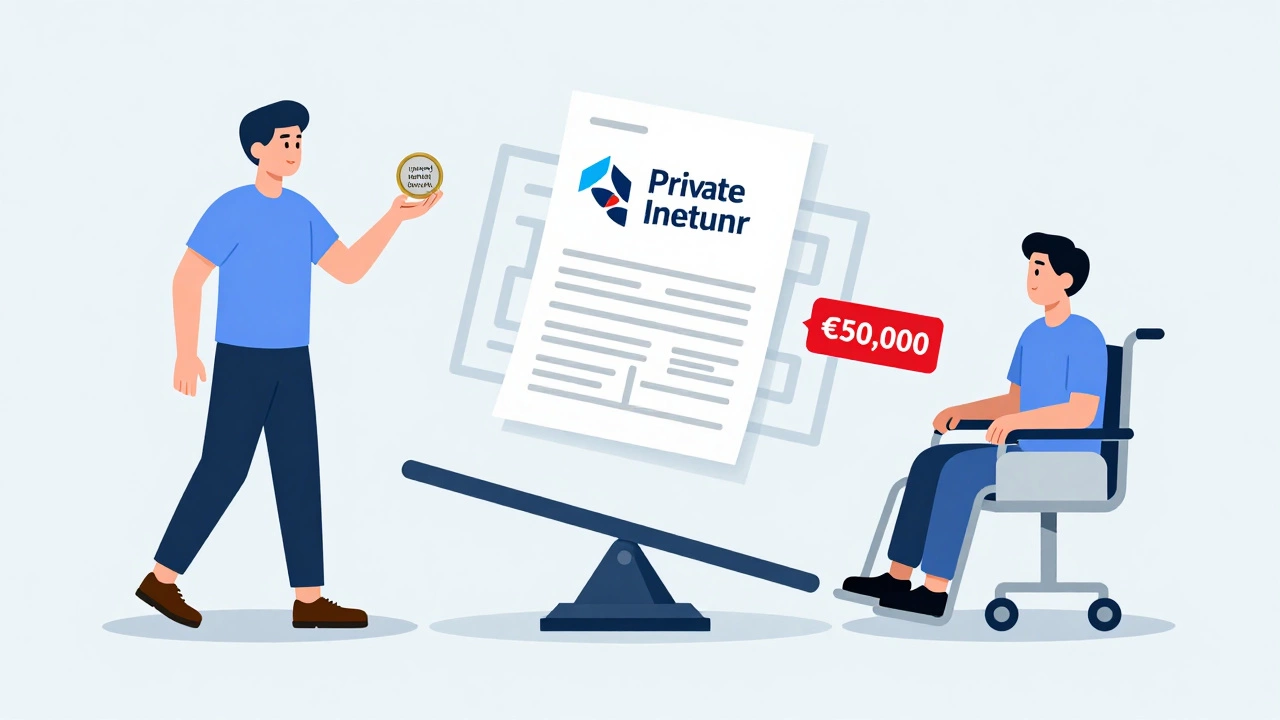
Private insurance works on risk pooling. That means you’re paying for the care of people who use it a lot-like someone with cancer, diabetes, or a chronic condition. And here’s the thing: those people are expensive. One person with heart disease can cost an insurer over €50,000 a year in treatment. But since insurers can’t pick and choose who to cover, they spread that cost across everyone.
Even if you’re healthy and never go to the doctor, you’re still paying for the person who does. That’s how insurance works. But when you combine that with rising treatment costs, you get premiums that feel unfair-even if they’re mathematically logical.
There’s No Price Transparency
Have you ever asked a private hospital how much a procedure costs? They’ll give you a range. Or a quote that changes after the fact. Unlike grocery shopping, where you know the price before you buy, healthcare pricing is hidden. That’s intentional.
Doctors don’t list prices. Hospitals don’t publish fee schedules. Insurers negotiate secret deals with providers, so the same scan might cost €300 at one clinic and €520 at another-both covered under your plan. Without transparency, there’s no competition. And without competition, prices keep going up.
Some insurers now offer price comparison tools, but they’re clunky and rarely updated. Most people just pick the cheapest plan and hope for the best.
Government Policies Make It Worse
The Irish government doesn’t regulate private insurance prices directly. There’s no cap on how much a hospital can charge, no rule forcing insurers to limit administrative costs, and no requirement to cover only essential care. In fact, the government encourages private insurance by offering tax relief-€1,000 a year for those who buy a plan. That sounds like a good deal, until you realize it’s just giving you back 35% of what you paid.
That tax relief doesn’t lower premiums. It just makes people feel like they’re getting something back. Meanwhile, the public system struggles with underfunding, pushing more people toward private care-and driving up demand, which drives up prices.
More Coverage = More Cost
When you buy private health insurance, you’re not just buying access to a hospital. You’re buying coverage for things like private rooms, shorter waiting times, physiotherapy, mental health sessions, dental care, and even alternative therapies. Most plans now include up to 20 different benefits.
But here’s the catch: most people never use half of them. A 2023 survey found that 68% of policyholders didn’t use their dental benefit in a year. Yet they still paid for it. That’s called cross-subsidization. You pay for someone else’s unused benefits, and they pay for yours.
It’s like buying a gym membership that includes a sauna, massage, and personal trainer-even if you only ever use the treadmill. The cost adds up.

There’s No Real Alternative
If you need surgery, a specialist, or faster access to care, your options are limited. The NHS waiting list in Ireland for non-emergency surgery now averages 18 months. That’s longer than in most of Europe. So people turn to private insurance-not because they want to, but because they have to.
And once you’re in the system, it’s hard to get out. If you cancel your plan, you’ll face waiting periods if you try to rejoin later. Many insurers impose a 2-year exclusion for pre-existing conditions if you lapse your cover. That traps people. You pay because you’re scared of what happens if you don’t.
What Can You Actually Do?
You can’t fix the system alone. But you can make smarter choices:
- Compare plans by what you actually need. Don’t pay for dental or maternity if you’re single and in your 30s.
- Choose a plan with a higher excess. Paying €500 upfront when you’re treated can cut your premium by 25%.
- Use your insurer’s network. Going outside it can double your out-of-pocket cost.
- Ask for itemized bills. If a hospital charges €1,200 for a procedure that usually costs €700, ask why.
There’s no magic fix. But understanding how the system works gives you power. You’re not just a customer. You’re a participant in a broken cycle-and you can choose how to move through it.
It’s Not About Being Rich
Private health insurance isn’t just for the wealthy. It’s for teachers, plumbers, nurses, and small business owners who just want to see a doctor without waiting a year. But the system is designed so that the more you need it, the more it costs. And the less you need it, the more you pay anyway.
That’s the irony. The people who benefit most from private care are the ones who can least afford it. And the ones who pay the most are the ones who use it the least.
Until the government steps in to control hospital pricing, force transparency, or create a real public-private hybrid, premiums will keep rising. And you’ll keep wondering why.
Why is my private health insurance premium higher than my friend’s?
Premiums vary based on age, location, health status, and the level of coverage. Someone with a plan that includes dental, maternity, and mental health services will pay more than someone with basic hospital-only cover. Age also matters-premiums jump significantly after 40. Even small differences in plan design can add up to hundreds of euros a year.
Can I save money by switching insurers?
Sometimes, but not always. Insurers often offer lower rates to new customers to lure them away. But if you’ve had continuous cover for years, you may lose loyalty discounts or face waiting periods for pre-existing conditions. Always check what’s excluded before switching. Use comparison tools like the HSE’s Health Insurance Authority website to see what’s changed.
Does private insurance cover chronic conditions?
Yes, but with limits. Most plans cover ongoing treatment for conditions like diabetes or asthma, but they won’t pay for long-term home care or specialized equipment. Some insurers cap annual spending on chronic conditions at €10,000. Always read the fine print-coverage varies widely between providers.
Why don’t insurers negotiate lower prices with hospitals?
They do-but hospitals have the upper hand. Many private hospitals are owned by large healthcare groups that control 70% of the market. These groups can set prices because they’re the only option in many areas. Insurers can’t afford to exclude them, so they pay the price. It’s a monopoly situation, not a free market.
Is private health insurance worth it if I’m healthy?
If you’re young and healthy, it’s not a financial win-you’re paying more than you’ll likely use. But it’s insurance, not savings. It’s there for the unexpected: a sudden injury, a cancer diagnosis, or a heart issue. The value isn’t in how much you use it, but in the peace of mind that you won’t face a €20,000 bill if something happens.