Private Healthcare Cost Estimator
Time Choice Comfort Control Peace of mind
Private healthcare isn’t just expensive-it’s often shockingly so. You pay hundreds, sometimes thousands, for a consultation that costs €50 on the NHS. You get faster access, yes. But why does that convenience come with such a heavy price tag? It’s not just about profit. The cost of private care comes from a mix of structural, operational, and systemic factors that most people never see until they’re staring at a bill.
It’s Not a Hospital, It’s a Business
Private hospitals aren’t charities. They’re companies. And like any company, they need to make money to survive. That means covering rent, salaries, equipment, utilities, and yes-profit margins. A private clinic in Dublin might charge €250 for a specialist consultation. That fee doesn’t just pay the doctor. It also covers the nurse who preps you, the receptionist who books your appointment, the cleaning staff who disinfects the room, the IT system that keeps your records safe, and the insurance premiums that protect the clinic from lawsuits.
Compare that to the NHS. The government funds it through taxes. Staff salaries come from public budgets. Equipment is bought in bulk. Buildings are owned or heavily subsidized. Private providers don’t get any of that. They pay full market rent for their spaces. They buy MRI machines outright, not lease them through state contracts. Every single cost is passed directly to the patient.
Doctors Don’t Work for Free
Private consultants earn significantly more than their NHS counterparts. Why? Because they’re offering a premium service. A consultant in private practice might see 15 patients a day instead of 30. They get more time per patient. They don’t have to rush through appointments because the system is overloaded. But that also means they need to charge more per visit to make the same income.
Many consultants split their time between NHS and private work. They’re paid a fixed salary by the NHS, but when they see private patients, they bill separately. That’s why you often hear, “I saw my NHS doctor, but if I want to get the scan done sooner, I’ll need to go private.” The doctor isn’t greedy-they’re just balancing two systems. The private side pays for their time, expertise, and the overhead they can’t recover through public funding.
Technology and Equipment Are Costly
Modern medicine runs on machines. An MRI scanner costs €1 million. A CT scanner? Around €700,000. Private clinics need these to compete. They can’t afford to wait months for public equipment to become available. So they buy them. And then they have to pay for maintenance, trained technicians, and regular calibration.
These machines don’t sit idle. They run 8-10 hours a day, 5 days a week. That’s a lot of electricity, a lot of consumables, and a lot of downtime if something breaks. A single faulty part can cost €10,000 to replace. All of that adds up. And yes-it’s baked into every scan you book.
Even basic tools like endoscopes or surgical kits are expensive. A single reusable endoscope can cost over €15,000. Private clinics buy them new. NHS hospitals often share equipment across multiple sites. That’s a huge cost difference.
Insurance Adds Another Layer
If you’re paying for private care through insurance, you might think the insurer is covering the bill. But they’re not. They’re negotiating rates, managing risk, and taking a cut. Insurance companies don’t pay full price. They strike deals with clinics for discounted rates. But those discounts aren’t passed to you-they’re used to keep premiums low for the group.
Here’s the catch: if you’re paying out of pocket, you’re charged the full “list price.” If you have insurance, you’re charged the negotiated rate. But that negotiated rate is still high because the clinic needs to cover its costs. And if your insurance plan has a high excess or limited coverage, you’re still paying a lot.
Plus, insurers don’t cover everything. Mental health sessions? Often capped at 10 per year. Physio? Limited to 6. Specialist referrals? Require pre-approval. So even with insurance, you might be paying for things you thought were included.
Speed Costs Money
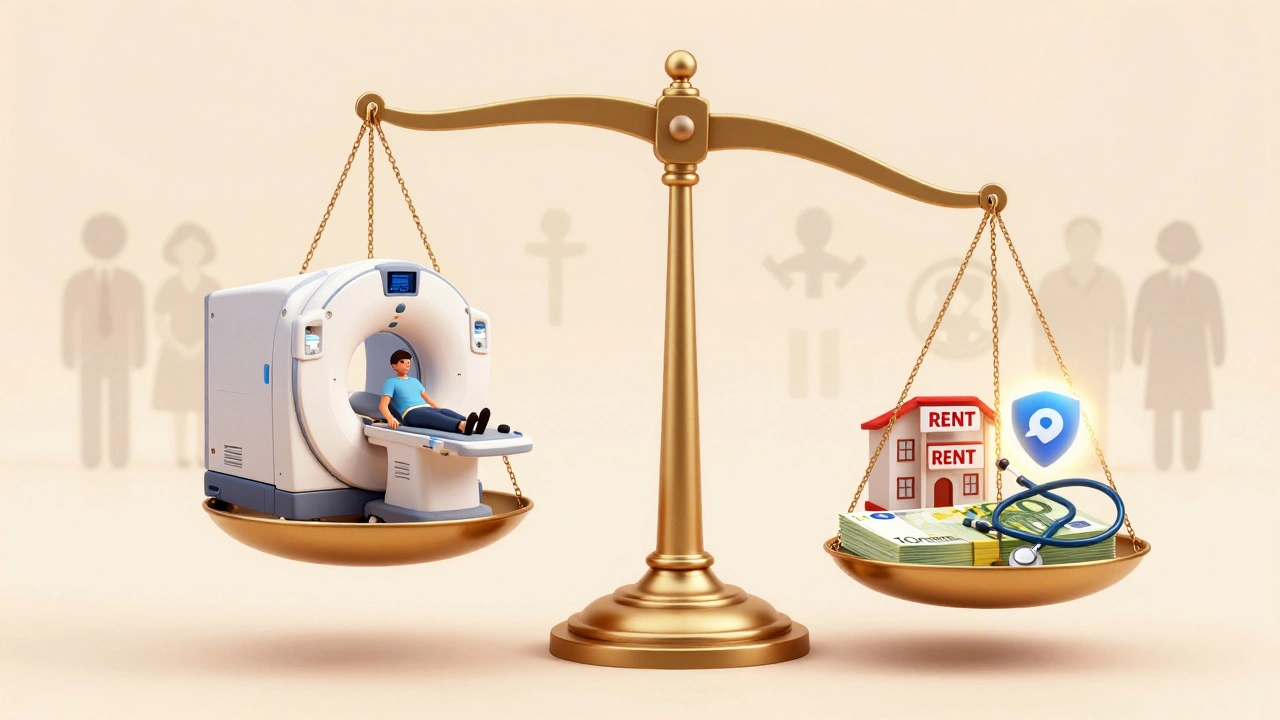
One of the biggest reasons people choose private care is speed. You don’t wait 6 months for a knee scan. You get it in 3 days. But that speed isn’t free. It comes from keeping capacity unused.
Think of it like this: if a private clinic runs at 95% capacity, they’re turning away patients. That’s bad for business. So they keep 20-30% of their slots empty. That way, they can accommodate urgent cases. That empty space? It’s paid for by everyone else.
NHS hospitals run at near 100% capacity. They don’t have the luxury of idle rooms. But that means you wait. Private clinics pay for the privilege of being able to say, “We can see you tomorrow.” And that’s worth a lot to someone in pain.
Marketing and Administration Are Hidden Costs
Private clinics spend money on advertising. Billboards, Google Ads, social media campaigns-they all cost. You don’t see the NHS running ads for hip replacements. But private clinics do. They need to attract patients because they don’t have a government-funded patient pipeline.
Then there’s the admin. NHS staff handle billing through centralized systems. Private clinics need their own billing departments. They need to process credit cards, manage insurance claims, send invoices, chase payments, and handle disputes. All of that requires staff. And staff cost money.
There’s No Bulk Buying Power
The NHS buys drugs, implants, and medical supplies in massive volumes. They negotiate prices with manufacturers based on national demand. A private clinic? They buy a handful of knee replacements each month. They don’t get the same discounts.
Take a standard hip implant. The NHS might pay €3,000 per unit. A private hospital might pay €5,500. That’s a 80% markup. Why? Because manufacturers don’t offer volume discounts to small buyers. And the clinic can’t absorb that cost-they have to pass it on.
It’s Not Just About the Doctor
People think private care is about the consultant. But it’s not. It’s about the whole system: the anesthesiologist, the recovery nurse, the physiotherapist, the lab technician, the radiologist, the pharmacist. Each person adds a line to the bill.
In the NHS, many of these roles are shared across departments. In private care, they’re dedicated to you. That’s better service-but it’s also more expensive. You’re not just paying for a diagnosis. You’re paying for a seamless, uninterrupted experience.
What You’re Really Paying For
When you pay for private healthcare, you’re not just paying for medicine. You’re paying for:
- Time-no waiting lists
- Choice-pick your doctor, your hospital, your date
- Comfort-private rooms, better food, less crowding
- Control-you decide when to act, not the system
- Peace of mind-knowing you’re not on a waiting list
It’s a premium service. And like any premium service-whether it’s a luxury hotel, a personal trainer, or a fast-track airport pass-you pay more for convenience, speed, and control.
Is It Worth It?
For some, yes. If you’re in chronic pain and can’t wait 8 months for surgery, private care is life-changing. If you need a specialist who’s not available on the NHS, it’s the only option. If you’re an expat without public access, it’s necessary.
But for others? It’s a luxury. You’re paying for something the NHS already provides-just slower. If you’re healthy, have good insurance, and can wait, the NHS is still the smarter financial choice.
The real question isn’t whether private care is expensive. It’s whether you value speed and control enough to pay for it. And that’s a personal decision-not a medical one.
Why is private healthcare more expensive than the NHS?
Private healthcare is more expensive because it doesn’t benefit from government funding, bulk purchasing, or subsidized infrastructure. Every cost-from rent and equipment to staff salaries and marketing-is paid directly by patients or insurers. The NHS spreads these costs across the entire population through taxes, making care cheaper for individuals.
Do private hospitals make a profit?
Yes. Private hospitals are for-profit businesses. They need to cover all operational costs and generate a return for owners or shareholders. While some clinics reinvest profits into better equipment or staff training, profit is a necessary part of their business model. Without it, they can’t stay open.
Is private healthcare worth the cost?
It depends on your needs. If you need fast access to treatment, prefer choice in providers, or suffer from chronic conditions that require urgent care, then yes. But if you can wait and don’t mind public facilities, the NHS provides high-quality care at no direct cost. Private care is about convenience and control-not necessarily better medical outcomes.
Why do private doctors charge more than NHS doctors?
Private consultants often see fewer patients per day, giving them more time per appointment. To make the same income as an NHS doctor who sees 30 patients a day, they must charge more per patient. They also pay for their own overhead-clinic space, staff, equipment-without public subsidies.
Can insurance make private healthcare affordable?
Insurance reduces out-of-pocket costs, but it doesn’t eliminate them. Most plans have excesses, annual limits, and exclusions. You still pay for services not covered, like mental health sessions beyond a set number or certain types of physiotherapy. Premiums also rise over time, making long-term coverage expensive.