When women talk about the most painful surgeries, it's not always the ones that make headlines. Some procedures look simple on paper but leave patients struggling for weeks-or months. Others are intense from the start and demand serious recovery time. In the UK, where cosmetic surgery is common but often misunderstood, the real pain doesn’t come from the cut-it comes from what happens after.
Why Pain Varies So Much
Pain isn’t the same for everyone. It depends on nerves, tissue damage, inflammation, and how your body heals. A surgery that feels brutal to one person might be manageable for another. But when you look at data from UK hospitals and patient surveys, some procedures consistently rank higher in pain scores.The NHS tracks post-op pain using a 0-10 scale. For most routine surgeries, patients report 3-5 pain levels. But certain operations spike above 7-sometimes hitting 9 or 10 in the first 48 hours. These aren’t just "bad" surgeries. They’re surgeries where the body is forced to rebuild from the inside out.
Tummy Tuck (Abdominoplasty): The Body’s Biggest Rewrite
If you’ve ever seen someone post about their tummy tuck recovery, you’ve probably noticed one thing: they’re not smiling. Not because they regret it, but because they’re still in pain.A tummy tuck isn’t just removing skin. It’s tightening muscles that have been stretched by pregnancy or weight gain. Surgeons stitch the abdominal wall back together, often pulling it tight enough to change your posture. That’s not a minor tweak. It’s like reassembling a broken shelf under tension.
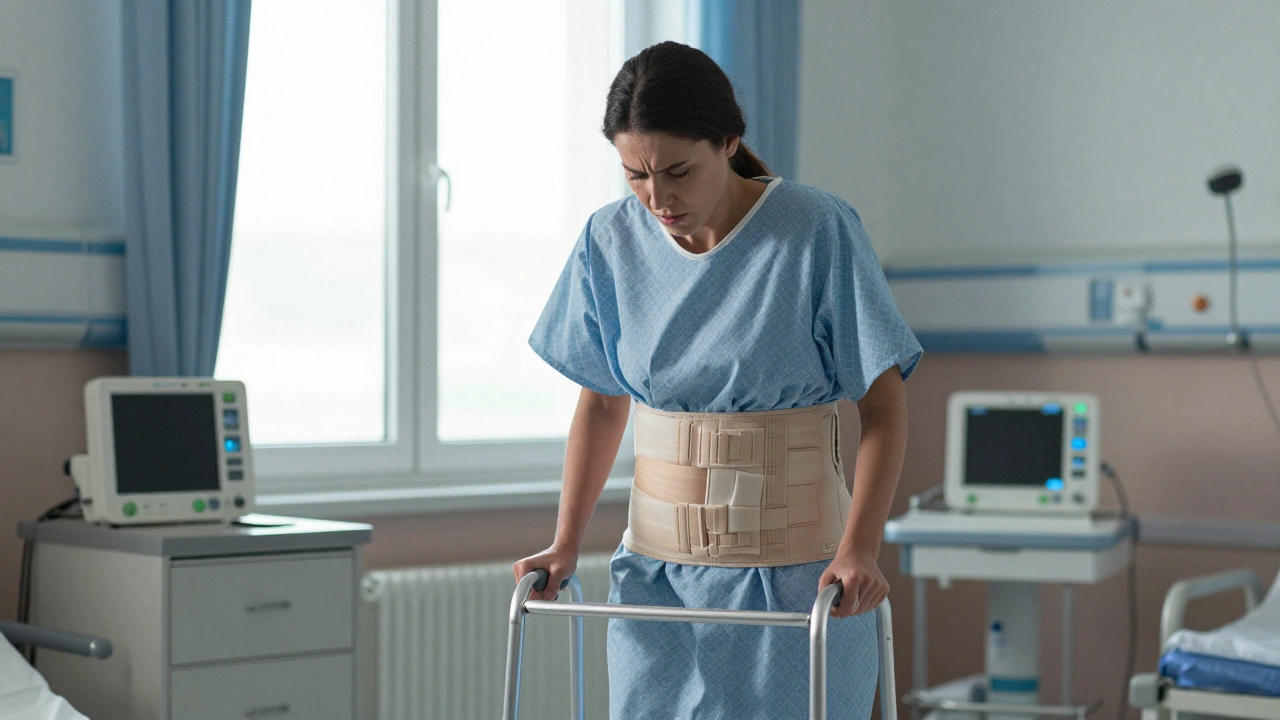
Patients report sharp, deep pain for the first week. Walking upright is hard. Coughing, sneezing, or even laughing can feel like a knife twist. Many need painkillers for 10-14 days. Some say the pain lasts longer than the swelling. One patient from Manchester told her surgeon, "I felt like I’d been hit by a truck-and then they tied me into a corset."
That’s why most UK clinics recommend avoiding heavy lifting for six weeks. Even light activities like carrying groceries can trigger sharp spasms. Recovery isn’t just about healing skin-it’s about retraining your core.
Breast Augmentation with Submuscular Implants
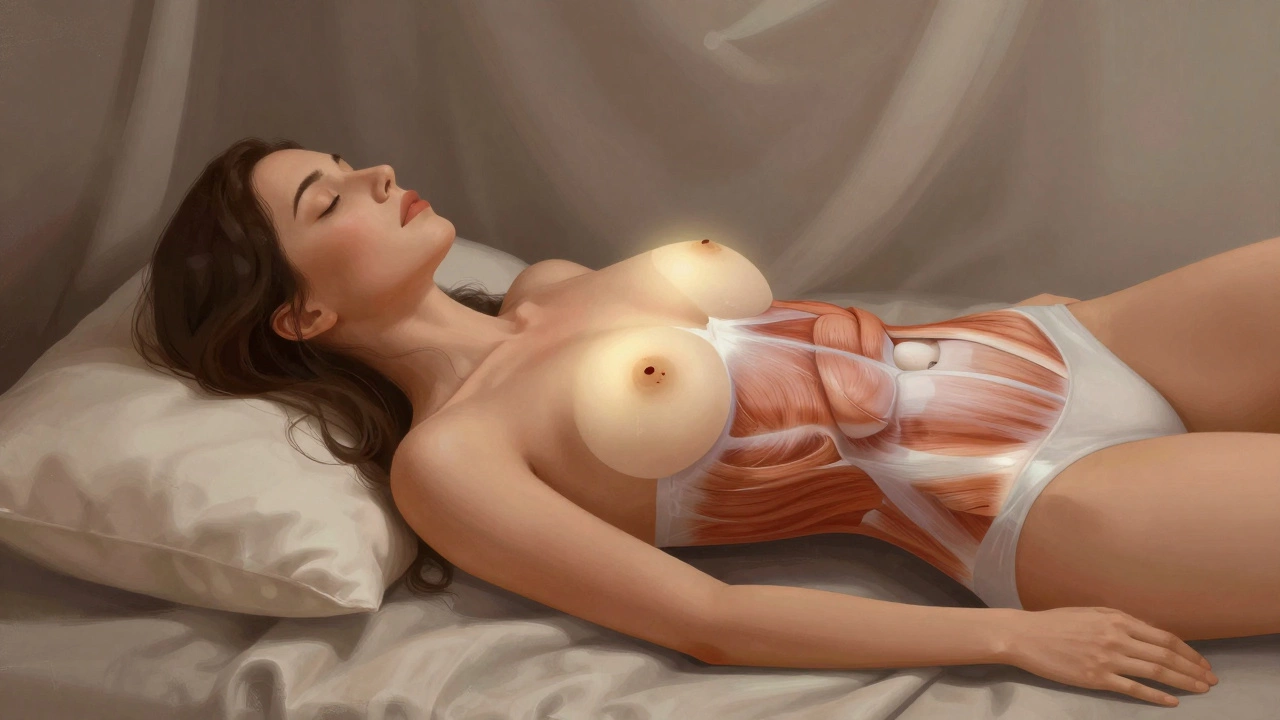
Breast implants sound simple: slip in a silicone bag, done. But when the implant goes under the muscle, the pain changes entirely.Submuscular placement means the surgeon lifts the pectoral muscle to create a pocket. That muscle doesn’t like being moved. It swells, tightens, and spasms. Patients often describe it as a constant, dull ache that gets worse when they move their arms or breathe deeply.
A 2024 survey of 1,200 women in the UK who had breast augmentation found that 68% rated their pain as 7 or higher in the first 72 hours. That’s higher than most knee replacements. The muscle doesn’t heal fast. It takes weeks to relax. Some women say they couldn’t sleep on their side for over a month.
And it’s not just the surgery. The implants themselves can cause discomfort as they settle. The body forms scar tissue around them-sometimes too tightly. That’s called capsular contracture. It can feel like pressure, tightness, even pain months later.
Hysterectomy: More Than Just Removal
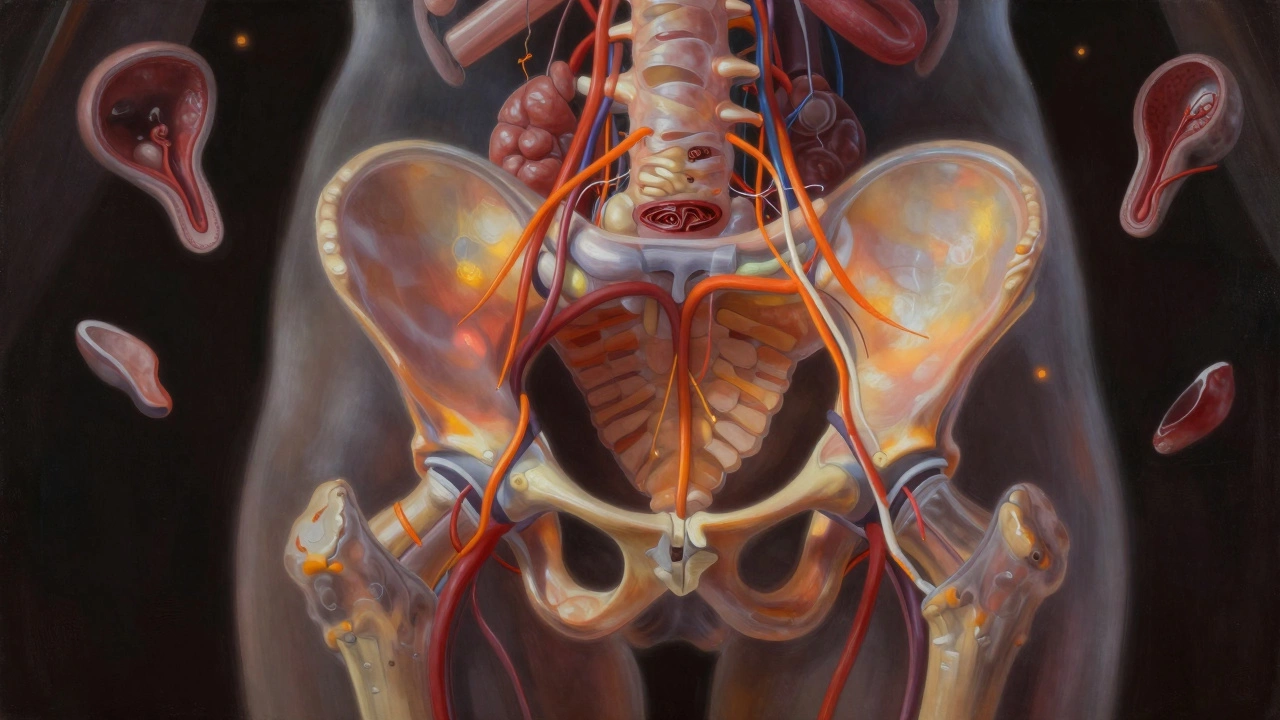
A hysterectomy removes the uterus. Sounds straightforward. But in practice, it’s one of the most physically disruptive surgeries a woman can have.Whether done laparoscopically or through an open cut, the surgery involves cutting ligaments, disconnecting blood vessels, and repositioning organs. The pelvic floor is a complex web. When you disturb it, everything shifts.
Post-op pain often includes cramping, pressure in the lower abdomen, and nerve-related burning. Many women report feeling like they’ve been gutted-literally. One woman from Birmingham described it as "a deep internal bruise that never goes away."
Recovery takes longer than people expect. Even with minimally invasive techniques, most women need 6-8 weeks before returning to normal activity. And that’s if there are no complications. If the surgery was due to endometriosis or fibroids, the pain might have been chronic before the operation. The surgery helps-but it doesn’t erase the memory of pain.
Why These Surgeries Hurt More Than Others
Not all cosmetic surgeries are equal. A nose job or eyelid lift? Minimal pain. A chin implant? Mostly swelling. But the surgeries that hurt the most have one thing in common: they involve major muscle manipulation or deep tissue reattachment.Here’s what makes them brutal:
- Muscle trauma: Tummy tucks and submuscular breast implants cut or stretch muscle. Muscle heals slower than skin.
- Nerve disruption: The pelvic region and chest have dense nerve networks. Cutting or stretching them causes burning, tingling, or numbness that lasts.
- Long recovery time: These aren’t weekend procedures. You can’t go back to work in three days.
- Restricted movement: Walking, sitting, lying down-all become challenges.
Compare that to liposuction, which mainly removes fat. Or a non-invasive skin tightening. Those have little to no pain. The difference? No deep restructuring.
What Helps? Real Recovery Tips
If you’re considering one of these surgeries, know this: pain is normal-but it doesn’t have to be unbearable.Here’s what works, based on UK patient reports and surgeon advice:
- Pain medication on schedule: Don’t wait until the pain hits. Take prescribed meds every 4-6 hours for the first few days. Skipping doses makes recovery harder.
- Compression garments: These aren’t optional. They reduce swelling and support healing tissue. Wear them 24/7 for the first week.
- Walk gently: Even if it hurts, short walks help circulation. Sitting still for too long increases clot risk.
- Use pillows strategically: Sleep on your back with a pillow under your knees (for tummy tucks) or between your arms (for breast implants). This takes pressure off sensitive areas.
- Hydrate and eat protein: Healing needs fuel. Skip the soda. Eat eggs, chicken, lentils. Your body repairs itself with what you give it.
Some clinics now offer nerve blocks or long-acting local anesthetics during surgery. These can delay pain for 12-24 hours. Ask your surgeon if it’s available.
When Pain Should Raise Red Flags
Some discomfort is expected. But if you have any of these, call your surgeon immediately:- Fever over 38°C (100.4°F)
- Swelling that gets worse instead of better
- Sharp, stabbing pain that doesn’t respond to medication
- Redness, warmth, or pus around the incision
- Inability to urinate after 12 hours
These aren’t normal. They could mean infection, internal bleeding, or a blood clot. Don’t wait. In the UK, private clinics have 24/7 emergency lines. Use them.
Final Thought: Pain Isn’t a Sign of Failure
Many women feel guilty for complaining about pain after cosmetic surgery. "I chose this," they think. "I should be tough."But pain isn’t a personal flaw. It’s biology. The body doesn’t care if you wanted the surgery. It just reacts to what you put it through.
The most painful surgeries aren’t the ones that look scary. They’re the ones that change your body’s foundation. And that’s okay. You’re not weak for needing time. You’re human.
If you’re thinking about one of these procedures, talk to at least three surgeons. Ask about pain management. Ask about recovery timelines. Ask to speak with someone who had it done last year. Real stories beat brochures every time.
Is a tummy tuck more painful than a C-section?
Many women say yes. A C-section involves cutting through muscle and skin, but the body is already stretched and prepared from pregnancy. A tummy tuck tightens muscles that have relaxed over years, often with no natural adaptation. The surgical trauma is deeper, and recovery is more restrictive. Post-op pain scores in UK clinics show tummy tucks average 8.1 on a 10-point scale in the first 48 hours, compared to 6.9 for C-sections.
Can breast implants cause long-term pain?
Yes, in some cases. While most women feel fine after a few weeks, about 5-10% develop chronic discomfort due to capsular contracture-scar tissue that squeezes the implant. This can cause tightness, pressure, or sharp pain, especially when lying on the chest. It usually appears months or years later. If pain returns after initial recovery, consult your surgeon. Revision surgery or implant removal may be needed.
Why is a hysterectomy so painful if it’s just removing an organ?
It’s not just removal. The uterus is connected to ligaments, nerves, and blood vessels that link to the bladder, bowel, and pelvic floor. Cutting those connections causes internal shifting and inflammation. Even with minimally invasive techniques, the pelvic region is densely packed with nerves. Many women experience lingering pressure, cramping, or nerve pain for weeks. Recovery is slower than expected because the body has to relearn how to support organs without the uterus.
Are there less painful alternatives to a tummy tuck?
For skin tightening, non-surgical options like radiofrequency or ultrasound treatments exist, but they don’t fix muscle separation. If your main issue is loose skin from weight loss or pregnancy, a mini tummy tuck (removing less tissue) or a panniculectomy (removing excess skin only) may reduce pain. But if you have diastasis recti (separated abdominal muscles), no non-surgical method can truly fix it. Surgery is the only solution-and it comes with recovery.
How long does pain last after cosmetic surgery?
It varies. For minor procedures like eyelid surgery, pain fades in 2-3 days. For tummy tucks and submuscular breast implants, sharp pain lasts 5-10 days, with dull aches continuing for 4-6 weeks. Full healing takes months. Numbness, tingling, or tightness can linger for up to a year as nerves regenerate. Patience is part of the process. Rushing back to exercise or heavy lifting can delay recovery or cause setbacks.