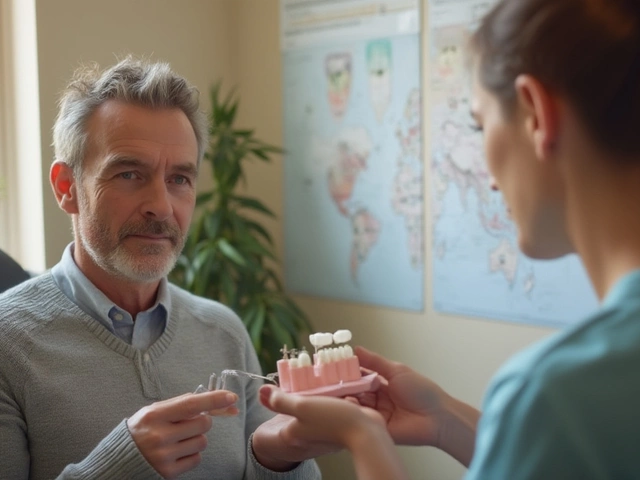
Dental Care Affordability Calculator
Estimate Your Dental Costs
Quick Stats
Risk Factors
- Ignoring pain leads to infections
- Small cavities become root canals
- Gum disease affects heart health
- Delayed care = higher costs
Your Cost Breakdown
United States Cost
United Kingdom Cost
Here is a hard truth that keeps many people up at night: in the United States, money often dictates whether you keep your teeth. While healthcare debates usually focus on hospitals and emergency rooms, there is a silent crisis happening in dentists' chairs across the country. The question isn't just about who gets sick; it's about who can afford to stay healthy. For millions of Americans, the answer to "can I afford this filling" is a resounding no.
You might be wondering exactly how big this problem is. It’s not a small fraction of the population. Recent data from the Centers for Disease Control and Prevention (CDC) and the National Health Interview Survey paints a stark picture. Approximately one in five adults in the U.S. report having unmet dental needs due to cost. That translates to roughly 48 million Americans who needed dental treatment but didn't get it because they couldn't pay for it.
Why is dental care so expensive in the US?
The high cost stems from several factors: the lack of inclusion in most standard health insurance plans, high malpractice insurance premiums for dentists, the cost of advanced technology and materials, and the administrative burden of billing multiple private insurers. Unlike medical care, which has some federal safety nets, dental care operates largely as an out-of-pocket luxury for many families.
The Real Numbers Behind the Crisis
Let’s look closer at those numbers. When we say "unmet dental needs," we aren't talking about cosmetic whitening or veneers. We are talking about basic care. This includes fillings for cavities, extractions for infected teeth, and cleanings to prevent gum disease. According to the CDC, nearly 25% of adults aged 65 and older have untreated tooth decay. Why? Because Medicare, the federal health insurance program for seniors, generally does not cover routine dental care.
This creates a dangerous cycle. People skip their check-ups to save money. A small cavity turns into a large infection. That infection requires a root canal or an extraction. By then, the bill is hundreds or even thousands of dollars higher than the original preventative visit. For a family living paycheck to paycheck, that unexpected $1,500 bill can mean choosing between dental work and paying the electric bill.
Dental Insurance is a type of health insurance that covers part of the cost of dental treatments. In the U.S., only about 40-50% of the population has dental coverage, and much of that comes through employer-sponsored plans with low annual maximums, often capping out at $1,000 or $1,500 per year. This means if you need major work like implants or crowns, you’re still on the hook for the majority of the cost.Who Is Most Affected?
This crisis doesn't hit everyone equally. The burden falls heaviest on specific groups. Low-income households are disproportionately affected. If you earn below the federal poverty level, your chances of skipping dental care due to cost skyrocket. Children in these families are also at risk. The Medicaid program, which helps low-income individuals, does cover dental services for children, but coverage for adults varies wildly by state. In some states, Medicaid covers almost nothing for adult dental care.
Racial and ethnic disparities play a huge role here too. Studies consistently show that Black and Hispanic adults are more likely to experience unmet dental needs than White adults. This isn't just about income; it's about systemic barriers, including a shortage of diverse dental professionals and clinics in underserved neighborhoods.
| Demographic Group | Primary Barrier | Estimated Unmet Need Rate |
|---|---|---|
| Low-Income Adults | Lack of Insurance/Cost | ~30% |
| Elderly (65+) | Medicare Exclusions | ~25% |
| Minority Communities | Access & Cost | ~20-25% |

The Ripple Effect on Overall Health
You might think, "It's just my teeth." But your mouth is a window to your overall health. Poor dental health is linked to serious conditions like heart disease, diabetes, and respiratory infections. When you can't afford to treat gum disease, the inflammation spreads. Bacteria from your mouth can enter your bloodstream. This isn't theoretical; it's well-documented medical science.
For diabetics, poor oral health makes blood sugar control harder. For pregnant women, gum disease increases the risk of preterm birth and low birth weight. So, when we talk about the percent of Americans who can't afford dental care, we're really talking about a public health issue that affects every system in the body. The financial strain of avoiding care leads to worse health outcomes, which in turn leads to higher medical bills down the road.
Alternatives: Dental Tourism and the UK Context
Faced with these staggering costs, many Americans look elsewhere. One growing trend is dental tourism. People travel to countries where procedures cost a fraction of what they do in the U.S. Mexico is a popular destination for those in the southern states. But another option gaining traction, especially for complex procedures like Dental Implants are permanent tooth replacements surgically placed in the jawbone, is the United Kingdom.
Why the UK? Well, the National Health Service (NHS) provides dental care to residents, but wait times can be long, and private options are available at competitive rates compared to the U.S. However, it's important to note that "dental implants UK" is a search term often used by Americans researching costs. While the UK has its own challenges with NHS dental access-where finding an NHS dentist accepting new patients can be difficult-the private sector offers high-quality care at prices that can be 30-50% lower than U.S. averages for major restorative work.
But dental tourism isn't without risks. Follow-up care is crucial after procedures like implants. If something goes wrong once you're back home, who fixes it? Your local dentist may not want to touch work done abroad, or they might charge full price for repairs. You need to weigh the savings against the potential logistical nightmares.
What Can You Do Right Now?
If you're one of the millions struggling with dental costs, you're not out of options. Here are some practical steps:
- Look for Community Health Centers: Federally Qualified Health Centers (FQHCs) offer dental services on a sliding fee scale based on your income. They are designed specifically for underserved populations.
- Dental Schools: Students at accredited dental schools provide care under the supervision of experienced faculty. The cost is significantly lower, though appointments take longer.
- Payment Plans: Many private dentists offer in-house payment plans or work with third-party financing companies like CareCredit. Always ask before starting treatment.
- Preventative Focus: If you can't afford everything, prioritize prevention. Brushing, flossing, and using fluoride toothpaste are free or cheap ways to avoid costly problems later.
The Future of Dental Affordability
Is there hope for change? Some advocates are pushing for dental care to be included in the Affordable Care Act exchanges or for Medicaid expansion to cover adult dental services universally. There are also innovative models popping up, like direct primary care dental practices, where you pay a monthly membership fee for unlimited basic care, bypassing insurance altogether.
However, until systemic changes happen, the burden remains on the individual. Understanding the landscape is the first step. Knowing that you're part of a larger group facing this challenge can help you make informed decisions. Whether that means seeking community resources, negotiating costs, or carefully considering international options, knowledge is power.
The percent of Americans who can't afford dental care is a statistic that reflects deeper issues in our healthcare system. It’s a reminder that health shouldn't be a privilege reserved for those who can pay. As we move forward, keeping an eye on policy changes and exploring all available resources is key to protecting your smile and your health.
Does Medicare cover dental implants?
Generally, no. Traditional Medicare (Parts A and B) does not cover routine dental care, including cleanings, fillings, extractions, or dental implants. Some Medicare Advantage (Part C) plans may offer limited dental benefits, but coverage for major procedures like implants is rare and often has strict limits.
How much does a dental implant cost in the US vs UK?
In the US, a single dental implant can cost between $3,000 and $6,000. In the UK, private dental implants typically range from £1,500 to £2,500 per tooth. While exchange rates fluctuate, the UK often presents a significant saving, especially for multiple implants, making it a popular choice for dental tourism.
What happens if I can't afford to pull a rotten tooth?
Ignoring a rotten tooth can lead to severe infections, abscesses, and even sepsis, which can be life-threatening. If you can't afford private care, seek out a local FQHC (Federally Qualified Health Center), a dental school clinic, or a charitable organization like Mission of Mercy that hosts free dental clinics.
Are there free dental clinics in the US?
Yes, but they are often overwhelmed. Organizations like Remote Area Medical (RAM) and local United Way chapters can help you find free or low-cost events. Additionally, many cities have emergency dental clinics that operate on a sliding scale or grant basis for uninsured residents.
Is dental tourism safe?
It can be, if you do your research. Look for dentists who are certified by international boards (like ICOI for implants) and have partnerships with US-based dentists for follow-up care. Check reviews, verify credentials, and ensure the clinic meets sterilization standards comparable to those in your home country.