
Therapy Cost & Profitability Calculator
Input Parameters
Financial Breakdown
Client Perspective (Out-of-Pocket)
Therapist Perspective (Per Hour)
Revenue: -
Overhead Expenses: -
Net Income: -
Revenue: -
Overhead Expenses: -
Net Income: -
You sit down for a session that lasts exactly fifty minutes. You leave feeling slightly lighter but significantly poorer. The bill arrives: €120. Or maybe £80. Or $150 in the US. It feels like robbery, doesn't it? You are paying more for an hour of talking than you do for a haircut, a gym membership, or even a night out with friends. This disconnect between the value of the service and the sticker price is one of the most frustrating aspects of modern healthcare.
The short answer is that therapy is expensive because the system is broken, not because therapists are greedy. A mix of low insurance reimbursement rates, high educational debt, administrative burdens, and a simple lack of supply creates a perfect storm of high prices. But understanding why these numbers are so high is the first step to navigating them without going bankrupt.
The Supply and Demand Imbalance
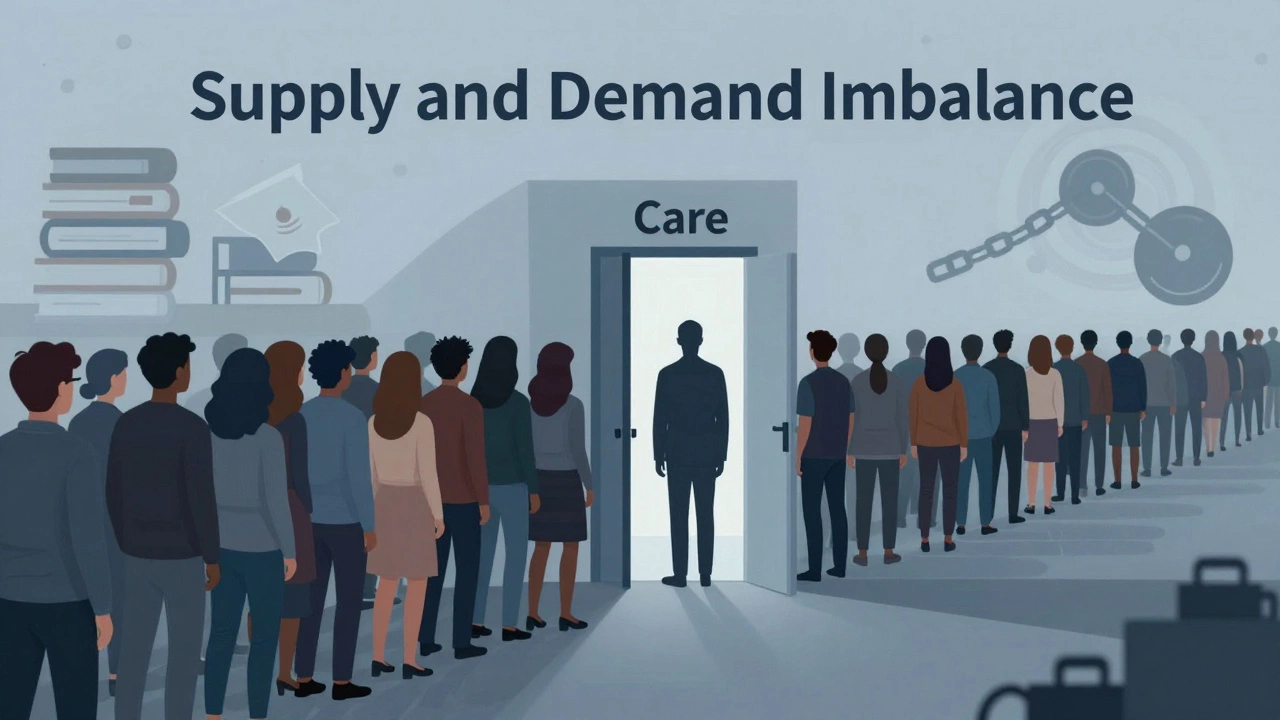
At its core, therapy suffers from a classic economic problem: there simply aren't enough providers for the number of people who need help. For years, society stigmatized mental health issues. People suffered in silence. Now, the stigma is fading fast. More people are seeking help than ever before, especially among younger generations.
However, the pipeline for new therapists is slow. Becoming a licensed psychotherapist takes time. In many places, including Ireland and the UK, you need a master’s degree followed by supervised clinical hours. In the US, it can take up to seven years of post-secondary education and training. During this time, students are earning little to nothing while accumulating significant debt. When they finally enter the workforce, they have to cover their overheads immediately. There is no buffer. This scarcity drives up private market rates because demand far outstrips the available supply of qualified clinicians.
The Insurance Trap: Low Reimbursement Rates
If you have health insurance, you might assume your sessions are covered. Here is where it gets tricky. Insurance companies often reimburse therapists at rates far below what those therapists charge privately. In the United States, for example, Medicaid might pay a therapist $40 to $60 per hour. Medicare pays similarly low amounts. Private insurance plans might offer $80 to $100.
So, why does the therapist charge $150? Because they have to survive. If a therapist accepts insurance, they must see a huge volume of clients just to break even. Many therapists choose to go "out-of-network" or cash-only to maintain a sustainable practice. They charge the true market rate to cover their rent, taxes, malpractice insurance, and continuing education. When you pay out-of-pocket, you are paying the full cost of the service, stripped of the artificial subsidy that insurance tries to provide-and often fails to deliver adequately.
| Region | Average Private Rate | Typical Insurance Reimbursement |
|---|---|---|
| Ireland (Dublin) | €100 - €150 | €40 - €70 (via HSA/Supplementary) |
| United Kingdom | £60 - £90 | £30 - £50 (Private Health Plans) |
| United States | $100 - $200+ | $50 - $120 (Varies wildly by plan) |
The Hidden Overhead Costs
People often forget that a therapist’s office isn’t free. Running a private practice involves substantial fixed costs. These include:
- Rent and Utilities: A quiet, safe, and accessible space is non-negotiable. In cities like Dublin or New York, commercial rent is astronomical.
- Malpractice Insurance: Therapists must carry liability insurance to protect against lawsuits. This can cost hundreds of dollars annually.
- Continuing Education: To keep their license, therapists must attend workshops and courses. These are rarely free and often require travel expenses.
- Administrative Time: For every hour spent with a client, a therapist spends 15-30 minutes on notes, scheduling, and billing. This is unpaid labor that must be factored into the hourly rate.
- Technology: Secure video platforms for telehealth, electronic health record systems, and cybersecurity measures all cost money.
When you add these up, the "profit" margin on a therapy session is much slimmer than it appears. A €120 fee might only net the therapist €60 after all expenses are paid.
Specialization and Experience Premiums
Not all therapy is created equal. General counseling for anxiety or depression is typically less expensive than highly specialized treatment. If you are looking for a therapist who specializes in trauma-informed care, EMDR (Eye Movement Desensitization and Reprocessing), or couples therapy using the Gottman Method, expect to pay more.
These specialists have invested extra years in advanced training. Their expertise allows them to treat complex conditions that generalist therapists might not be equipped to handle. Additionally, senior clinicians with 20+ years of experience command higher fees. You are paying for their refined intuition and proven track record. While this increases the upfront cost, it can sometimes reduce the total duration of treatment, potentially saving money in the long run.

How to Make Therapy Affordable
High prices don’t mean you have to give up on mental health care. There are strategic ways to lower the financial barrier.
- Check Your Insurance Again: Don’t just ask if therapy is covered; ask for a list of in-network providers. Seeing an in-network therapist means the insurer has negotiated a lower rate, and your copay will be predictable.
- Look for Sliding Scale Fees: Many private practitioners reserve a few slots each week for clients who cannot afford the full rate. These fees are adjusted based on your income. Be upfront about your budget when booking the initial consultation.
- Consider Training Clinics: Universities with psychology or counseling programs often have clinics where graduate students provide therapy under the supervision of licensed professionals. Rates here are significantly lower, often 50-70% less than private practice.
- Try Group Therapy: Group sessions cost less per person because the therapist’s time is shared among multiple participants. They are highly effective for issues like grief, addiction recovery, and social anxiety.
- Use Digital Platforms: Online therapy apps often use a subscription model that can be cheaper than hourly face-to-face sessions. While not suitable for severe mental illness, they work well for mild to moderate stress and relationship issues.
- Employer Assistance Programs (EAP): Many employers offer free or discounted short-term therapy sessions through an EAP. Check with your HR department.
The Value Proposition
Is therapy worth the cost? Consider the alternative. Untreated mental health issues lead to lost productivity, strained relationships, substance abuse, and physical health problems. The economic burden of untreated depression or anxiety on individuals and societies is massive. Therapy is an investment in your ability to function, connect, and thrive. When you view it through that lens, the price tag becomes a calculation of return on investment rather than just an expense.
Why is therapy so expensive in Ireland compared to other countries?
Therapy in Ireland is expensive due to high urban rents, particularly in Dublin, and a limited number of publicly funded mental health services. Most people rely on private insurance or out-of-pocket payments. The HSE (Health Service Executive) provides some community support, but waiting lists are long, pushing people toward the private sector where market forces drive prices up.
Does insurance really cover therapy?
It depends on your plan and location. In the US, the ACA requires most plans to cover mental health, but reimbursement rates are low. In Ireland, supplementary medical insurance may cover a portion of fees, but you often pay the difference. Always check your specific policy limits and whether pre-authorization is required.
What is a sliding scale fee?
A sliding scale fee is a reduced rate offered by therapists based on a client's income or financial hardship. Instead of a fixed price, the cost adjusts to ensure therapy remains accessible. You must discuss this directly with the therapist during the intake process.
Are online therapy platforms cheaper than in-person visits?
Generally, yes. Online platforms operate on subscription models that bundle text, audio, and video sessions, often costing less than individual hourly rates. However, they may lack the depth of personalized care found in traditional one-on-one therapy.
Can I negotiate my therapy fees?
You can ask. Some private practitioners are open to negotiating rates, especially if you commit to a package of sessions or pay upfront. However, many have strict policies due to tax and accounting reasons. Asking politely during the initial consultation is always better than assuming the price is fixed.