Private Surgery Cost Estimator
Select your procedure details and click calculate to see the estimated breakdown.
Walk into any modern hospital, and you are surrounded by machines that cost more than most houses. From the MRI scanner humming in the basement to the robotic arm assisting a surgeon upstairs, the price tags are staggering. But if you are asking what the single most expensive item in a hospital is, the answer might surprise you. It isn’t always the shiny new technology. Often, it’s the specialized implants or the rare pharmaceuticals used during critical procedures.
For patients navigating private surgery costs, understanding these hidden price drivers is crucial. When you pay out of pocket for healthcare, you aren't just paying for the doctor's time; you are subsidizing the infrastructure, the high-risk inventory, and the cutting-edge tools that keep you alive. Let’s break down exactly where the money goes and why your bill looks the way it does.
The Heavy Hitters: Capital Equipment vs. Consumables
To understand hospital economics, we need to split items into two buckets: capital equipment (the big machines) and consumables (the things used once and thrown away). This distinction matters because hospitals depreciate machines over years, but they charge you fully for every syringe and stent used in your procedure.
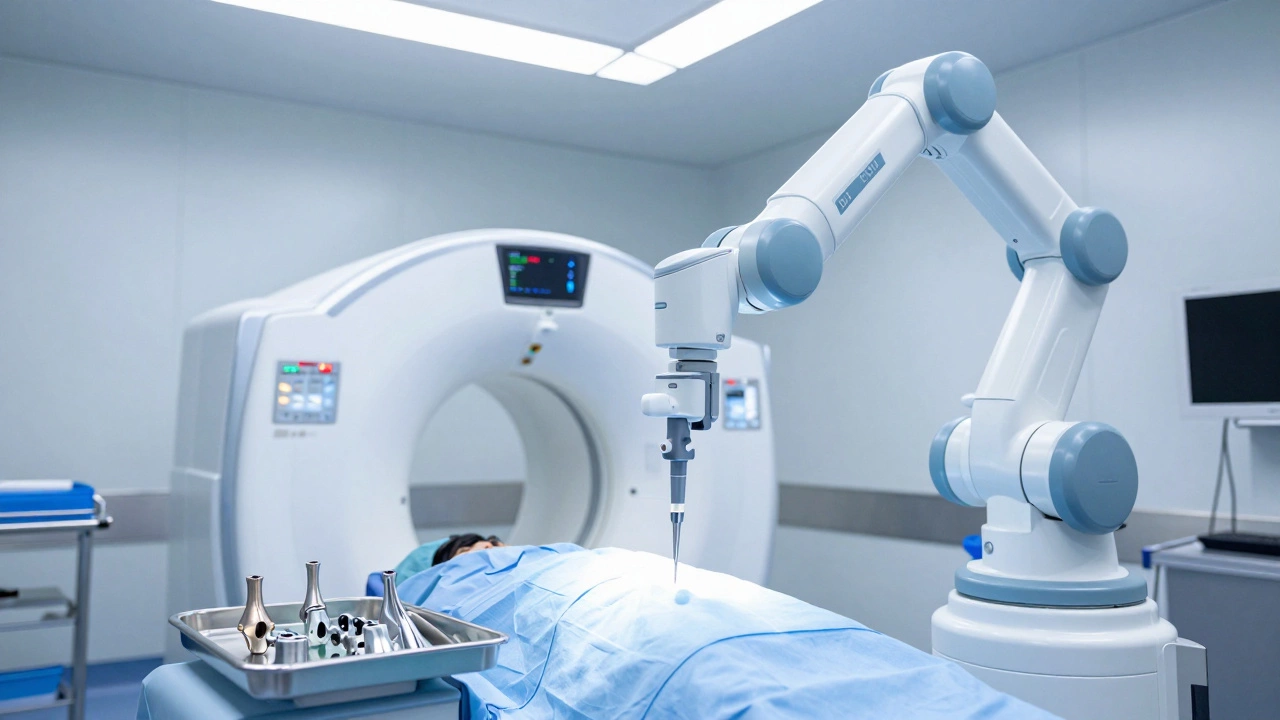
Magnetic Resonance Imaging (MRI) is a diagnostic imaging device that uses strong magnetic fields and radio waves to create detailed images of organs and tissues. An advanced 3 Tesla MRI scanner can cost between $1.5 million and $3 million. Add in the installation, shielding, and maintenance contracts, and you are looking at a five-figure monthly overhead just to keep it running. However, this cost is spread across thousands of scans per year. You rarely see the full weight of an MRI on a single patient's bill unless it is a highly specialized research scan.
Then there is the Da Vinci Surgical System is a robot-assisted surgical system that allows surgeons to perform minimally invasive procedures with enhanced precision. The initial purchase price hovers around $2 million, with annual service contracts costing another $500,000. While impressive, the robot itself doesn't drive up individual bills as much as the disposable instruments attached to it. Each set of robotic arms and grippers is single-use and can add $1,500 to $2,000 to a surgery cost alone.
| Item Type | Estimated Cost | Impact on Patient Bill |
|---|---|---|
| MRI Scanner (3T) | $1.5M - $3M | Low (Amortized over many users) |
| Da Vinci Robot | $2M + $500k/year service | Medium (High disposables) |
| Heart-Lung Bypass Machine | $100k - $200k | High (Critical for open-heart) |
| Specialized Implants (e.g., Hip/Knee) | $5k - $20k per unit | Very High (Direct pass-through) |
| Rare Pharmaceuticals (e.g., Cancer Drugs) | $10k - $100k+ per dose | Extreme (Can be the bulk of the bill) |
The Real Money Drain: Implants and Devices
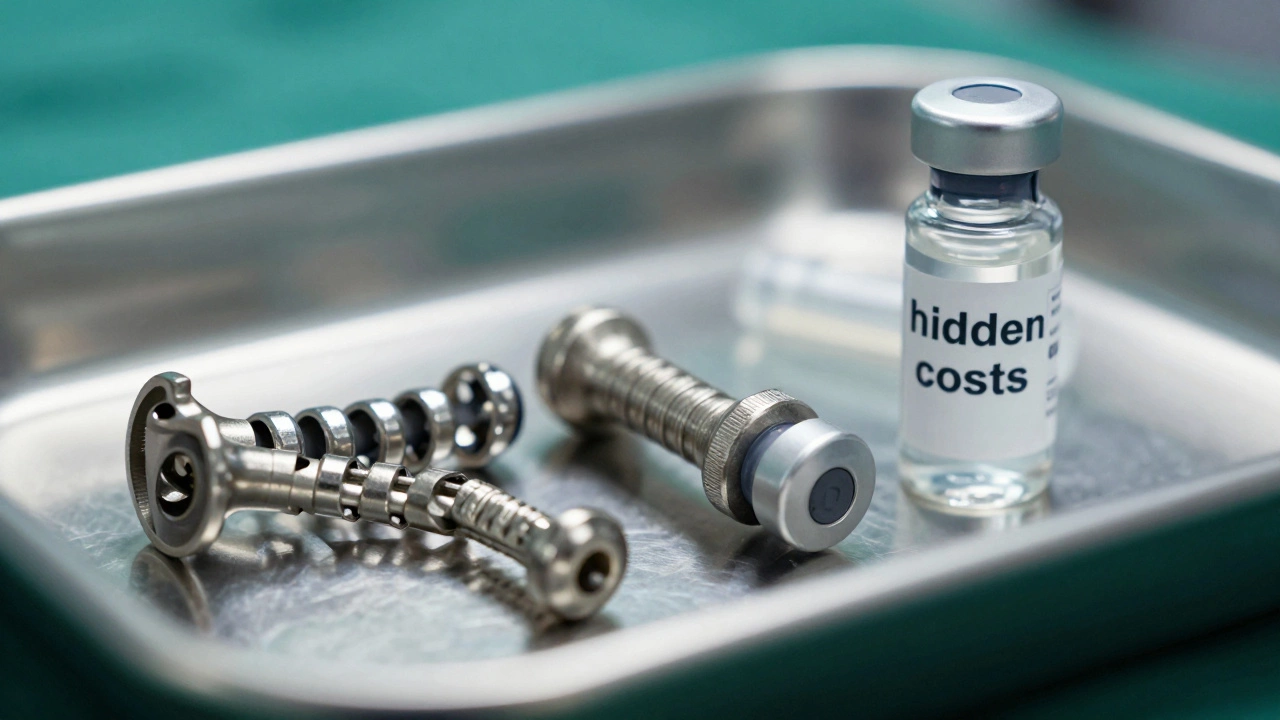
If you are having joint replacement surgery, cardiac repair, or neurosurgery, the "most expensive item" is likely sitting inside your body. Medical implants are not cheap to manufacture. They require biocompatible materials like titanium, cobalt-chromium, or porous polymers that won't trigger rejection. Plus, they must be sterilized, tracked via RFID, and guaranteed for life by the manufacturer.
A total knee replacement implant can cost the hospital $8,000 to $15,000. A complex spinal fusion cage might run $10,000. In private healthcare, these costs are often marked up significantly. If you are comparing quotes for elective surgeries, ask specifically about the brand and model of the implant. Sometimes, choosing a generic or older-generation implant can save you thousands without compromising safety.
Pharmaceuticals: The Hidden Price Spike
While metal and plastic have fixed costs, drugs have volatile ones. Biologics and targeted therapies represent some of the highest-cost items in a hospital pharmacy. For example, a single infusion of certain monoclonal antibodies used in oncology can exceed $50,000. These drugs are expensive because they are tailored to specific genetic markers, produced in small batches, and protected by patents that prevent generic competition.
In emergency settings, clot-busting drugs like tissue plasminogen activator (tPA) for stroke patients can cost upwards of $3,000 per dose. If you are undergoing cancer treatment privately, the drug regimen will likely dwarf the cost of the surgery itself. Always request a breakdown of medication costs before starting a course of treatment.
Why Private Surgery Costs Vary So Much
You might wonder why two people having the same surgery at different private hospitals get vastly different bills. It comes down to three factors:
- Facility Fees: Hospitals charge for the use of the operating room, nursing staff, anesthesia, and post-op recovery beds. Luxury private hospitals with concierge services charge premium facility fees.
- Surgeon Preference Items: Some surgeons insist on using specific brands of sutures, staplers, or implants. These "preference items" carry higher markups.
- Complications: Unplanned extended stays, additional tests, or ICU transfers drastically increase costs. Private insurance often covers complications, but self-pay patients bear the brunt.
How to Navigate High Hospital Costs
Knowing what drives up the bill empowers you to make smarter choices. Here is how to protect your wallet when facing private surgery:
- Get Itemized Estimates: Don't accept a lump sum. Ask for a line-item estimate including implants, anesthesia, and facility fees.
- Ask About Alternatives: Is a robotic surgery necessary for your condition? Can a standard laparoscopic approach achieve the same result for less?
- Check Implant Brands: Request information on the specific implant being used. Compare its cost against alternatives.
- Review Drug Coverage: If medications are part of the plan, verify if they are covered by your insurance or if you can source them elsewhere.
The Human Factor: Staffing and Expertise
It’s easy to focus on machines, but the most expensive resource in any hospital is actually human expertise. Specialized surgeons, anesthesiologists, and perfusionists command high salaries due to their training and liability risks. In private practice, you are paying for access to top-tier specialists who may not be available in public systems due to long waiting lists. While this doesn't show up as a physical "item," it is a significant portion of your bill.
Ultimately, the most expensive item in a hospital depends on your specific case. For a broken leg, it’s the cast and screws. For cancer, it’s the chemotherapy drugs. For heart disease, it’s the stents and bypass machine. Understanding these components helps you budget better and question unnecessary charges.
What is the single most expensive piece of equipment in a hospital?
The most expensive single piece of equipment is typically a high-field MRI scanner or a PET-CT scanner, which can cost between $2 million and $4 million. However, these costs are amortized over many years and thousands of patients, so they do not appear as a direct charge on individual bills.
Why are medical implants so expensive?
Medical implants are expensive due to the high cost of biocompatible materials (like titanium), rigorous regulatory testing, sterilization processes, and the fact that they are often single-use per patient. Manufacturers also invest heavily in R&D to improve longevity and reduce rejection rates.
Does robotic surgery cost more than traditional surgery?
Yes, robotic surgery generally costs more. While the robot itself is a capital expense, the disposable instruments used for each procedure add $1,500 to $2,000 to the bill. Additionally, the longer setup time and specialized training required for the surgical team contribute to higher overall costs.
How can I reduce my private surgery costs?
You can reduce costs by requesting itemized estimates, asking about alternative implant brands, verifying if robotic assistance is medically necessary, and checking if your insurance covers all aspects of the procedure, including pre-op tests and post-op care.
Are hospital drugs more expensive than pharmacy drugs?
Often, yes. Hospitals buy drugs in bulk but may apply markups to cover storage, handling, and administration costs. For chronic conditions, it is usually cheaper to fill prescriptions at a retail pharmacy. However, for IV-administered biologics, hospital pricing is unavoidable.